First Major Offshore Wind Farm Completed Under Trump Presidency in Massachusetts
Construction has officially concluded on a significant offshore wind farm in Massachusetts, representing the first project of its scale to reach completion during President Donald Trump's time in office. This milestone occurs despite Trump's well-documented aversion to wind power, which he has frequently criticized in public statements.
Project Completion and Background
Offshore construction on Vineyard Wind was finalized on Friday night with the installation of the last turbine blades, as confirmed by project spokesperson Craig Gilvarg on Saturday. Located approximately 15 miles south of Martha's Vineyard and Nantucket, Massachusetts, this joint venture between Avangrid and Copenhagen Infrastructure Partners features 62 turbines capable of generating 800 megawatts of clean electricity. This output is sufficient to power around 400,000 homes, contributing substantially to regional energy needs.
The project's journey has been fraught with challenges, particularly from the Trump administration. In a move days before Christmas, the administration halted construction on Vineyard Wind and four other major East Coast offshore wind projects, citing national security concerns. However, developers and states filed lawsuits, and federal judges permitted all five projects to resume construction, effectively ruling that the government failed to demonstrate an imminent national security risk warranting a halt.

Political and Environmental Context
President Trump has consistently expressed his disdain for wind power, often referring to turbines as "windmills" and vowing to prevent their construction. His administration reversed energy policies from day one, issuing executive orders to promote oil, gas, and coal while criticizing renewable sources. White House spokesperson Taylor Rogers emphasized this stance, stating that Trump reversed what he termed Joe Biden's costly green energy agenda to focus on reliable and affordable energy sources.
Despite this opposition, Vineyard Wind has been operational for over a year, gradually increasing power delivery as more turbines were completed. In contrast, another of the five projects, Revolution Wind, began supplying power to New England's electric grid on Friday and is expected to scale up to full operation in the coming weeks.
Economic and Legal Implications
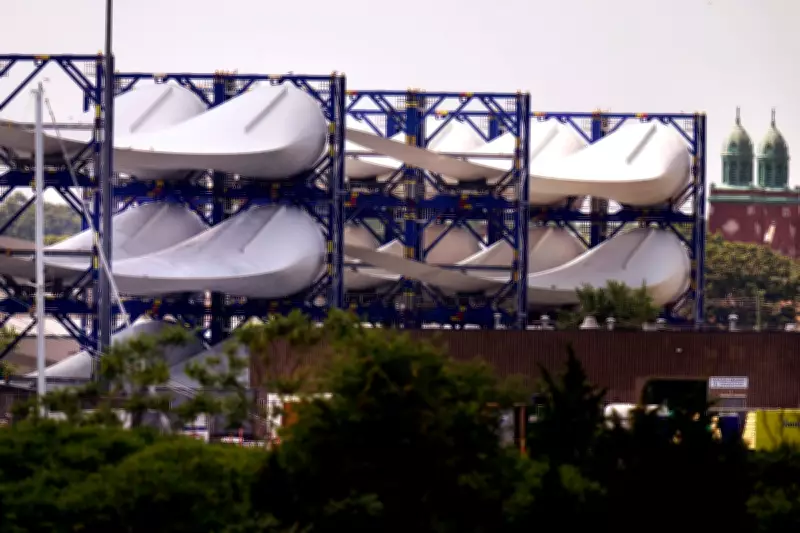
Massachusetts Attorney General Andrea Joy Campbell highlighted the project's importance, noting it is essential for lowering costs, meeting rising energy demand, advancing climate goals, and sustaining thousands of well-paying jobs. The Trump administration's criticism intensified following a blade failure in July 2024, when fiberglass fragments from a turbine washed onto Nantucket beaches during peak tourist season. Manufacturer GE Vernova settled for $10.5 million to compensate affected island businesses.
Vineyard Wind's plans were initially submitted in 2017, with Massachusetts committing to offshore wind by requiring utilities to solicit proposals for up to 1,600 megawatts by 2027. Federal regulators delayed the project in 2019 by withholding a key environmental impact statement, a move that Massachusetts Democratic Rep. William Keating described as an attempt to stymie the renewable energy initiative. The Biden administration approved the project in 2021 as part of efforts to expand offshore wind as a climate change solution, with onshore construction beginning in Barnstable, Massachusetts.
Broader Industry Landscape
The first U.S. offshore wind farm opened off Rhode Island's Block Island in 2016 at the end of President Barack Obama's tenure, but with only five turbines, it was not commercial-scale. The nation's inaugural commercial-scale offshore wind farm, South Fork Wind, opened in March 2024 under President Joe Biden. Developed by Danish firm Orsted and utility Eversource, this 12-turbine farm is situated 35 miles east of Montauk Point, New York.
This completion underscores the ongoing tension between political agendas and renewable energy development, highlighting how legal and state-level support can propel projects forward even amid federal opposition.