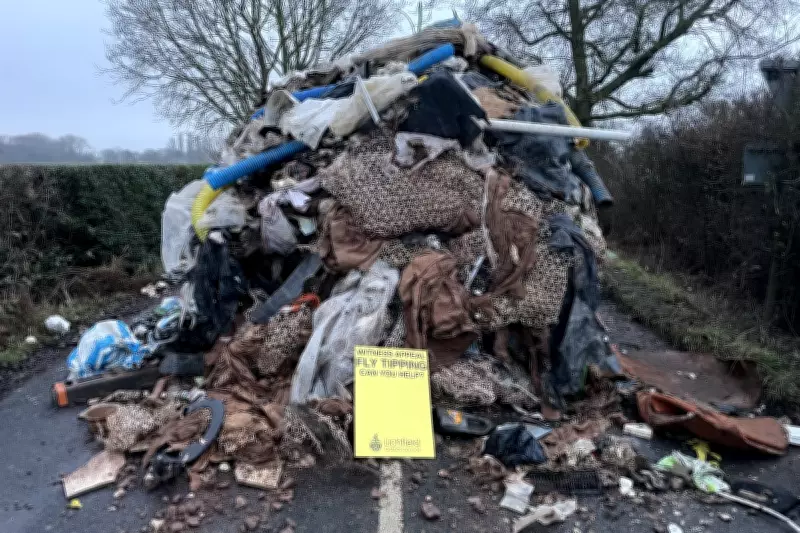
Official statistics have revealed a sharp increase in fly-tipping across England, with cases rising by nearly 10% last year to reach a new record high. Council data shows there were almost 1.26 million incidents recorded by local authorities in the 2024/2025 period, marking the highest level since new recording methods were introduced in 2018/2019.
Alarming Rise in Illegal Waste Dumping
The Environment Department (Defra) released figures indicating a 9% jump from the 1.15 million incidents dealt with in the previous year. These statistics specifically relate to rubbish illegally dumped on public land, though private landowners across the country also face significant clear-up costs when waste is fly-tipped on their properties.
Household Waste Dominates Fly-Tipping Incidents
Council data analysis reveals that nearly two thirds of all cases (62%) involved household waste, totaling 777,000 incidents in 2024/2025. This represents a substantial increase from the 688,000 household waste cases that required clearance the previous year. Household waste encompasses everything from standard black bags of daily rubbish to discarded furniture, carpets, and various items from loft and shed clearances.

Common Locations and Scale of Incidents
According to the figures, fly-tipping most frequently occurs on pavements and roads, accounting for more than a third of all cases (37%). In terms of scale, almost a third of incidents (31%) involved waste equivalent to a small van load, while 27% were the size of a car boot or smaller. However, 52,000 cases involved rubbish equivalent to a tipper lorry load or more, with these larger incidents costing English councils £19.3 million to clear up last year.
Enforcement Actions and Government Response
While the number of enforcement actions by councils increased by 8% to 572,000 in 2024/2025, and fixed penalty notices issued rose by 9% to 69,000, court fines decreased by 9% to just 1,250. The combined value of these fines also dropped from £730,000 the previous year to £673,000, though average fines saw a slight increase.
In addition to council figures, the Environment Agency dealt with 98 incidents of large-scale illegal dumping during the same period. As these concerning statistics were announced, Defra published new guidance to help councils seize and crush more vehicles used for fly-tipping, or repurpose them for clean-up operations, along with advice on pursuing cases through the courts.
Government Crackdown and Ministerial Statement
Defra Minister Mary Creagh stated: "We are empowering local authorities to clamp down on waste cowboys and restore pride in our local areas. I share the public's fury at seeing our streets, parks and fields used as dumping grounds. Fly-tippers should know – if you use your van to trash our countryside, don't be surprised when it ends up on the scrapheap."
She added: "This Government is investing in cutting-edge technology and boosting Environment Agency funding to put more waste crime officers on the ground, while introducing tougher checks and penalties for those who break the law." Councils are also being encouraged to name and shame fly-tippers on social media platforms as part of the broader crackdown on this environmental crime.