Floreana Giant Tortoise Reintroduced to Galápagos Island After Nearly Two Centuries
Giant tortoises, the vital ecosystem engineers of remote islands, are once again plodding across the Galápagos island of Floreana for the first time in over 180 years. This remarkable reintroduction follows a dedicated back-breeding programme that has revived a subspecies driven to extinction by whalers in the 1840s.
Extinction and Rediscovery
The Floreana giant tortoise (Chelonoidis niger niger), a subspecies once widespread across the Galápagos, was hunted to extinction by whalers who removed thousands from the volcanic island to use as a living food source during their voyages. By the time Charles Darwin visited Floreana in 1835, the population was already in its death throes, highlighting the devastating impact of human activity on native wildlife.
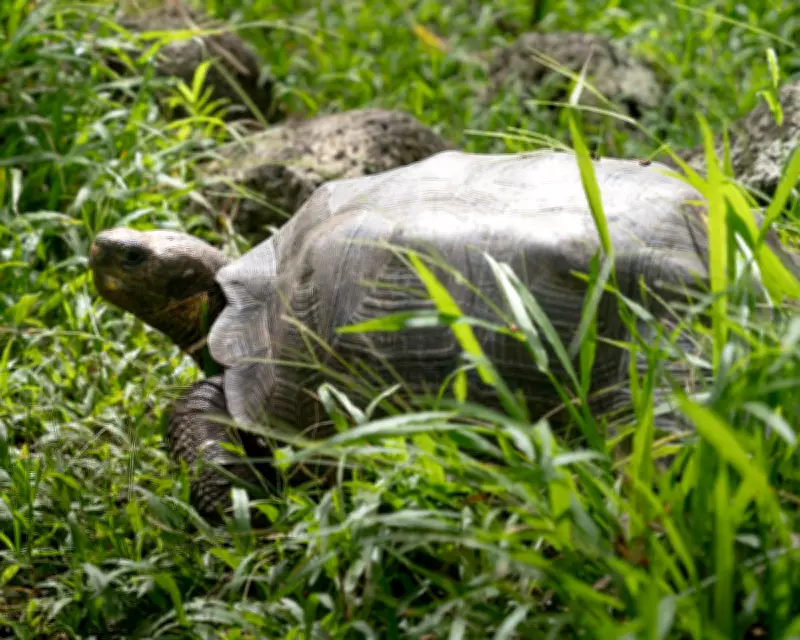
In a twist of fate, a relic population of giant tortoises was discovered on Wolf volcano in the north of Isabela Island in 2008. Genetic analysis revealed that some of these tortoises had partial ancestry from the Floreana subspecies, identifiable by their saddleback-shaped carapaces, distinct from the domed shells of other local tortoises. This discovery provided a crucial genetic link for conservation efforts.

Back-Breeding Programme Success
A captive back-breeding initiative launched in 2017 selected 23 hybrid tortoises with the closest genetic ties to the original Floreana subspecies. The goal was to recreate the subspecies as accurately as possible. By 2025, the programme had produced over 600 hatchlings, with several hundred growing large enough—males can reach nearly 1.5 metres in length—to be returned to their ancestral home.
Ironically, the survival of Floreana tortoise genes on Wolf volcano is attributed to whalers themselves, who sometimes deposited live tortoises on other islands for safekeeping or discarded them to lighten their loads during whaling missions.
Ecological Restoration and Community Impact
The reintroduction is a key component of the Floreana Ecological Restoration Project, a collaboration between the Galápagos national park directorate and various charities, working closely with the island's 160 residents. An invasive species eradication programme, initiated in 2023, successfully removed most rats and feral cats, paving the way for the tortoises' return and leading to improved agricultural harvests for local farmers.
Since the eradication, native species such as the Galapagos rail, ground finches, geckos, lizards, and snails have experienced a resurgence, demonstrating the broader benefits of conservation efforts. Verónica Mora, a community representative, emphasised that this moment signifies a future where conservation and community wellbeing are intertwined, as livelihoods from tourism to fishing depend on a healthy ecosystem.
Role of Giant Tortoises as Keystone Species
Giant tortoises are keystone species, essential for maintaining ecological balance. Their grazing habits help shape vegetation, create micro-habitats like wallows, and disperse native seeds across the island, supporting reptiles, invertebrates, and birds. Rakan Zahawi of the Charles Darwin Foundation noted that habitats are the foundation for biodiversity, and tortoises play a critical role in rebuilding ecological processes that many species rely on.
Hugo Mogollón of Galápagos Conservancy highlighted that by breeding descendants of tortoises with Floreana ancestry, they are restoring the species in a form closely reflecting its original lineage, laying a scientific foundation for future reintroductions of other native species, such as the Floreana mockingbird and racer snake.
Future Prospects and Validation
The next phase of restoration aims to reintroduce additional species, including the vegetarian finch and little vermilion flycatcher. Dr Jen Jones of the Galapagos Conservation Trust described the success as a validation of decades of effort from conservation NGOs, local authorities, researchers, and community champions, underscoring the collaborative nature of this ecological achievement.