Hope Moor Windfarm Battle: UK's Largest Onshore Turbines Spark Yorkshire Dales Clash
A fierce battle has erupted over proposals to construct one of England's tallest windfarms on deep peat moorland overlooking the Yorkshire Dales National Park. The Hope Moor project, featuring turbines with blade tips reaching 200 metres, is set to become the UK's largest onshore windfarm, generating power for approximately 81,000 homes. This conflict exemplifies the nationwide tension between the government's ambitious renewable energy targets and local communities' fears for wildlife, landscape preservation, and rural character.
Visualising the Scale: A Model of Controversy
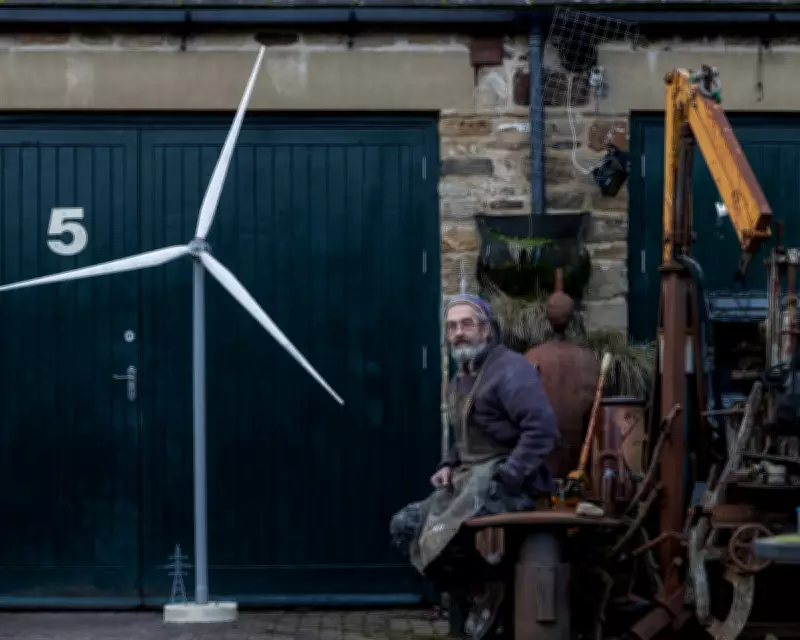
Local sculptor Michael Kusz, residing in Reeth, North Yorkshire, has created a scale model of a proposed Hope Moor turbine to illustrate its immense size. Using model railway 00 gauge, where a person measures just 22mm tall, Kusz's model starkly contrasts the turbine with a scaled electricity pylon. "It's all very well talking about 200m but it's hard to visualise it," Kusz remarked. He expressed profound horror at the project, stating, "I've been on walks where you can have a 360-degree view with nothing man-made and it brings a profound depth of relaxation I've never experienced before. There are so few places in Britain where you can connect to the natural world in its own state."
Government Targets vs. Local Opposition
The Hope Moor windfarm constitutes a key component of the Labour government's renewable energy strategy and planning revolution. Energy Secretary Ed Miliband recently announced contracts for 157 new solar farms, 28 onshore windfarms, eight offshore windfarms, and three tidal projects. Together with earlier offshore announcements, these initiatives aim to supply clean power to 16 million homes. Labour lifted the "ban" on onshore windfarms in 2024, with Hope Moor's 100MW capacity dwarfing other approved projects like the 20MW Imerys site in Cornwall.

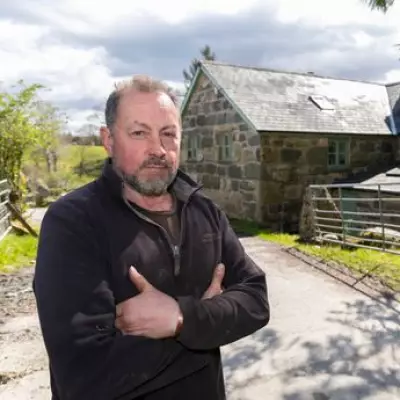
However, local residents vehemently oppose the scale and location. Simon Thompson, a caravan park owner in Newsham, criticised the logic: "The fact they are digging up peat to save carbon emissions is ridiculous. The size is ridiculous. The location next to the Yorkshire Dales national park is ridiculous. It just doesn't make sense." The moorland, though outside protected national parks, is designated by Natural England as blanket bog, a priority conservation habitat with extensive deep peat areas exceeding 30cm.
Community Concerns and Historical Context
In the village of Barningham, County Durham, opposition coalesces around a coffee table book produced by the late Sir Anthony Milbank, celebrating the moor's rich wildlife, including breeding curlew, nightjars, rare black grouse, and hen harriers. His son, Sir Edward Milbank, stands to profit from the windfarm planned by Fred. Olsen Renewables. Residents Suzy and Tim Wilson, who moved to Barningham three years ago, described the area as "paradise" and "heaven," emphasising their desire to share its natural beauty.
Locals question the project's designation as a Nationally Significant Infrastructure Project (NSIP), which transfers planning authority from local councils to the national Planning Inspectorate, with Miliband having final say. This contrasts with a 1999 high court rejection of 54m turbines on the same moorland, where a judge upheld a planning inspector's conclusion that the area's "special character" would be "seriously harmed."
Economic Incentives and Environmental Assessments
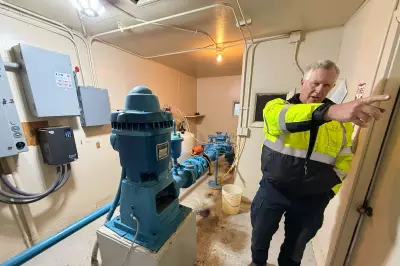
Hope Moor promises £500,000 annually to the local community for 30 years, but opponents like Christine Gonsalves, a Labour voter, argue, "It's as if everybody is motivated by money. The people who live here aren't necessarily motivated by money. They are motivated by nature and the countryside." Concerns extend beyond aesthetics to include access roads, pylon and cable routes, impacts on pristine water supplies, and noise and flicker from turbines.

Local academic researcher Steve Myers conducted a sightlines analysis indicating turbines will be widely visible from the Yorkshire Dales and even the Lake District in clear weather. Hope Moor's spokesperson assured that "these factors will be assessed comprehensively through a detailed, robust, evidence-led environmental impact assessment (EIA)," with public consultations scheduled later this year. However, Myers fears scoping decisions may precede community input.
A National Precedent in the Making
Kelly Wyness, senior project manager for Hope Moor, stated, "Hope Moor windfarm is a proposal to strengthen energy security by delivering home-grown renewable power. It will provide long-term investment in the land and the traditional practices that have shaped this landscape for generations." Yet, for residents like Simon Thompson, the mere prospect of the windfarm has already diminished their enjoyment of the moors, where he once walked to clear his mind but now finds it dominated by thoughts of the development.
This clash at Hope Moor is poised to be repeated across the UK as the government drives toward generating 95% of electricity from low-carbon sources by 2030, highlighting the delicate balance between renewable energy progress and preserving cherished natural landscapes.