A remarkable collaboration between marine conservationists and space technology is shedding light on the resilience of injured sea turtles. In Florida, a three-limbed Kemp's ridley sea turtle is now being tracked at sea by satellite, marking a significant step in understanding how amputees adapt to life in the wild.
Rehabilitation and Release of Amelie
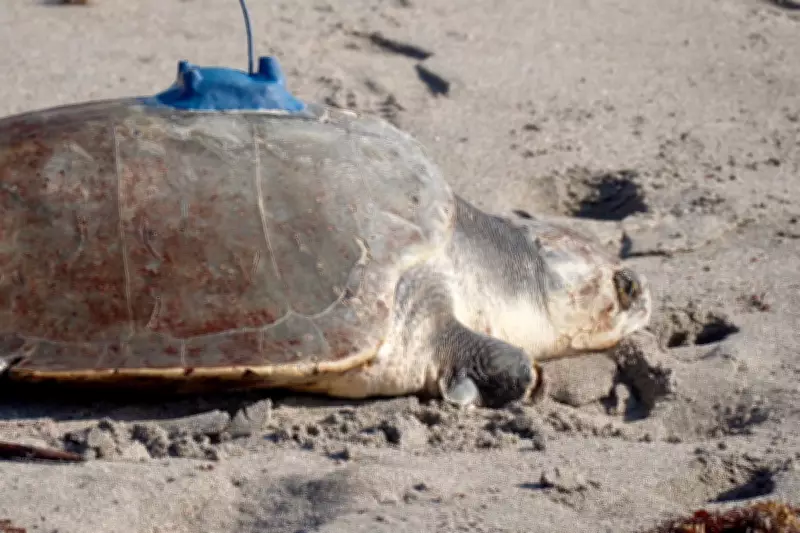
The veterinary staff at the Loggerhead Marinelife Center in Florida is leveraging satellite tracking devices, in partnership with the Smithsonian Conservation Biology Institute, to monitor rehabilitated animals. Their focus is particularly on amputees, like Amelie, a Kemp's ridley sea turtle who lost her right forelimb to a predator, likely a shark.
Amelie was rescued seven weeks earlier by the Inwater Research Group in Port St. Lucie, Florida, after suffering a traumatic amputation. She underwent surgery to clean and close the wound and received treatment for pneumonia while recovering in a tank at the center. When veterinarians deemed her healthy enough for release, they attached a tracking device to her shell.

Tracking Insights and Population Contributions
On Wednesday, Amelie was taken to the beach for her highly anticipated release. She paused for about 30 seconds before slowly making her way into the Atlantic Ocean, cheered on by onlookers. An ultrasound confirmed that Amelie is developing eggs, adding another layer of importance to tracking her movements, as researchers aim to understand her dive behaviors and migration patterns.
Andy Dehart, the center's president and CEO, noted that Kemp's ridley turtles, the rarest of sea turtle species, are more typically found on Florida's Gulf Coast, making Amelie's treatment especially significant. According to Loggerhead research director Sarah Hirsch, Amelie is the fourth amputee sea turtle being tracked by the center. This includes a three-limbed turtle named Pyari, who has traveled nearly 700 miles since her release in January, as shown by her tracker.
Technology and Data Collection
The satellite tags used in this project feature a saltwater switch that detects when the turtle surfaces to breathe, triggering data transmission to satellites. Their locations appear online after a 24-hour delay, allowing scientists and the public to monitor their journeys. Hirsch emphasized the importance of this research, stating, "We do know that they can be successful in the wild because we have seen them on our nesting beaches, but we really want to understand their dive behaviors, how they’re migrating once they’re back in the wild."
This initiative not only aids in conservation efforts but also provides rewarding insights into the survival of rehabilitated turtles. Hirsch added, "They’ve been through a lot. They’ve gotten a lot of medical care here, and to see them be able to go back out and contribute to the population is really rewarding."