Suzanne Simard's Inspiring Return to Forest Ecology
In 2021, renowned forestry scientist and conservationist Suzanne Simard found herself in a police vehicle, being escorted from a protest site at Fairy Creek on Vancouver Island. Activists were locked in a standoff with the Teal-Jones Group, an industrial logging company, and Simard seized the moment to educate the apprehending officer. With the earnestness characteristic of a Canadian forestry ecologist, she explained, "It takes decades for clearcut forests to stop emitting more carbon than they sequester, and centuries more to recover the sink strength of the original stands. We don't have decades for these forests to recover from clearcutting. In the hundreds of years it takes for a forest to mature, our planet could warm upwards of five degrees celsius." The officer remained unmoved, but for those familiar with Simard's work, her persistence is no surprise.
A Global Icon in Environmental Science
Simard, often described as one part Indiana Jones and one part Mister Rogers, has become a Canadian national treasure and a global environmental icon. Her 2016 TED talk has garnered nearly 6 million views, showcasing her unique ability to speak about trees with profound conviction. When not being removed from protests, she navigates the flames of forest fires in British Columbia's Cariboo Mountains, explores the Haida Gwaii archipelago—dubbed Canada's Galapagos—or studies Indigenous practices in the Amazon. In her TED talk, she recounted a dramatic episode where she sprinted through a forest with syringes filled with radioactive isotopes, pursued by a grizzly bear, in a successful research endeavor.
Groundbreaking Research on Tree Communication
That research propelled Simard to celebrity status, inspiring numerous profile pieces and the character of Patricia in Richard Powers' Pulitzer Prize-winning novel The Overstory. By tracing radioactive particles between trees, Simard's findings revealed that trees engage in continuous exchanges of information and resources through mycorrhizal fungi networks. As she famously stated, "Trees talk. Through back-and-forth conversations, they increase the resilience of the whole community." This work was groundbreaking and resonated intuitively with the public, suggesting that plant life might possess communal self-preservation instincts.

Scientific Backlash and Resilience
However, Simard's ideas sparked intense criticism and scientific backlash. She was accused of anthropomorphising trees by implying they notice and need each other, and that they are governed not just by evolutionary competition but also by intergenerational kinship links. This led to a period of academic difficulty and demoralisation for Simard, challenging her resolve but ultimately strengthening her commitment to her research.
When the Forest Breathes: A Legacy of Renewal
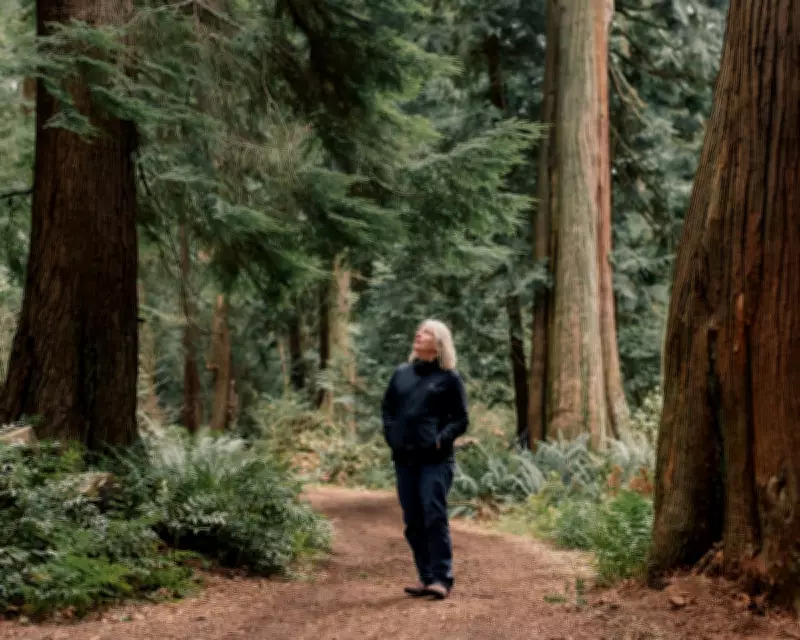
In her new book, When the Forest Breathes, Simard returns to the forests, advancing her research while reflecting on her legacy. She describes how the largest, oldest "mother trees" act as arboreal matriarchs—"energetic keystones" that disperse seeds and nurture new life. Simard herself emerges as a kind of mother tree in this narrative, a deeply rooted figure connecting and supporting the next generation of forest ecologists. Through the Mother Tree Project, she has planted hundreds of thousands of trees across nine forests worldwide, spending long days tending saplings and mentoring younger researchers, including her daughters, Hannah and Nava.
Embracing Activism and Indigenous Knowledge
Simard also writes about her collaborations with Indigenous communities and her shift towards activism, driven by years of witnessing logging outpace cautious scientific recommendations. She concludes that "Science is not enough," prompting her to seek other avenues for conservation and restoration. Books like this one allow her to step beyond the linguistic constraints of peer-reviewed research, offering an interpretation of her findings and the philosophy behind them. She embraces the poetry inherent in forest work, refusing to shy away from its emotional depth.

A Call to Future Generations
When the Forest Breathes features an extensive acknowledgments section, highlighting the many who have supported Simard on her unique path. The book serves as an invitation for others to follow in her footsteps or forge their own trails in ecology. As Simard emphasises, no mother tree tends the understory alone, underscoring the importance of community and collaboration in environmental stewardship.