Search for Escaped Wolf in South Korea Enters Fourth Day as Efforts Hindered by AI Image Confusion
Search teams are using thermal cameras to track the animal and hope to lure it with recordings of howling. Shahana Yasmin Saturday 11 April 2026 14:08 BST
A wolf that escaped from a zoo in the South Korean city of Daejeon remains on the loose after more than four days, with authorities struggling to track it amid bad weather and a surge of false sightings.
Escape and Initial Search Efforts
The two-year-old male wolf, named Neukgu, broke out of its enclosure at O-World around 9.15am on Wednesday by digging under a fence, zoo officials said. Born in January 2024 and weighing between 30kg and 35kg, the animal was discovered missing during a pre-opening inspection, with CCTV later confirming how it escaped.

Authorities launched a search the same morning, deploying more than 300 personnel. Drones equipped with thermal imaging cameras were brought in, but an official from the Daejeon fire headquarters told Agence France-Presse they “had to pull them back due to the ongoing rain”. In the first 24 hours, Neukgu was detected multiple times in wooded hills near the zoo, including a confirmed sighting at about 1.30am on Thursday captured on thermal imaging cameras, according to Chosun Biz.
Authorities divided the surrounding area into five sectors, formed human perimeters, and installed traps and baited cages.
Complications from Weather and False Reports
However, the search has been complicated by worsening weather and a flood of inaccurate reports. Rain and fog limited visibility and disrupted aerial searches, while more than 100 sightings reported to police and fire authorities were later found to be false or based on doctored or AI-generated images. “There are many unverified reports, so we plan to dispatch teams only after confirmation by veterinarians and experts,” fire authorities said.
One reported sighting roughly 23km away in Cheongju prompted an hour-long search that found no trace. Officials now believe the wolf remains in the wooded hills around O-World, particularly near Mount Bomun, guided by its homing instinct. Authorities have also said the wolf may be hiding in a self-dug burrow, noting that he had previously shown similar behaviour while inside its enclosure.
New Tactics and Conservation Significance
The zoo has since broadcast recorded howls from the wolf’s pack and replayed routine visitor announcements the animal had heard since birth in an attempt to lure it back, reported The Korea Herald. Search teams have also shifted tactics, placing traps and waiting for the animal to return rather than pursuing it. “Wolves are pack animals, so it will likely try to return to its group. If chased too aggressively, it may perceive it as a threat and go further into hiding out of fear,” experts told Korea JoongAng Daily.
Neukgu is part of a programme to restore the Korean wolf, a subspecies classified as a Class I endangered species and considered functionally extinct in the wild in South Korea, according to the Korea JoongAng Daily. The animals were reintroduced using wolves imported from Russia in 2008, after the last known wild wolf on the peninsula died in 1997.
Concerns Over Wolf's Condition and AI Image Fallout
Concerns have grown over Neukgu’s condition, with officials stating he last ate two chickens just before the escape and may now be hungry and stressed. A search authority official told The Asia Business Daily that Neukgu would have trouble looking for food since he was raised in captivity. However, officials said that if the wolf is able to find water, he could survive for up to two weeks.
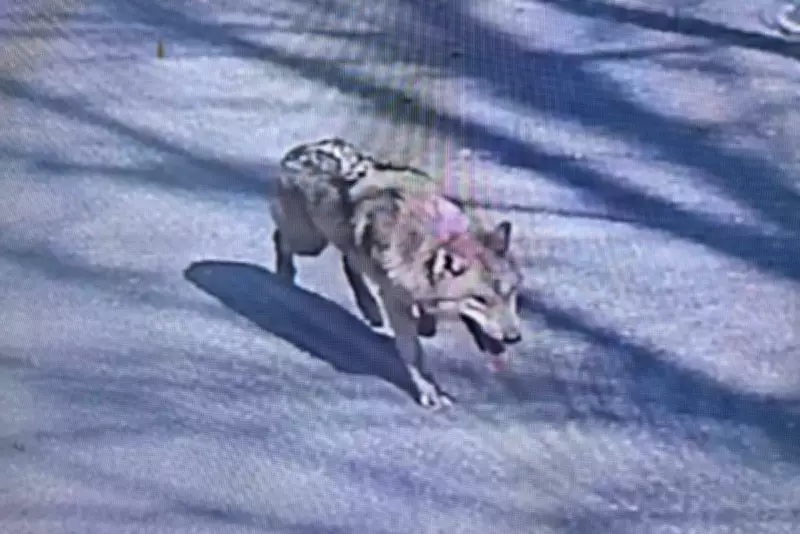
The search has also been hindered by the circulation of fake, AI-generated images, including one that authorities themselves initially helped spread. A photo that began circulating on social media on Wednesday appeared to show the escaped wolf on a city street and was picked up by officials at an on-site situation room. After consulting zoo staff, the Daejeon Fire Department shared the image with media outlets and the city government, which then issued a public safety alert stating that the wolf had been seen in an urban area.

The alert triggered panic among residents, with parents rushing to collect children from a nearby primary school, overwhelming staff and contributing to its closure the following day. Authorities later said it did not match the actual location of the search for the wolf, and on Friday, the fire department stated it was “suspected to be a synthetic image created using AI,” urging the public to delete it. A department source told The Chosun Daily: “At the time, the situation was urgent, so we couldn’t verify further.”
Criticism and Broader Implications
Experts criticised the decision, saying the confusion may have caused authorities to miss a critical 48-hour “golden time” for capture, when the wolf’s homing instinct would have been strongest.
Neukgu’s escape has drawn national attention, including from the South Korean president Lee Jae Myung, who wrote on X: “I hope no human casualties occur, and I pray that Neukgu also returns home safely.” Animal welfare groups have called for Neukgu to be captured alive rather than killed. “One fact that must be made clear is that Neukgu is the fundamental victim of this incident,” Animal Freedom Solidarity said in a statement, adding that “the life of a captive animal may be at stake due to an accident caused by poor management and structural defects.”
Animal rights group Korea Animal Welfare Association brought up a 2018 incident at the same zoo when an escaped puma was shot dead after about four hours, saying: “An accident caused by facility issues must not again lead to the death of an animal.”