Eden Project Celebrates 25 Years as a Cornish Landmark
On the eve of its 25th anniversary, the Eden Project in Cornwall remains a testament to human ingenuity and nature's wonders. Built on the site of a former clay quarry, this non-profit charity has welcomed over 25 million visitors since its inception, generating an impressive £6.8 billion in economic impact for the south-west of England.
A Horticultural Haven
Kim Mackintosh, leader of the horticulture team in the Mediterranean biome, expresses her deep connection to the plants. "Give me a sleeping bag and I'll happily sleep here overnight," she says, examining the yellow furry buds of an Acacia glaucoptera with her loupe. She marvels at the Eucalyptus caesia, describing its pink flowers as a "tutu" with crazy stamens.
Among the most awe-inspiring specimens are three ancient olive trees brought from Portugal, with the oldest estimated to be up to 1,500 years old. "We prune them each year and I'm very aware that I'm one of an incredibly long line of horticulturalists going back to Roman times who've attended to these plants," Mackintosh explains. "It's utterly awesome."

Architectural and Engineering Marvels
The Eden Project's distinctive biomes are maintained by a team of climbers known as "sky monkeys." Jamie Robson, the lead climber, details the challenges of working on the hexagonal pillows made of Teflon-coated ETFE plastic. "The largest pillows are about 8 metres across and they're made of multiple layers, like triple glazing," he says. "Today we had to repair one with tape. It's £400 a roll - the most expensive Sellotape you could ever find."
Heating the biomes has evolved from a biomass boiler to geothermal technology. Augusta Grand, chief executive of Eden Geothermal, explains: "In 2021, engineers drilled more than 5,000 metres into the earth at the quarry's edge. By 2023, Eden was generating up to 800 kilowatts of power from the site."
Rainforest Wonders and Challenges
The largest biome at Eden is 100 metres wide and 55 metres high, housing more than 1,000 varieties of rainforest plants. Temperatures can reach a sweat-inducing 37°C at the canopy. Visitors can cross a wobbly bridge and climb to a lookout platform suspended from the rafters.
Alex Hill, on holiday with his family, describes the experience: "It's a spectacular place: the views, the scenery, we've never been anywhere like this before, it's absolutely stunning." His mother Liz adds: "It was terrifying at first but you've got to do something that challenges you every day."
Horticulturalists face unique challenges in maintaining this artificial ecosystem. John Porter explains their approach to pest control: "We only have a small ecosystem and we try to buy in natural predators for biocontrol purposes, rather than using sprays." Mackintosh adds gory details about parasitic wasps that "eat the hosts from the inside out, organ by organ, keeping them alive as long as possible."
Conservation and Education
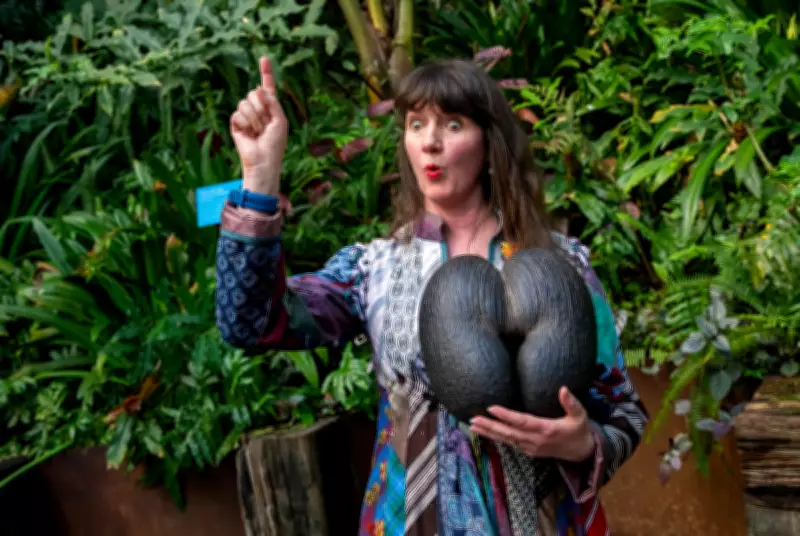
Jenny Crowe, a performer in the Mediterranean biome, delights in showcasing Eden's "bum nut" - a rare, football-sized seed from a coco de mer plant. "We get 50,000 schoolchildren a year through our doors and their faces light up when they see the bum nut!" she says. The plant, endemic to Seychelles, had been going extinct but has been saved by conservationists.
Catherine Cutler, head of horticulture who has worked at Eden since day one, reflects on its mission: "Eden inspires people and reminds them that we're custodians of the planet. I hope the impact is far-reaching and far greater than we'll ever know."
Recent Challenges and Future Prospects
The 25th anniversary comes after a turbulent year in 2025, when Eden reported a 10% drop in visitor numbers, posted pre-tax losses of £3.5 million, and cut 75 jobs. Despite these challenges, the project continues to innovate and inspire.
Tim Smit, co-founder of the Eden Project, still finds wonder in the biomes: "The original aim was to build massive conservatories containing the biggest collection of plants useful to humankind in one place and so, theatrically, create wonder at the sheer abundance of our planet."

His favorite part remains the Core, where a 9-metre ceramic sculpture called Infinity Blue pumps rings of smoke into the air, representing how cyanobacteria pioneered oxygenic photosynthesis 3 billion years ago. "Just thinking about it sends a shiver up my spine," Smit says. "It's the origin of all life revealed."
For young visitors like six-year-old Amelia, the magic is simpler - popping the smoke rings that float through the air, connecting them to ancient natural processes through playful interaction.