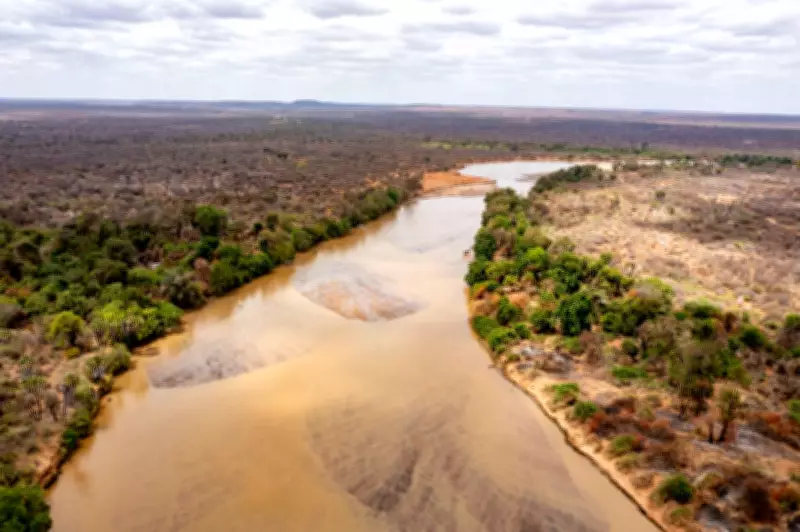
Protecting the Tana River Watershed Secures Nairobi's Water and Livelihoods
Conserving the watershed of Kenya's Tana River and enhancing agricultural methods is proving crucial for securing water supplies and supporting livelihoods amid a changing climate. When David Nyoro, a 67-year-old farmer, partnered with Africa's first water fund in 2017, he received 180 high-value avocado seedlings, transforming his five-acre farm from erosion-prone land to a productive asset.
Previously, his reliance on annual crops left soil exposed, leading to significant erosion and river sedimentation. "We used to lose a lot of topsoil to the river. Such loss of soil nutrients and poor farming practices meant we had less farm produce," Nyoro explains. The avocado trees now yield 70kg annually per tree, boosting his income to nearly 2 million Kenyan shillings (about £11,500). He also introduced cover crops to improve soil health and reduce erosion.
"Improving farming methods and conserving the watershed has helped me to feed and educate my six children, while those in Nairobi and others downstream can enjoy more clean water from these rivers," he adds.

Water Fund Achieves Significant Environmental and Economic Gains
The Upper Tana-Nairobi water fund trust, established in 2015 by the Nature Conservancy (TNC), reports that a decade of protection has secured Nairobi's water supply by delivering over 27 million litres of additional dry-season water daily. The project has achieved a 41% decline in turbidity, saving urban authorities £900,000 in water-treatment costs and demonstrating how nature-based solutions can safeguard urban water systems against climate variability.
The Tana River provides 95% of water for Nairobi's 4.8 million residents and another 5 million people in the basin, while its dams contribute more than 50% of Kenya's hydroelectric capacity. Over 470,000 acres of farms and forests, along with 620 miles of rivers, are now under sustainable management. More than 260,000 farmers have adopted climate-resilient practices, including installing 17,000 water pans that collect over 2 billion litres of rainwater annually.
Expanding Impact Through Reforestation and Job Creation
In addition, the water fund has supported the planting of 5.9 million trees, created over 22,000 green jobs, and generated $118 million in additional income for farmers through fruit, nut, and livestock feed value chains. Inspired by a pioneering model in Quito, Ecuador, this approach has been replicated in over 30 cities worldwide, including 16 in Africa, based on the principle that preventing water problems at the source is cheaper than addressing them downstream.
"This model is delivering what growing African cities need: reliable, affordable water in a changing climate," said Ademola Ajagbe, TNC's regional managing director for Africa. The fund operates as a public-private partnership with entities like Coca-Cola and East African Breweries, raising 25 million shillings initially and now totalling 500 million shillings in an endowment fund managed by GenAfrica.
Farmers Embrace Innovation for Water Security and Income
Fred Kihara, the fund's public and private partnership director, notes that severe water rationing a decade ago led some manufacturers to consider relocating. "We convinced such corporations that for every dollar invested upstream, it was going to generate two dollars to businesses downstream. That business case depends on incentivising farmers within the watershed," he explains.
Near Nyoro's home, 75-year-old Francis Mburu faced water challenges despite living near the Aberdare mountain range. In 2020, he installed a water harvesting structure and a 100,000-litre water pan, using his roof as a catchment area. By terracing his farm, he reduced soil erosion and improved water retention. "I now harvest water from my farm rather than rely on the nearby stream, while the terraces help water seep into the soil with very little silt going into the river. These methods mean more food for me and more clean water downstream," Mburu says.

Community Engagement and Youth Empowerment
Stephen Matu, evicted from Mount Kenya forest in 2009, now farms in Laikipia county with support from the water fund. With two water pans, he and his wife have turned their half-acre farm into a seedbed for fruit trees and vegetables. In Gatura village, John Maina, 31, chose farming over college and adopted water harvesting techniques to avoid pumping from the river, preserving clean water supplies. "I would have ended up in the debased lifestyle had these [water fund] people not helped me improve my farming methods," he says, having trained over 50 young people in modern techniques.
Caroline Wangari, a field extension assistant, emphasizes that the fund's interventions, though not cash-based, catalyze economic benefits. "The last decade has convinced us that providing farmers with water pan liners or tree seedlings has been a catalyst for community economic benefits," she notes. The Upper Tana-Nairobi water fund trust is hailed as a strong example of delivering returns through reduced costs and improved resilience, but it requires increased sustainable financing and deeper community engagement to scale to other Kenyan cities.