Dutch Rain Fences Combat Flooding and Drought in Climate Adaptation Push
In the low-lying Netherlands, where vulnerability to water extremes is a growing concern, housing corporations are pioneering an innovative solution: rainwater storage integrated into garden fences. This approach aims to alleviate pressure on drainage systems during heavy downpours while preserving water for use during increasingly frequent droughts.
Practical Implementation in Veldhoven
Theo and Willy Bolder, residents of Veldhoven, have become local celebrities after their social housing provider, Woonstichting ’thuis, installed the first rain fence in their neighbourhood. "People are all coming round to ask what it costs," said Willy Bolder, highlighting the community's interest in this climate adaptation technology.
Between rattan fence panels, plastic blocks connected to roof drainage can store up to 2,160 litres of water. "The rain is getting heavier and heavier nowadays, and if you have a cloudburst the drainage isn't good and it comes up through the toilet," explained Willy, noting the practical benefits for their paved neighbourhood where water struggles to escape.

Theo added that hotter summers are threatening local ecosystems and quality of life. "I always go fishing in a lake, it's always full of water but last summer it was completely dry," he recalled, emphasising the increasing frequency of hosepipe bans that affect their extensive plant collection.
Climate Context and National Vulnerability
The Netherlands faces significant climate challenges. According to the Royal Netherlands Meteorological Institute KNMI:
- Average temperatures have increased by 1°C since 2000
- Cities are typically 5°C warmer than rural areas
- Weather extremes are becoming more probable
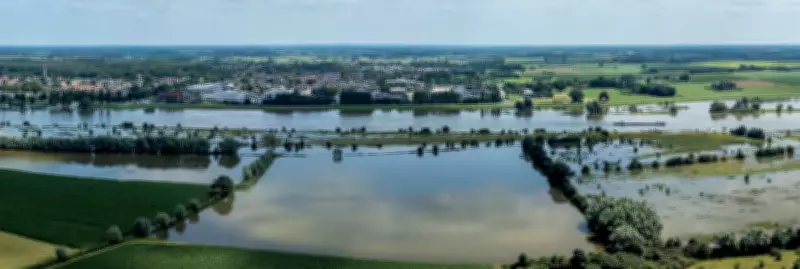
The country was shocked by the 2021 Limburg floods when more than 15cm of rain fell within 48 hours, causing the River Geul to burst its banks. This event highlighted the nation's ongoing vulnerability despite its sophisticated water management history.
Rik Thijs, deputy mayor for public space, greenery and water in Eindhoven, explained the necessity for adaptation. "Our sewage system cannot cope with the rainfall that is coming, and we cannot increase its capacity, so we need to do things differently," he stated. "This means that you need to capture as much as possible on the surface."
Historical Inspiration and Entrepreneurial Innovation
The devastating North Sea flood of 1953, which claimed at least 1,800 lives in Zeeland province, left a lasting impression on Dutch water consciousness. While inspiring the Delta Works sea defences, this disaster also motivated entrepreneur Harry den Hartigh, whose company SunnyRain Solutions installed the Bolders' rain fence system.
"I was born in Zeeland and my parents experienced the flood disaster," said den Hartigh. "My father volunteered to help, to rescue people, and it was an intense experience. The danger and the value of water are in my blood."
His childhood observations of Zeeland's struggles with brackish water for agriculture inspired his rainwater storage concept. "I started thinking about how, in an urban area with not much space, you can collect rainwater in a way that is also attractive: a fence that also serves as a rainwater store."
Urban Planning Perspectives and Practical Benefits
Jannes Willems, assistant professor in urban planning at the University of Amsterdam, emphasised the importance of simple, scalable solutions. "Rainwater harvesting is a very easy fix," he noted. "We have a water system that was built to discharge water as quickly as possible."
With increasing flood events and intense rain bursts overwhelming sewer systems, alternative approaches are essential. "You can better let it infiltrate the soil through green measures, bringing back natural elements in cities. And then, in times of heatwaves, that can lower temperatures," Willems explained.

For property managers, the benefits extend beyond environmental responsibility. Matthijs Hulsbosch, property and sustainability manager at Woonstichting ’thuis, highlighted the protective aspect for their 11,000 homes. "Of course, for the future, it is also part of protecting your own property," he said. "Because if water cannot drain away and it gets into the building, then we have a problem."
"We can fix leaks, but it might be better to prevent them through these kinds of ideas – and save a great deal of money and inconvenience," Hulsbosch added, emphasising the economic rationale behind climate adaptation measures.
Changing Dutch Water Management Philosophy
Willems observed that rain fences represent a philosophical shift in Dutch water management. "Fifty years ago, the Dutch water system was a good example of modernist thinking: being able to master nature," he reflected. "With green infrastructure, the Dutch are trying to rebrand that narrative and bring back a natural state – if we want to."
This approach acknowledges that a country which reclaimed a fifth of its land from the sea cannot always bend nature to its will, particularly in the face of accelerating climate change.
Social Dimensions and Community Impact
Beyond environmental benefits, rain fences may improve community relations. David Hearn, neighbourhood manager for Woonstichting ’thuis, was pleased with the Bolders' participation in the pilot scheme, though he acknowledged social challenges. "Although," he added, "I have had tenants who hated each other so much, they weren't even prepared to accept a free fence."
As the Netherlands continues adapting to climate realities, these innovative rain fences demonstrate how practical solutions can address multiple challenges simultaneously – managing water extremes, protecting property, and potentially strengthening community bonds in the process.