Paris Undergoes Radical Shift from Car Dominance to Cycling Culture
Paris has fundamentally transformed its urban landscape over the past decade, shedding its long-standing reputation as a car-centric city. Under the leadership of outgoing Mayor Anne Hidalgo, the French capital has implemented sweeping changes that prioritise cyclists and pedestrians, leading to measurable improvements in air pollution levels.
A Personal Journey Reflects Broader Change
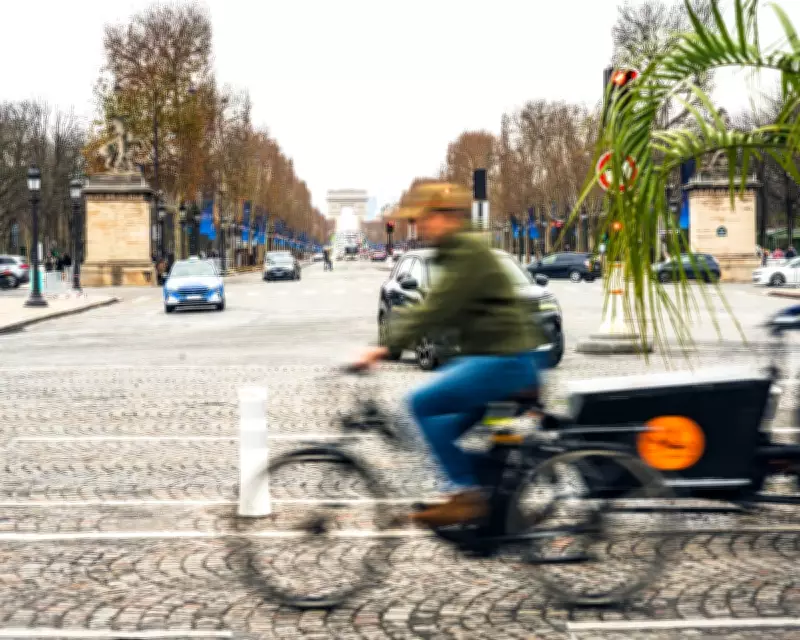
Corentin Roudaut's experience encapsulates this urban revolution. When the IT developer moved to Paris ten years ago, he found cycling too intimidating amidst the bustling traffic. "Cars were everywhere. Cyclists had almost no protection," he recalled. However, once authorities installed segregated bike lanes on Boulevard Voltaire near his 11th arrondissement home, Roudaut returned to two-wheel commuting and never looked back.
Now volunteering with cycling campaign group Paris en Selle, Roudaut has witnessed the city's remarkable transformation firsthand. "It was a process that started slow and really accelerated in the last 10 years," he observed. "At least in some parts of the city, we have a cycle network that is starting to be safe and pretty much complete."

Hidalgo's Ambitious Urban Legacy
Since assuming office in 2014, Mayor Anne Hidalgo has pursued an ambitious agenda to make Paris more livable. Her administration has planted 155,000 trees, created several hundred kilometres of protected bike lanes, pedestrianised 300 school streets, and banned cars from the iconic banks of the Seine. Numerous parking spaces have been converted into green areas and café terraces, fundamentally altering the city's public spaces.
"When people ask me if I have any advice, I say don't be afraid of being ambitious," said Roudaut, who recently hosted German Green politicians studying Paris's success. "Everybody's saying: 'Look at what Paris has done, it's so amazing.'"
Measurable Environmental Progress
The environmental impact has been significant. Paris is among 19 global cities that achieved substantial reductions in toxic air pollutants between 2010 and 2024, according to recent research. While fine-particle pollution decreased more rapidly in Brussels and Warsaw during this period, and nitrogen dioxide levels fell faster in London, Paris's improvements remain noteworthy given its starting point.
Audrey de Nazelle, an environmental epidemiologist at Imperial College London who grew up in Paris, recalls when cycling was so uncommon that "you could go and have coffee together" if you encountered another cyclist. She describes the current changes as "fabulous" while noting that "what's missing in the rest of the world is courage."
Political Resistance and Urban Challenges
Not all Parisians have embraced these changes. Efforts to create safer streets have reduced space for cars, sparking opposition from motorists. Referendums on charging SUV drivers higher parking fees and pedestrianising additional school streets achieved victories with concerningly low voter turnout.
During recent municipal elections, rightwing Les Républicains candidate Rachida Dati criticised what she called "anxiety-inducing" chaos in public spaces, though she stopped short of proposing to reverse core policies. In a recent interview, Hidalgo acknowledged that pedestrianising the Seine riverbanks had been "a tough battle" but noted that "today there are generations of children who have not known cars there."
Structural Advantages and Remaining Barriers
Experts suggest Paris's transformation benefited from unique administrative circumstances. The city's unusually tight boundaries give commuter suburbs less influence over transport policies than in other European capitals. Giulio Mattioli, a transport researcher at the Technical University of Dortmund who previously lived in Paris, observed that "the conditions were there already, you just needed to make some bike lanes and people would use them."

However, significant challenges remain. While central Paris has evolved toward becoming a "15-minute city" where amenities are within walking distance, extensive suburbs remain car-dominated and separated by the busy Boulevard Périphérique ring road. Jean-Louis Missika, a former deputy mayor who served under Hidalgo and her predecessor, argues that transforming this 35-kilometre motorway is essential for creating a truly post-car metropolis.
Broader European Context
Paris's transformation occurs within a complex European landscape. Many cities experienced cycling booms during the COVID-19 pandemic but now face setbacks amid political shifts to the right and conspiracy theories targeting urban planning concepts like 15-minute cities. Berlin, which recently opened a new urban motorway section and voted to remove speed limits on major streets, still maintains a higher cycling share than Paris.
As Hidalgo concludes her 12-year tenure, her efforts to reimagine urban mobility have established Paris as a reference point for progressive European cities, even as national governments in some countries retreat from green policies. The city's journey from car dominance to cycling prominence demonstrates both the possibilities and political challenges of urban transformation in the 21st century.