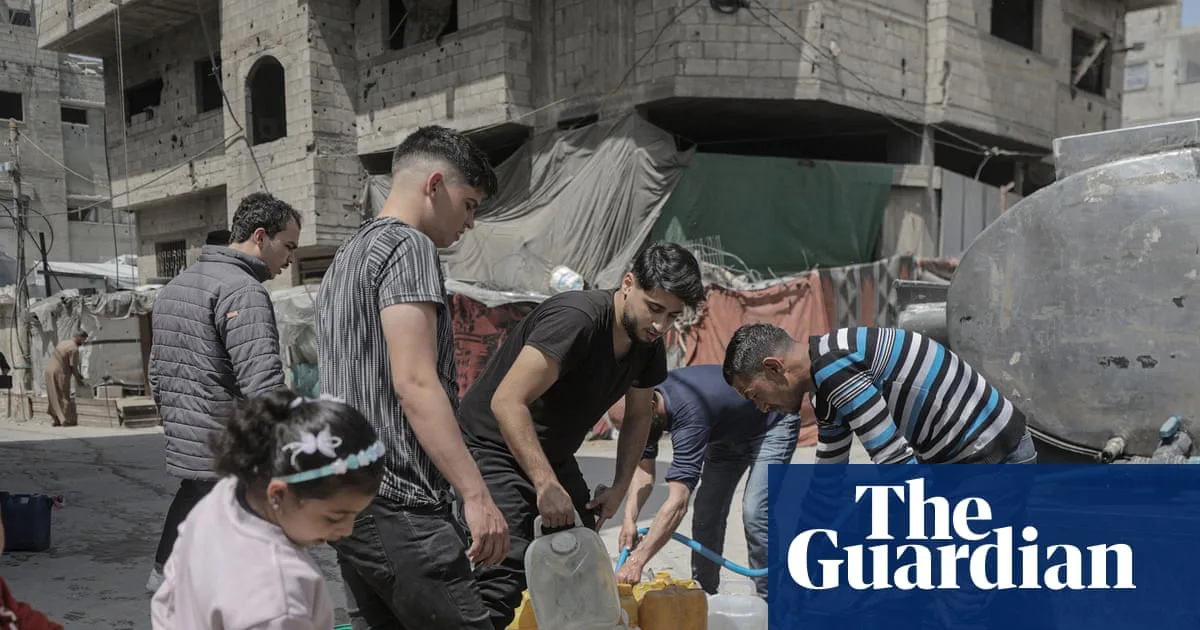
Israeli forces in Gaza have killed a water engineer and two drivers who transported water to displaced families over four days in mid-April, exacerbating severe shortages of clean water that are fuelling the spread of preventable diseases, according to reports.
Israeli limits on the shipment of soap, washing powder and other hygiene products into Gaza have forced prices up, adding to the challenge of keeping clean and avoiding infection in overcrowded shelters and tent encampments. Over more than two and a half years of war, Israeli attacks have destroyed most of Gaza’s civilian infrastructure, including networks that provided clean water and removed and treated sewage.
“Since the beginning of the war, we have lost about 19 workers from water facilities who were carrying out repair and distribution work,” said Omar Shatat, deputy director of Gaza’s coastal municipalities water utility. “Targeting has become part of the operational reality.” The most recent attack was a strike on al-Zein well in northern Gaza last Monday, killing one, injuring four and causing extensive structural damage to a critical water source serving the surrounding population.

Four days earlier, Israeli forces shot dead two drivers working for Unicef at the main water collection point for northern Gaza. Two others were injured in the attack, which Unicef said threatened humanitarian networks bringing clean water to hundreds of thousands of people. Across Gaza, the average daily supply is only 7 litres of drinking water and 16 litres of domestic water, Unicef said, and many people do not have access to even the minimum 6 litres a day of clean drinking water.
The price of soap and other cleaning supplies has doubled over the last month. “A 7kg pack of laundry detergent has risen from 50 shekels to 100 shekels or more,” said shopkeeper Anwar al-Maghribi. Laureline Lasserre of Médecins Sans Frontières said people were getting sick because they could not access clean water and basic sanitation. “No clean water, no soap, overcrowded living conditions; this is the root cause of a huge proportion of what we treat every day,” she said.
Displaced families report severe shortages. Omar Saada, a father of four in Khan Younis, said one water truck served more than 50 families, forcing them to queue from 6am. “It sometimes causes intestinal infections and stomach pain due to contamination, but we are forced to drink it because it is the only water available,” he said.