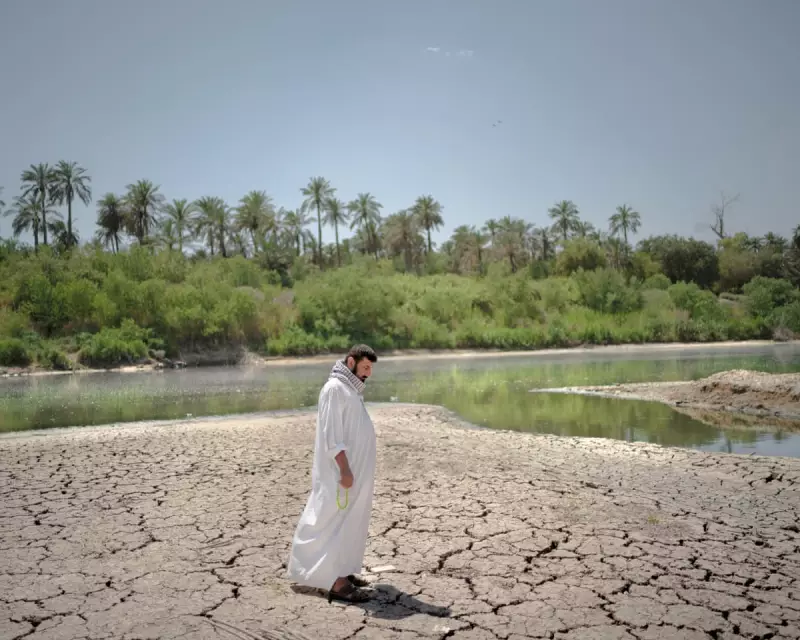
On the cracked, parched earth beside the Diyala River, a farmer surveys a dire scene. The waterway near his home has turned stagnant and toxic, now unfit even for his livestock. This image encapsulates a growing catastrophe unfolding across Iraq, where the legendary Tigris River faces an existential threat from pollution and drastic depletion.
A Faith Flowing with the River
For Sheikh Nidham Kreidi al-Sabahi, a 68-year-old leader of the ancient Mandaean religion, the crisis strikes at the heart of his spiritual existence. As a Mandaean, he must use water from a flowing river for all rituals, including drinking. He has never fallen ill from Tigris water, believing its motion purifies it. "No water, no life," states Sheikh Nidham, who lives in Amarah, southern Iraq.
Mandaeans, whose homeland in Iraq spans over a thousand years, centre their faith on water. Every major life event requires ritual purification in the river, from marriage ceremonies to final cleansing before death. "For our religion, the importance of water is like air," explains Sheikh Nidham, linking water directly to creation itself.

The Sources of a Gathering Crisis
The Tigris, one of Mesopotamia's twin rivers that fostered the dawn of civilisation, now sustains an estimated 18 million Iraqis. It provides water for irrigation, industry, power, and drinking. However, its health has deteriorated for decades.
The decline began in earnest when US-led forces targeted water infrastructure during Operation Desert Storm in 1991. With treatment plants destroyed, sewage flooded the waterways. Sanctions and ongoing conflict have prevented a full recovery. Today, only 30% of urban households and a mere 1.7% in rural areas are connected to sewage treatment.
Pollution now comes from multiple sources:
- Municipal and medical waste.
- Agricultural runoff containing fertilisers and pesticides.
- Industrial discharges, including from the oil sector.
A 2022 study found water quality in Baghdad was "poor" or "very poor," and in 2018, over 118,000 people in Basra were hospitalised after drinking contaminated water.
A River Running Dry
Compounding the pollution is a dramatic loss of water volume. In the past 30 years, Turkey has constructed major dams on the Tigris, reducing flow to Baghdad by 33%. Iran has also diverted water from shared tributaries. Within Iraq, agriculture consumes at least 85% of surface water, often inefficiently.
The climate crisis intensifies the strain. Iraq has seen a 30% decline in precipitation and is enduring its worst drought in a century. Demand is projected to outstrip supply by 2035. Last summer, the Tigris was so shallow people could walk across it.
Salman Khairalla, founder of the NGO Humat Dijlah, warns that less water means a higher concentration of pollutants, creating a vicious cycle of degradation.
A Controversial Deal and an Uncertain Future
In November, the Iraqi government signed a preliminary agreement with Turkey, dubbed an "oil-for-water" accord. It proposes joint action on pollution, modern irrigation, and water governance, with Turkish companies undertaking projects funded by Iraqi oil. The Iraqi foreign ministry hailed it as a landmark deal.
However, the agreement has faced fierce criticism. Experts, activists, and the public question its lack of detail, fear it cedes control of water resources to Ankara, and note it is not legally binding. Former water resources minister Mohsen al-Shammari dismissed it as "election propaganda," noting it was signed just nine days before Iraq's general election.
For the Mandaean community, the stakes could not be higher. Their global population is between 60,000 and 100,000, with fewer than 10,000 remaining in Iraq. Many have already fled abroad or moved to Kurdistan. A dying Tigris may force the final exodus of this ancient faith from its historic homeland, severing a spiritual link that has endured for millennia.