The ambitious Wallis Annenberg Wildlife Crossing in California, touted as the world's largest such structure, is grappling with significant delays and a ballooning budget, now estimated at $114 million. Originally announced by Governor Gavin Newsom in 2022 with a projected cost of $93 million, the project has faced multiple setbacks, pushing its completion date to Fall 2026, nine months behind the initial end-of-2025 target.
Funding and Construction Challenges
Governor Newsom initially pledged over $50 million toward the crossing, which is designed to span the 10-lane US 101 highway, reconnecting protected lands between the Santa Monica Mountains and the Sierra Madre Range. In February, his office secured an additional $18.8 million through the California Transportation Commission, bringing state contributions to approximately $77 million, with the remainder covered by private donors.
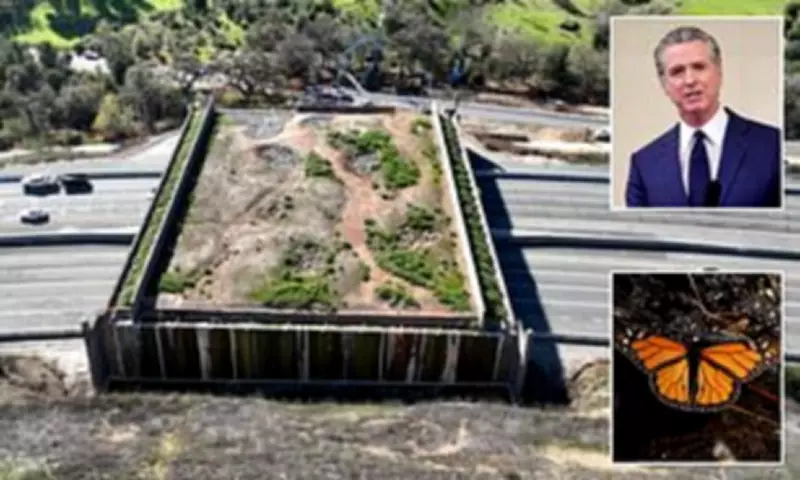
However, aerial photographs reveal a half-completed structure, with the main framework erected but not yet connected to the ground, rendering it inaccessible to wildlife. The crossing, intended for use by animals ranging from butterflies to bears, currently features mounds of dirt, pathways, and greenery to mimic natural terrain, but construction remains ongoing.

Reasons for Delays and Cost Increases
According to reports from The Los Angeles Times, the price hike stems from multiple factors, including increased equipment costs due to wildfires and tariffs. Additionally, the project experienced delays in 2022 and 2023 because of record rainfall, further complicating timelines.
Construction, which began last summer, still requires extensive work, such as moving overhead power lines underground and drilling 70-foot holes to be filled with concrete for support. The shoulders of the bridge, which will link both sides, are currently under development.
Governor's Vision and Future Plans
In a February press release, Governor Newsom described the crossing as an 'ambitious project' that bridges conservation and urban development. He emphasized its role in enhancing safety for both Los Angeles wildlife and drivers on US 101, aiming to foster coexistence for generations to come.
Despite the challenges, the governor's office remains optimistic, predicting completion by Fall 2026. Meanwhile, Save LA Cougars, an organization involved in the construction, is seeking to raise $6 million for habitat maintenance, even though the project itself is fully funded to completion.
The Daily Mail has reached out to the Governor's Office for further comment on the ongoing issues.