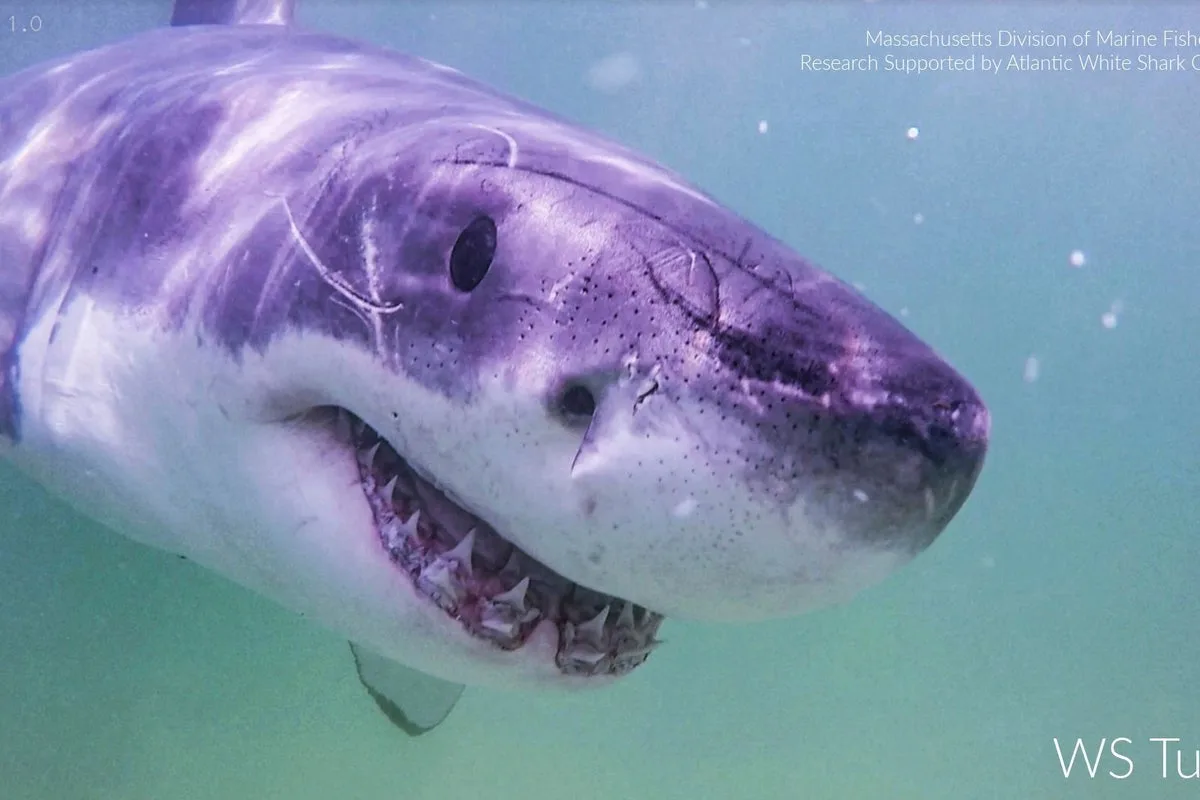
Shark teeth may lose their cutting edge as oceans become more acidic, new research warns. Scientists in Germany say rising carbon dioxide levels could erode the very weapons that predators rely on for survival.
Researchers at Heinrich Heine University Düsseldorf incubated discarded teeth from Blacktip reef sharks in seawater at different pH levels for eight weeks. At today's average ocean pH of 8.1, the teeth remained intact but suffered visible surface cracks, holes, root corrosion and structural weakening when exposed to more acidic water reflecting levels expected by the year 2300.
“Shark teeth, despite being composed of highly mineralised phosphates, are still vulnerable to corrosion under future ocean acidification scenarios,” said study lead author Maximilian Baum. “They are highly developed weapons built for cutting flesh, not resisting ocean acid. Our results show just how vulnerable even nature’s sharpest weapons can be.”

Ocean acidification occurs as the seas absorb carbon dioxide produced by human activities like burning fossil fuels, lowering their pH levels. The study notes that by 2300, the global average is expected to drop from 8.1 to around 7.3, making the water almost 10 times more acidic than it is today. Acidification is known to weaken corals, dissolve the shells of molluscs, and interfere with the ability of crustaceans to form exoskeletons.
Researchers argue that while sharks are famed for shedding and regrowing teeth, microscopic damage from acidifying seas may still pose long-term risks by altering their hunting efficiency. If acidification compromises their ability to bite effectively, it could make it harder for sharks to catch fast or tough prey. While they can replace teeth, doing so more often or under harsher conditions could cost energy that might otherwise go into growth or reproduction.
Many shark species are already in decline. According to the IUCN Red List, more than one-third of sharks and rays are threatened with extinction, largely due to overfishing, bycatch, and habitat loss. Sharks are apex predators and play a crucial role in keeping marine ecosystems balanced.