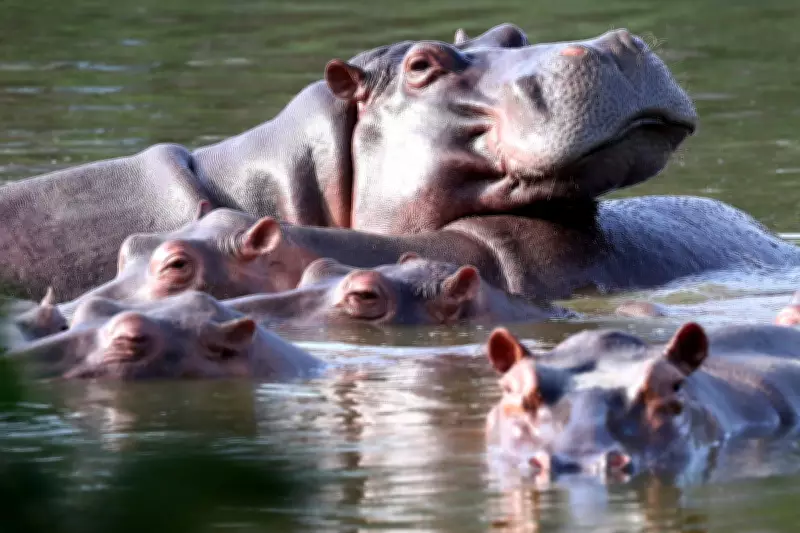
Colombian authorities have sanctioned a controversial plan to cull dozens of hippopotamuses that are roaming wild in the country's central region. This decision follows years of unsuccessful and costly attempts to manage the growing population of these large mammals, which are descendants of animals originally imported by the infamous drug lord Pablo Escobar.
Environmental Justification for the Cull
Environment Minister Irene Vélez announced that the government has authorised the measure, stating that up to 80 hippos will be targeted. She explained that previous methods, including surgical sterilisation and relocation to zoos, have proven both expensive and ineffective in controlling their numbers. "If we don't do this we will not be able to control the population," Vélez asserted. "We have to take this action to preserve our ecosystems."
Origins of Colombia's Unique Hippo Population
Colombia holds the distinction of being the only nation outside Africa with a wild hippo population. These animals trace their lineage back to four hippos brought to the country during the 1980s by Pablo Escobar. The notorious narcotics trafficker established a private zoo at his sprawling Hacienda Nápoles ranch in the Magdalena River valley, which featured a private airstrip and served as his rural retreat.

A study conducted by Colombia's National University estimated that approximately 170 hippos were living freely in the country as of 2022. Recently, sightings have occurred more than 100 kilometres north of the original ranch location, indicating significant territorial expansion.
Threats to Local Communities and Wildlife
Environmental officials report that the hippos present a direct danger to villagers who encounter them on farms and in rivers. Furthermore, they compete aggressively with indigenous species, such as the vulnerable river manatee, for crucial resources including food and habitat space.
Tourist Attraction and Economic Paradox
Despite the ecological challenges, the hippos have paradoxically become a significant tourist draw. Local residents near Hacienda Nápoles now offer guided hippo-spotting tours and sell a variety of hippo-themed souvenirs. The ranch itself, confiscated by the government following Escobar's downfall, now operates as a theme park complete with swimming pools, water slides, and a zoo housing several other African species, with the hippos remaining a primary attraction.
Animal Welfare Opposition and Historical Context
Animal rights activists in Colombia have consistently voiced strong opposition to any proposals involving the killing of the hippos. They argue that the animals deserve protection and that resorting to lethal measures sets a damaging precedent for a nation still healing from decades of internal armed conflict.
Failed Population Control Efforts
Over the past twelve years, spanning three different presidential administrations, Colombia has attempted to neuter some of the hippos to curb population growth. These initiatives have been severely limited in scope due to the exorbitant costs and considerable risks associated with capturing and performing surgery on such large, dangerous animals.
Additionally, repatriating the hippos to their native African habitats is deemed unfeasible. This is primarily because the Colombian population originates from a very limited genetic pool and could potentially carry diseases that might threaten African ecosystems.
The government has not yet specified an exact commencement date for the hunting operations, but Minister Vélez's announcement signals a decisive, albeit contentious, shift in strategy to address what has become a unique and complex environmental management issue.