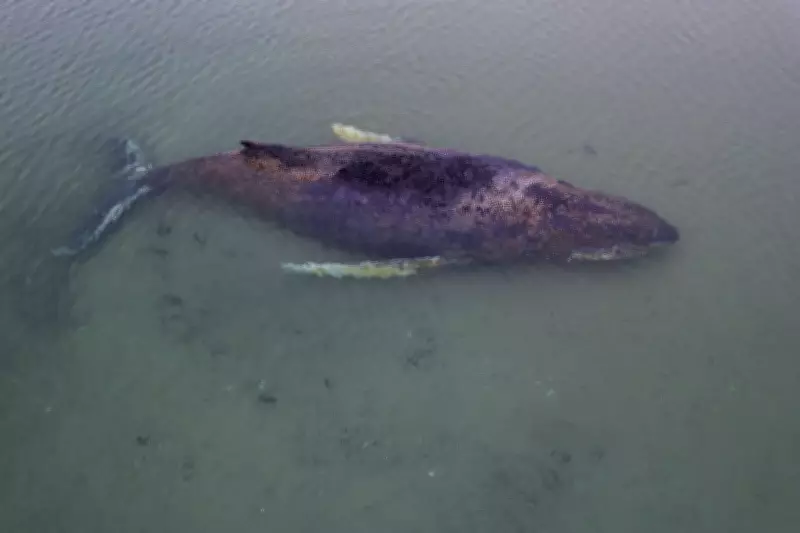
A humpback whale trapped in shallow waters off the Baltic coast of northern Germany has broken free following an extraordinary and painstaking rescue operation that lasted more than seventy-six hours. Rescuers had been racing against time to save the life of the thirty-three-foot-long mammal, drafting in coastguards and police in an urgent mission that was livestreamed from Timmendorfer Strand, a popular resort in Schleswig-Holstein.
Initial Discovery and Dire Prognosis
Weak and disoriented, the animal was first spotted by members of the public on Monday, stuck on a sandbank with rope and net hanging from its mouth. Marine biologist Robert Marc Lehmann, who was the first to enter the water to examine the humpback, gave it a mere 0.1 percent chance of survival earlier in the week. He stressed that the whale was in the worst possible situation, highlighting the severity of its predicament.
Failed Rescue Attempts and Environmental Challenges
Numerous rescue attempts initially failed to coach the whale back toward deeper water. Coastguard and fire department boats were sent to create large waves, alas without success. Drones were also dispatched to check on the condition of the whale, which weighs about fifteen tonnes, and to monitor its position from above. What made the operation even more challenging was that the Baltic Sea lacks strong tides, which would have given the stranded animal the necessary push to free itself. Any attempts to drag it back to deeper water could have led to serious injuries.

Lehmann told reporters on Thursday that the whale was visibly suffering but remained reactive. He had previously noted that it was in poor health and had not eaten in a long time, adding to concerns about its survival prospects.
Breakthrough with Mechanical Intervention
Eventually, two diggers were deployed to create a channel for the whale to escape. Shortly after 7 p.m., the whale suddenly started to move, giving hope to the teams on site and the onlookers who had gathered at the beach to observe the operation. However, rescuers' attempts to encourage it to swim further into the Baltic Sea were met with motionlessness, and fears mounted that it was going to die.
Nature's Timely Intervention
Crews withdrew about an hour and a half later after last-ditch efforts to save the animal. Then, in a dramatic twist, Mother Nature intervened. Sebastian Stoll, coordinator at the scene, told BILD that strong winds had pushed water into Lubeck Bay during the night, raising levels by half a metre. By the early hours of this morning, the humpback was no longer stranded and was found one thousand feet off the coast.
Relief and Ongoing Concerns
Mayor of Timmendorfer Strand, Sven Partheil-Bohnke, expressed his relief that the mammal was now safe. He said, I am simply happy, as reported by German broadcaster NDR. I think all the rescuers were pleased that all their digging had paid off. But Lehmann cautioned that this was only a small step in the right direction, emphasizing that the whale would only be at home again if it reached the Atlantic Ocean, some six hundred nautical miles away.
Continued Escort and Long Journey Ahead
The whale is now under a police escort with support from as many as six vessels, including the coastguard and the German Life Saving Association. Rescuers are trying to guide it as it makes its way through Danish waters and out into the North Sea, before finally passing into the Atlantic Ocean. This ongoing effort underscores the complexity and dedication involved in marine rescue operations, as the team works to ensure the whale's safe return to its natural habitat.