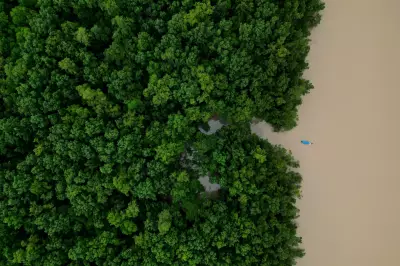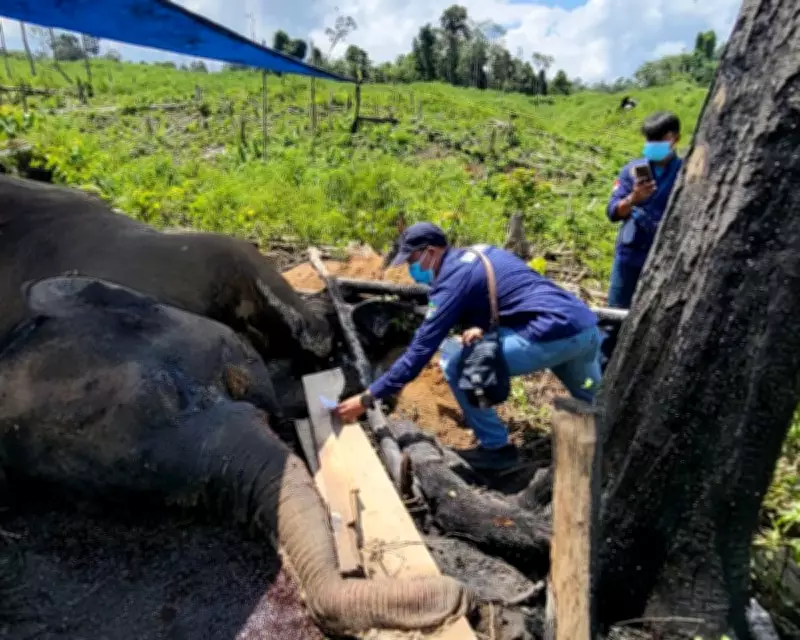
The recent deaths of a mother Sumatran elephant and her calf in Indonesia's Bengkulu province remain under investigation, but conservationists point to the animal's rapidly shrinking habitat as a primary concern. The two elephants were discovered lying side by side in a production forest area in southern Sumatra, their tusks intact, suggesting poaching was not the cause.
Critical Population Decline
The Sumatran elephant (Elephas Maximus Sumatranus) has suffered severe population declines due to deforestation for agriculture and palm oil plantations. Listed as critically endangered by the IUCN since 2011, the species now faces an even bleaker outlook in the Seblat region of Bengkulu. According to Ali Akbar, director of the environmental organisation Kanopi Hijau Indonesia, the population in Seblat Landscape has dropped from 100-150 individuals in 2010 to no more than 50 today.
Human-Elephant Conflict on the Rise
As their habitat shrinks, elephants increasingly encroach on farmland and settlements, leading to more frequent conflicts. Prof Burhanuddin Masyud from Bandung Technology Institute estimates that at least 1,585 hectares of elephant habitat were lost between January 2024 and October 2025. He describes the situation as a direct attack on the ecology and reproduction of elephants, with long-term multilayered impacts.

In response to the latest deaths, two logging companies' permits have been revoked, according to local media. The Bengkulu Natural Resources Conservation Agency (BKSDA) has begun using thermal-imaging drones to monitor the elephant population and its habitat. The head of BKSDA, Agung Nugroho, states that the goal is to establish the extent of the population and implement both short-term habitat protection through encroachment control and long-term measures through improved governance.
Thermal Drone Monitoring
The drones scanned several square kilometres before dawn, detecting elephants by their body heat against the cooler air. Footprints and dung trails one to three days old helped identify key locations. The scanning revealed a group of 17 elephants, including four calves. Agung Nugroho emphasises the importance of calves for genetic sustainability: a small group size or absence of calves signals an unhealthy population requiring further strategies such as habitat corridors or translocation.
Wahdi Azmi from the Indonesia Elephant Conservation Forum notes that thermal drones can help understand distribution, movement patterns, and potential conflicts, but warns that monitoring alone is insufficient if the root causes are not addressed.
Calls for Sanctuary and Community Engagement
Egi Ade Saputra, director of Genesis Bengkulu, urges action to restore the landscape by revoking logging and palm oil licences and establishing the Seblat area as a wildlife sanctuary. This month, forestry minister Raja Juli Antoni pledged to strengthen conservation efforts, including an early warning system for communities near elephant habitats and mapping of corridors to connect fragmented areas.
Harry Siswoyo, a wildlife conservationist at Lingkar Inisiatif Indonesia, stresses the importance of involving local communities, many of whom view elephants as pests. Changing these perceptions through campaigns is crucial for long-term success.
Elephants are ecosystem engineers: their movements shape forest structure, create pathways, and aid seed dispersal. As Wahdi Azmi states, elephant conservation is about maintaining ecological systems that support humanity's future. Moving from conflict resolution to building landscapes where humans and elephants coexist safely requires science, policy, technology, and sustained community engagement.