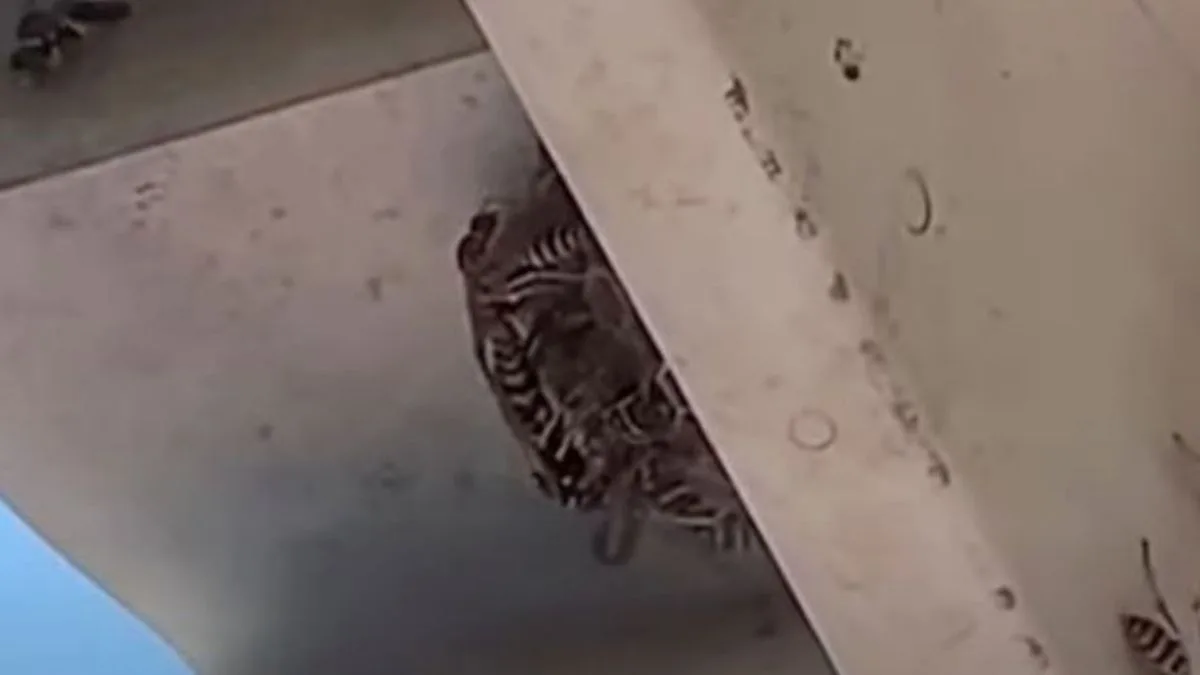
Four wasp nests contaminated with radioactive material have been discovered at the Savannah River Site (SRS) in South Carolina, a former Cold War nuclear weapons facility. The first nest was found in early July near a nuclear waste tank, prompting workers to exterminate the wasps and dispose of the nest as radioactive waste. Three more contaminated nests have since been found elsewhere on the 310-square-mile site.
While the US Department of Energy (DOE) insists there is no danger to workers or the public, scientists warn the discovery could indicate that radioactive contaminants are leaking from containment. Dr Timothy Mousseau, a biologist at the University of South Carolina, told the New York Times that the nests suggest contaminants have spread across the area and are not fully encased. He noted that wasps rarely travel more than 100 yards from their nests, so public exposure is unlikely, but the insects act as 'accidental messengers' of a deeper problem.
One theory is that the wasps used pulp from contaminated wood or debris to build their nests, inadvertently incorporating radioactive material. This is not the first sign of wildlife contamination at SRS: in 2017, radioactive bird droppings were found on a building roof, indicating birds may carry material beyond the site.

The SRS, once used to produce plutonium and tritium for nuclear weapons, has been undergoing environmental cleanup since 1996. The DOE expects the process to continue until 2065. Edwin Deshong, DOE manager for the Savannah River office, confirmed the nests had 'very low levels' of radioactive contamination and posed no health risk.