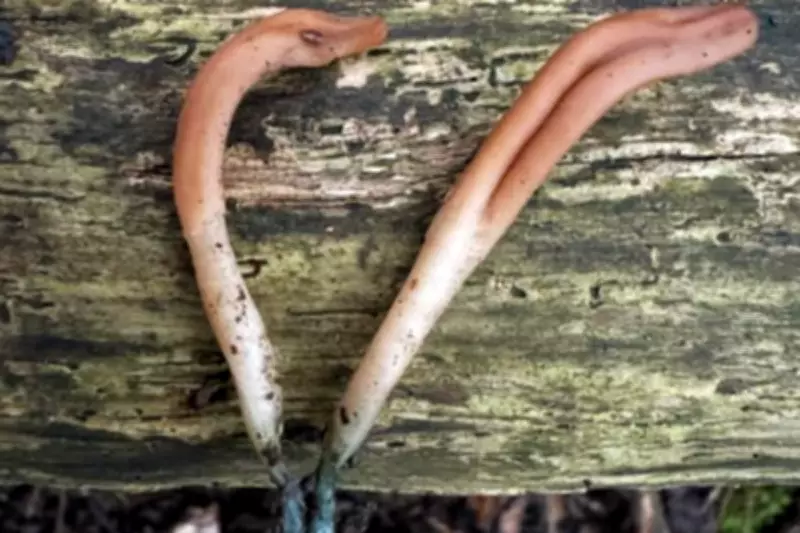
A rare fungus known as the Blue-Based Earthtongue (Microglossum cyanobasis) has been identified in the United Kingdom for the very first time, nearly 20 years after it was initially recognised in Spain. This significant discovery was made by fungi enthusiast Liz Frost, who spotted the species within the ancient woodland of Kingley Vale National Nature Reserve in West Sussex.
Details of the Discovery
The Blue-Based Earthtongue is a small and delicate fungus, standing at a height of only 4.5 to 5 centimetres. It is particularly notable for its distinctive bluish-green base, which gives the species its name. To confirm its identity, DNA sequencing was conducted, revealing a 99 per cent match with the original Spanish sample, thereby solidifying its classification as the same species.
Ecological Importance
Experts emphasise that the presence of the Earthtongue fungus is a strong indicator of high-quality, undisturbed environments. It thrives in nutrient-poor grasslands and long-established woodland soils, which are characteristic of well-preserved natural habitats. This discovery underscores the ecological importance of Kingley Vale National Nature Reserve, suggesting that the area maintains pristine conditions conducive to rare and sensitive species.

The fungus is easily overlooked due to its small size and effective camouflage, making such finds particularly noteworthy for conservation efforts. Its detection highlights the value of ongoing biodiversity surveys and the role of amateur enthusiasts in contributing to scientific knowledge.