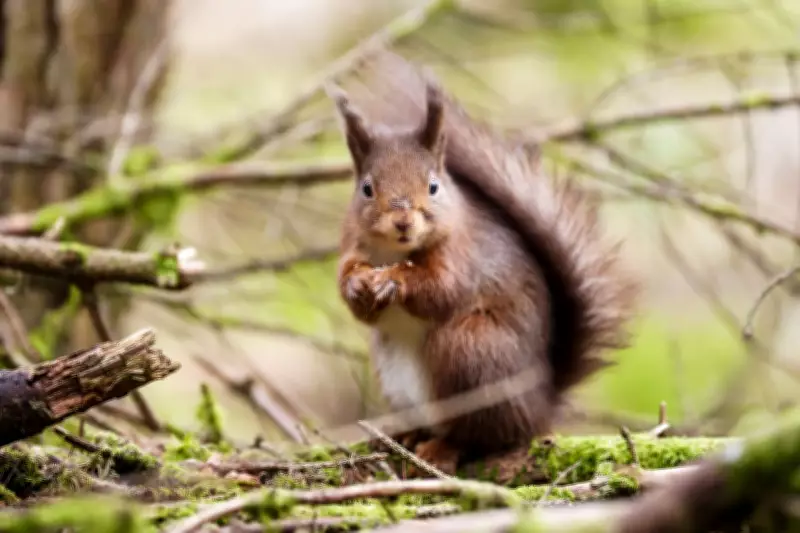
Petition Calls for Red Squirrel Emoji to Highlight Endangered UK Mammal
A significant campaign has been launched urging the creation of a red squirrel emoji, aiming to bolster conservation efforts for one of Britain's most threatened native mammals. The initiative, spearheaded by The Wildlife Trusts and Center Parcs, argues that introducing the animal into the digital emoji library could enhance its visibility in everyday conversations, particularly among younger audiences who frequently communicate via digital platforms.
Alarming Lack of Awareness Among UK Children
A recent Censuswide survey commissioned by Center Parcs, which polled 2,000 UK children aged eight to fifteen, uncovered concerning gaps in knowledge about red squirrels. The findings revealed that 34% of respondents did not know red squirrels inhabit the UK, while 33% were unaware or uncertain about the species' endangered status in the country.
Furthermore, 10% of children struggled to correctly identify a red squirrel from photographs, often mistaking it for the more prevalent grey squirrel. Additionally, a striking 40% of British children incorrectly believed that red squirrels can still be seen widespread across the UK, highlighting a critical disconnect between perception and reality.

Drastic Population Decline and Conservation Challenges
Immortalised in Beatrix Potter's classic tale The Tale of Squirrel Nutkin and long celebrated as a symbol of Britain's woodlands, the reddish-brown squirrel has experienced a rapid population collapse in recent decades. Estimates indicate numbers have plummeted from approximately 3.5 million in the UK just 150 years ago to as low as 120,000 today, with red squirrels now confined to a limited number of locations.
This severe decline is primarily driven by habitat loss and the introduction of invasive grey squirrels from North America, which carry the deadly squirrelpox virus. Currently, there is no dedicated squirrel emoji available globally for smartphone users, only the North American chipmunk emoji. Intriguingly, the Censuswide survey found that 86% of British children mistakenly believe the chipmunk emoji represents a squirrel.
Conservation Efforts and Digital Advocacy
Richard Watson, ecology and biodiversity manager at Center Parcs, emphasised the potential impact of digital representation, stating: "If children can instantly recognise animals through the modern language of emojis they use every day, that visibility can spark curiosity, conversation, and, ultimately, care." Center Parcs manages its Whinfell Forest site in Cumbria as a red squirrel conservation area, reporting that sustained efforts have led to a steady population increase over twenty-five years, with a notable 24% rise in sightings recorded in 2025.
Through the petition, Center Parcs hopes to garner public support for the emoji's creation, ensuring these cherished animals are not lost from Britain's public consciousness or its natural landscapes. Heather Harris, red squirrel recovery network communications officer at The Wildlife Trust for Lancashire, Manchester and North Merseyside, added: "Spotting the russet fur and fluffy ear tufts of a red squirrel as it dashes through the trees is an absolute delight, and one that more of us should have the chance to enjoy."
Harris warned: "Sadly, populations of this incredible animal have radically decreased in recent decades, and we could lose red squirrels completely in the next ten years without significant conservation and awareness-raising efforts. That's why, along with partners and local communities, we're working hard to plant trees, conduct surveys, and connect fragmented habitat so that all generations can hope to enjoy these beautiful animals in woodlands for years to come."
The petition will be directed towards the Unicode Consortium, the organisation responsible for standardising emojis across phones, apps, and platforms worldwide, marking a novel approach to wildlife preservation in the digital age.