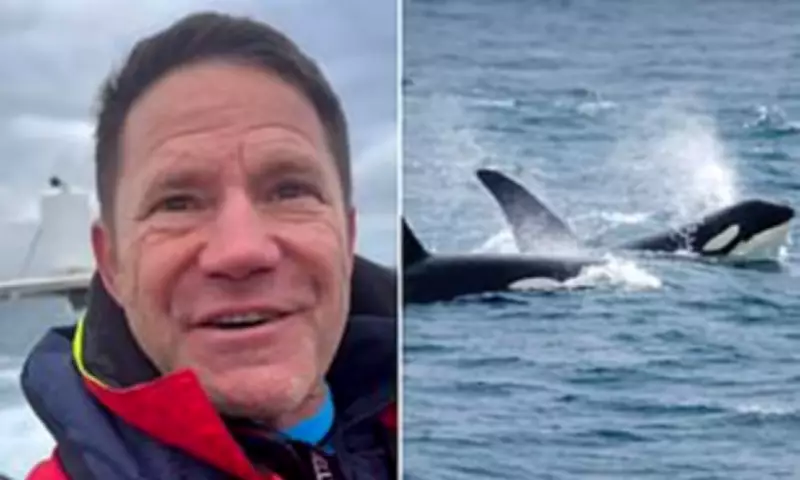
In a breathtaking wildlife encounter, renowned explorer Steve Backshall came face-to-face with two of the United Kingdom's last resident killer whales off the rugged coast of Cornwall. This remarkable sighting, which Backshall hailed as one of his 'greatest British wildlife moments', unfolded as the orcas glided harmoniously through the choppy waves more than 500 miles from their usual home in Scotland.
A Moment of Pure Elation
Footage from the scene captures the wind rustling against the microphone as Backshall, clad in a bright red coat and life jacket, alternates between observing the majestic animals and delivering ecstatic commentary. From his boat, the wildlife star could be heard shouting with glee: 'They're there. They're right in front of us. Unbelievable.'
Backshall elaborated on the significance of the sighting, stating: 'Orca in Cornish seas and not just any Orca but the two best known individuals in the Northern hemisphere. Just absolute rock stars, celebrities, icons of the Orca world and right here on our doorstep. Unreal.'

The Iconic Duo: John Coe and Aquarius
The male killer whales, named John Coe and Aquarius, were filmed by Backshall off Lizard Point in Cornwall. These brothers, believed to be in their sixties, are the last surviving members of the West Coast Community, a pod that once numbered ten orcas in the 1990s and was frequently spotted around the UK and Ireland.
Backshall, a Cornish local who lives near Land's End with his wife, Olympic rower Helen Glover, and their children, had been tipped off about the orcas' presence by filmmaker George Morris, who is working on a documentary about the pair.
Rare Sightings and Public Amazement
Joe Jones, who rushed to Lizard Point to glimpse the orcas, initially thought the sighting might be an 'April's fool' joke due to its rarity. He recounted: 'I went to Lizard Point where they passed much closer and gave much better views. I have seen Fin, Minke and Humpback whales over the last few years around the Lizard, but this was by far the best and an absolute pleasure to have seen them.'
The brothers were last spotted off the west coast of Cornwall in May 2021, making this recent encounter a significant event for wildlife enthusiasts. A spokesperson from the Cornwall Wildlife Trust described the sighting as 'big wildlife news', noting: 'Orca were seen off the Lizard in Cornwall. Another rare sighting in our changing seas.'
The Tragic Decline of the West Coast Community
The pod, which Backshall described as 'stalking our shores for a long time', has dwindled from ten members to just John Coe and Aquarius. Researchers, who have studied them for over 50 years, attribute the pod's demise to pollution, particularly polychlorinated biphenyls (PCBs), which have prevented the killer whales from reproducing for more than a quarter of a century.
Tests on a female orca named Lulu, found dead entangled in fishing lines in the Inner Hebrides in 2016, revealed PCB levels of 950mg/kg—more than 100 times the 9mg/kg threshold known to harm marine mammals. This high concentration of PCBs, despite the chemicals being banned in the 1970s, likely caused infertility in the pod.
The pod's tenth original member, Moon, was found dead on the Isle of Lewis in 2008. Researchers are now striving to uncover what happened to the missing orcas, who have not been spotted for over nine years despite their close bonds.
Broader Context and Conservation Concerns
Scotland's seas are also home to a semi-resident group of orcas that travel from Iceland each spring to raise calves and hunt. Killer whales can travel up to 100 miles in a day, with those around Shetland and Orkney known to hunt seals, while others target harbour porpoises.
This encounter underscores the fragile state of the UK's killer whale population and highlights ongoing conservation challenges. Backshall's thrilling moment serves as a poignant reminder of the beauty and vulnerability of these iconic marine creatures in British waters.