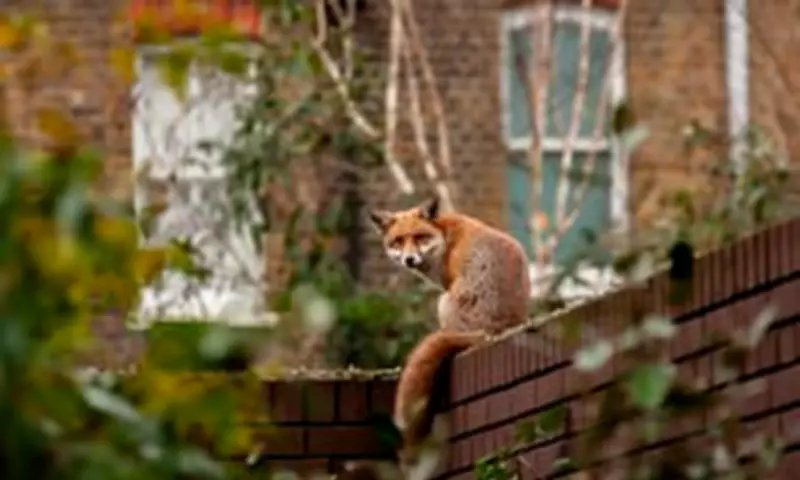
The Unholy Howl of Urban Foxes: A British Nighttime Nuisance
The long, wailing shriek is an unholy sound, somewhere between a soul in torment and a celebrity being dunked in maggots by Ant and Dec. At 3am, it drives my dog bonkers. The streets around my home in north Bristol, as in many other cities across the UK, are rife with skulks – groups of foxes. They are fearless, destructive, messy, and very loud.
I happen to like them: watching an inquisitive fox cub nose around my garden at dusk or seeing a bushy male strut along the street at lunchtime as if he is on patrol is a pleasure. But I can appreciate the opposite point of view, particularly when howls set my poodle-cross, Fizzy, barking fit to burst throughout the night.
Why Do Foxes Scream and What Can Be Done?
Fox screams can continue for half an hour, and though the dog will go straight back to sleep once the excitement is over, I do not always find it so easy. What can you do? The temptation is to open a window, fling a boot into the darkness, and bellow: 'Shut up!' – but that will do no good, and in the morning you will only have one boot.

A far worse idea, though one that is sadly acted upon far too often, is to put down poisoned meat to kill them. That is illegal, carrying a sentence of six months in prison plus an unlimited fine for causing 'unnecessary suffering' to a wild animal. This did not deter someone in allotments near my house from laying poison a few years ago. As well as foxes, at least two cats died.
The thought of anyone poisoning an animal makes me seethe. So what can be done to deal with problem foxes, and why do they make that chilling screech? Once you know the reason for a vixen's cry, you might feel differently about it.
Expert Insights on Fox Behaviour and Solutions
I had always assumed it was a mating call – until a neighbour told me confidently this week that it is a sound of a female fox's sheer pain, caused by barbs on the male fox's, or tod's, penis. We are both wrong, in fact. While foxes regularly bark and squeal to communicate, the howling is a female calling to her mate for food, says Graham Le Blond, one of the UK's urban fox experts.
'At this time of year she is calling him to bring food in,' he says. 'She will have given birth to her cubs, normally underneath a garden shed, decking or summer house, and for four weeks her cubs are blind, deaf, and cannot retain their own body heat. So she has got to remain with them.'
Based in London, which has the highest population of urban foxes in Britain, Graham has been fascinated by the animals for half a century, since he was a teenager. As co-founder and director of Fox-A-Gon, he advises on solutions to a range of fox-related problems across Britain – not only noise and mess, but holes in playing fields, chewed cables, discoloured lawns and more.
His methods cause no harm to the animals and, he says, are less expensive than conventional pest control. Non-lethal solutions are also more effective in the long term, because they encourage permanent changes in behaviour.
Urban Fox Survival and Management Strategies
In the countryside foxes can live up to 12 years. But in the city half of all cubs die before they turn one. And during mating season, when males single-mindedly search for females, scores are hit by cars every night. Graham says it is important to understand how foxes survive in the city in order to manage them: 'A fox will have between 80 and 120 gardens as its territory.'
'When a vixen gets pregnant during mating season, in December and January, she will establish multiple homes – four or five permanent ones, plus ten or maybe 15 daytime lie-ups where she can go for shelter and rest in safety.'
'What we normally do is get them out of the one where they are causing a nuisance, and get them to relocate to one of their pre-existing homes. There will be sites such as cemeteries or railway sidings where they will not cause a similar nuisance.'

Using a range of specialist cameras, we are able to inspect down holes and underneath structures, to find and get them out safely. Graham's team then block holes and cavities with galvanised mesh, and fill in the gaps to ensure the animals cannot return. Trapping foxes to relocate them is illegal without a long-term plan to introduce them to a new territory, known as a 'soft release' process. This can take months.
It is also impossible to take them to wildlife sanctuaries, which only accept arrivals that are injured or need medication – not regular, healthy urban foxes.
Effective Deterrents and Common Misconceptions
Another effective method is to lay a scent blocker to mask the scents laid down by foxes to mark their territories, confusing them. This is a harmless deterrent and pet dogs and cats are unbothered because although they too have an instinct to mark their own patches, their lives do not depend on it.
As well as blockers, Graham recommends scent repellents such as strong citronella: 'Humans find it quite pleasant, because we have only four million receptors in our noses. A fox's sense of smell uses 40 million.'
What definitely does not work, despite the folklore, is human urine. 'I have seen it all,' Graham sighs. 'Once, I was called out to a flat shared by six women. They were all peeing in a bucket and pouring it around their shed.'
'At the height of summer, that smell was pretty unpleasant, but it did not keep the foxes away. Nor will curry powder or mirrors.'
Far more effective is a water scarer, a garden-hose device with an infrared beam for a trigger. When it detects movement, it fires 30ft jets of water. Once a fox has suffered a soaking, it quickly learns to stay away.
Fox Intelligence and Urban Adaptations
I am fascinated by how rapidly they learn. In late spring, as the cubs emerge from their dens no bigger than cats, they are wary of everything. Taking Fizzy for her evening walk I will often see half a dozen of them rough and tumbling in gardens and hiding under parked cars. The moment they spot the dog, they are gone.
But within weeks they have learned not to fear her because she is on a lead. She will bark and lunge, but she is unable to chase them – so they just stand and stare a few feet away. They adopt a quizzical, contemptuous air as if to taunt her: 'Look at you, all bark and bluster, and you cannot even run up the street. Pathetic!'
Sneer as they do, they also seem intrigued by us. One night a couple of summers ago my wife and I were woken by a frantic squeaking. At first we thought a cat must have caught a rat – but when we looked out of the back bedroom window, a fox cub was playing with a squeaky dog toy.
He was biting it, tossing it in the air and chasing it, just as Fizzy does. And on the shed roof, looking down, a vixen was watching with maternal pride.
Why Feeding Foxes Is Not Recommended
Though they might occasionally behave like pets, it is vital not to encourage them to become too trusting of people – for humans' sake as well as their own. 'Some people put out food and they will tap on the window to attract the fox to come closer,' says Graham. 'But somebody else who is scared of foxes might also bang on the window, to frighten them away... and they will come closer because they have been conditioned to expect food.'
Foxes will not attack people, but not everyone knows that. And feeding them really is not necessary. A Bristol University study suggests in each fox's territory, there is 341 times more food than it requires. Whatever the other dangers for an urban fox, starvation is not one of them.
City life does affect them in unexpected ways, though. Until recently, cubs would leave their mothers and disperse by the time they were six months old. Now, they will often stay at home with mum well into adulthood, for a year or longer. Apparently Gen Z's desire to live with their parents is a fox thing, too.