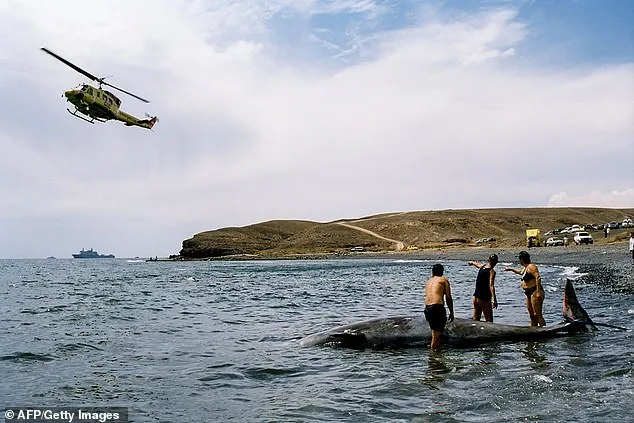
A new study published in the Royal Society journal Proceedings B has revealed that naval sonar causes decompression sickness in beaked whales, leading to strandings. The research, conducted by 21 experts, explains why these whales have been observed beaching themselves after exposure to mid-frequency active sonar (MFAS), used since the 1960s to detect submarines.
Lead researcher Yara Bernaldo de Quiros from the University of Las Palmas de Gran Canaria stated that the fear and stress response triggered by sonar overrides the whales' natural diving instincts. This causes a build-up of nitrogen in the blood, similar to decompression sickness in scuba divers, which can be fatal.
The study found that between 1960 and 2004, there were 121 mass strandings of beaked whales, with at least 40 linked to naval activities. The deadliest event occurred in 2002 in the Canary Islands, where 14 whales stranded within 36 hours during a NATO exercise. Autopsies revealed nitrogen gas bubbles in their veins and haemorrhaging in the brain and other organs.

Whales typically dive for hours by slowing their heart rate and restricting blood flow. However, sonar causes them to swim away vigorously, altering their dive pattern and leading to the bends. The condition forces the whales to beach themselves, often dying days later.