They are often depicted as primitive and uncivilised, but Neanderthal 'dentists' used stone drills to treat cavities 60,000 years ago, a study reveals. Experts have discovered that the ancient species had the knowledge to identify an infected tooth and the skills to drill out the damage.
Oldest Evidence of Dental Treatment
Archaeological discoveries have previously shown that Neanderthals used toothpicks to remove food from their teeth and might have used medicinal plants. However, this new study marks the first time an operation of this kind has been demonstrated outside of our own Homo sapiens species. The researchers, from the Russian Academy of Sciences, said it represents the world's oldest evidence of successful dental treatment.
'Treating a carious (decayed) tooth is not just feeding or guarding someone,' said Dr Ksenia Kolobova, one of the study's authors. 'It requires diagnosing the source of pain, selecting an appropriate tool, performing a painful, invasive action, and persisting despite the patient's discomfort. That is active, targeted medical intervention. It suggests Neanderthals understood cause and effect. This is a cognitive leap beyond instinct.'

The Discovery in Chagyrskaya Cave
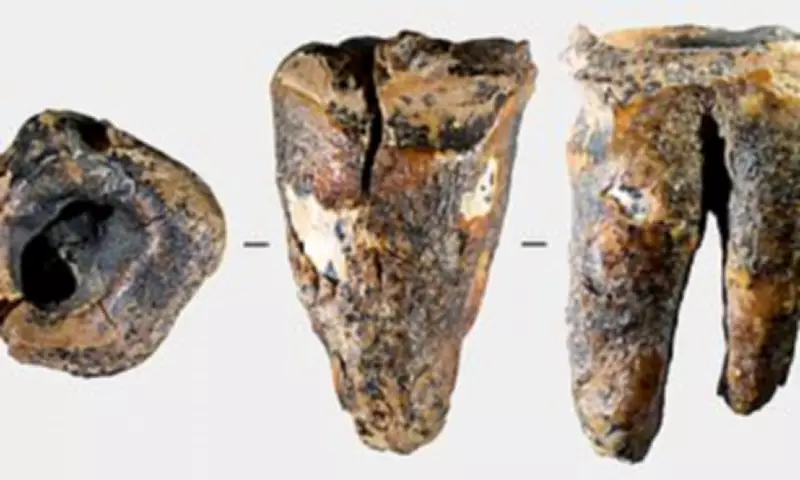
For the new study, published in the journal Plos One, researchers analysed a single molar found in the Chagyrskaya Cave in Russia, dating back around 59,000 years. In the centre of the tooth is a deep hole extending into the pulp cavity, which would have allowed for the removal of decayed tissue. The researchers conducted experiments on three modern human teeth to demonstrate that a hole of the same shape and microscopic grooves can be created by drilling with a stone point similar to tools found in the cave.
'The individual with the infected molar would have been in significant pain, perhaps unable to chew properly, which could lead to malnutrition or infection spreading to the jawbone,' Dr Kolobova explained. 'Another group member, possibly with experience in fine stone tool production, used a small perforator to carefully drill into the tooth. This was not a sterile operating room, but it was a deliberate, goal-oriented act. The mouth is a difficult space to work in; you need good manual dexterity, patience, and a helper who can hold the head still. I think this happened within a close social bond, possibly between family members.'
The Procedure
The operation would likely have been carried out using a tool made of local jasper, a vibrant type of quartz, and without any anaesthetic. The 'dentist' would have carefully twisted the stone into the tooth to create the deep hole. This procedure would have hurt, but it would also have ultimately alleviated the pain of a tooth infection by removing the damaged part of the tooth. It predates the oldest known example of such behaviour by more than 40,000 years.
- The Neanderthal identified a badly infected tooth causing severe pain.
- A sharp stone drill, probably made from jasper, was prepared for the procedure.
- Helpers likely held the patient still while the tooth was treated.
- The 'dentist' drilled into the cavity using careful twisting motions.
- Decayed tissue and exposed pulp were removed to ease the pain.
- Wear marks show the tooth was still used after treatment, meaning the procedure worked temporarily.
Implications for Neanderthal Cognition
'The damage documented on the Neanderthal tooth from Chagyrskaya Cave in Siberia points not only to intentional pulp removal but also to antemortem wear – wear that could only have developed if the individual kept using the tooth while alive,' the researchers said. The archaeologists said the Neanderthal 'dentist' who carried out the operation did so in several stages, indicating that their cognitive abilities were 'remarkably advanced' and, in this respect, comparable to those of Homo sapiens of the time.

'We have known for a very long time that Neanderthals cared for the sick and weak among them,' said author Dr Alisa Zubova. 'At many other sites, researchers have found bone fragments showing well-healed severe injuries and signs of diseases that would have made normal life difficult. Similar cases have also been found for fossils of Homo sapiens. Yet because Neanderthals were long viewed as a more primitive branch of the human family, care for community members during the Middle Paleolithic has been regarded as something exceptional. But as the evidence mounts, it increasingly suggests that Neanderthals treated their sick and weak no differently than modern humans did.'
Lydia Zotkina, who also worked on the study, said: 'What struck me, and continues to strike me, is what an incredibly strong-willed person this Neanderthal must have been. He must have surely understood that although the pain of the procedure was greater than the pain of the inflammation, it was only temporary and had to be endured. To me, this is a stunning example of how archaeological evidence can allow us not just to glimpse a single aspect of past people's lives, but to actually understand what these individuals were like – strong and resilient. Now, every time I go to the dentist, I think about that guy.'
Neanderthal Sophistication
A close relative of modern humans, Neanderthals went extinct around 40,000 years ago. They lived in Africa with early humans for millennia before moving across to Europe around 300,000 years ago. They were later joined by humans, who entered Eurasia around 48,000 years ago. Historically thought to be dim-witted and brutish, a growing body of evidence points to a more sophisticated and multi-talented kind of 'caveman'. It now seems likely that Neanderthals told stories, buried their dead, painted, and even interbred with humans. They used body art such as pigments and beads, and they were the very first artists, with Neanderthal cave art in Spain predating the earliest modern human art by some 20,000 years. They are thought to have hunted on land and done some fishing.