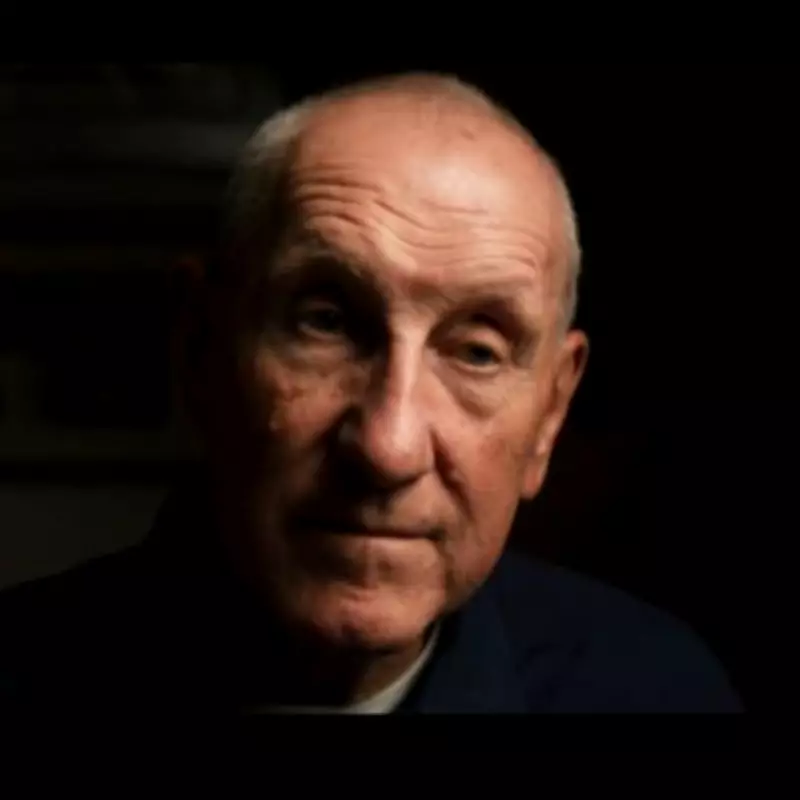
Former England captain Terry Butcher has spoken exclusively to the Mirror about the tragic death of his son Christopher, who suffered from severe post-traumatic stress disorder (PTSD) after serving in the British Army. The 67-year-old football legend, known for his uncompromising style on the pitch, is now using his platform to raise awareness about the hidden wounds of war.
A Father's Grief
Christopher Butcher, the eldest of Terry and Rita Butcher's three sons, served in the Royal Artillery and struggled with PTSD after tours in Iraq and Afghanistan. He died at the family home in east Suffolk in 2016 at the age of 35. An inquest ruled his death was due to an abnormal enlargement of the heart combined with the effect of drugs, against a background of PTSD. The coroner described him as a 'victim of war'.
Terry reveals that grief has become a permanent part of his life. Each night, he pauses outside Christopher's bedroom. 'I always stop at the top of the stairs and say good night to him, just give him a wink and all that sort of thing, because that was the room where he passed away,' he says. When visiting his son's grave, he and his wife hug the stone and say, 'See you at home, son.'

Breaking the Hard Man Myth
Butcher, famed for playing on with a bloodied head in a World Cup qualifier, admits he used to suppress his emotions. 'I was feted as this so-called hard man. You just didn't cry. But I think you have to. It's compulsory. It's part of the process,' he says. He recalls breaking down on a train unexpectedly, illustrating how grief can surface without warning.
One of the hardest aspects is navigating conversations about his children. 'When someone says, 'How many children did you have?' I normally say three sons. And then if they ask what they're all doing now, then you have to come clean and say one passed away. And then that conversation stops, because they don't know what to say.'
Christopher's Struggle
After returning from Iraq, Christopher's condition deteriorated over two to three years. He turned to alcohol and drugs to escape flashbacks and voices in his head, including a sergeant major and a young Iraqi girl. He eventually moved back in with his parents because the strain on his wife became unbearable. Terry describes the unpredictability: 'You didn't know what Chris you were going to get, because PTSD changes your persona sometimes. We got the real Chris sometimes. Most of the time we didn't.'
Family life revolved around managing his condition. Even simple activities like dog walks could be interrupted. Christopher attempted suicide three times. Terry says the NHS lacked specialist military PTSD knowledge, but he holds no grudge against the Ministry of Defence. 'At the start there was a lot of anger because he was let down. But I don't harbour any grudges now.'
Football Memories
Christopher was born while Terry played for Ipswich Town and attended the 1982 World Cup in Spain as a baby. Terry bottle-fed him in the stands after being rested for a match. Later, during Terry's Rangers days, Christopher and his brother Edward would scour Ibrox for dropped coins. Terry laughs at memories of the giant baths becoming 'like a swimming pool for the boys', where they learned to swear from players like Ally McCoist and Alan Brazil.
A New Mission
Since Christopher's death, Terry has found purpose through Combat2Coffee, a veterans' organisation providing mental health support. 'What it has done is give me a mission. All through my career as a footballer there were missions. Survive relegation, win titles, be strong, go to Europe... This is now,' he says. He speaks to veterans, thanking them for their service, while deflecting praise: 'They're the real heroes. I just kicked a ball about.'
The documentary Butcher: Invisible Wounds airs on ITV4 on Sunday, 7th June at 10pm and will be available on ITVX. For support, visit Combat2Coffee at combat2coffee.co.uk or contact Samaritans on 116 123.