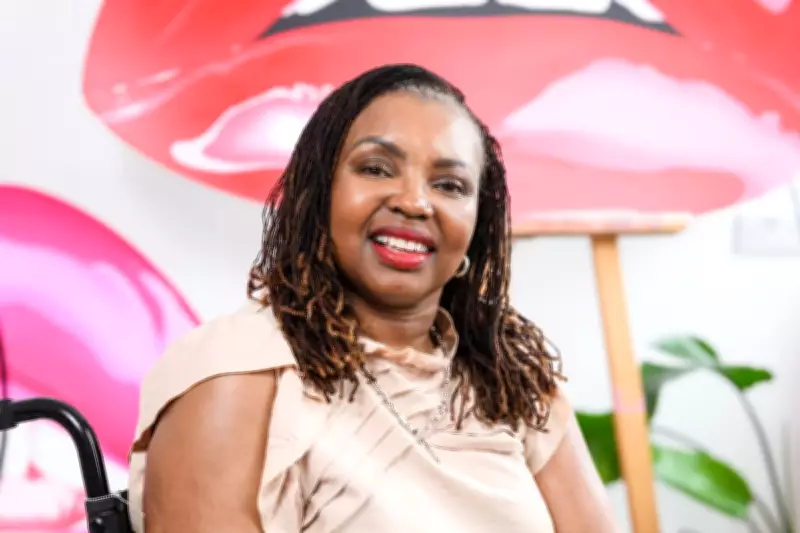
A mother-of-three living with motor neurone disease has remarkably regained the ability to use her own voice through cutting-edge artificial intelligence technology. Yvonne Johnson, aged 58 and residing in north London, received her diagnosis of motor neurone disease nearly six years ago. Over that period, this progressive neurological condition has severely impacted her mobility, strength, and capacity to work, but the most profound loss for her was the ability to speak.
The Emotional Impact of Losing Her Voice
"I used to be the person telling jokes and leading conversations," Ms Johnson explained. "When I lost my speech, it felt like I was still present but often unheard. That reality was incredibly difficult to come to terms with." Motor neurone disease affects the brain and nerves, leading to worsening muscle weakness over months or years. According to the NHS, it is typically life-shortening with no current cure, claiming six lives daily in the UK and offering an average life expectancy of just 18 months post-diagnosis. Approximately 80 percent of individuals with MND experience speech loss.
How AI Technology Recreated Her Voice
Using archived voice notes, personal videos, and old voicemails to capture her unique sound and distinctive accent, the US-based firm ElevenLabs successfully recreated Ms Johnson's voice through AI algorithms. "It's similar to sending a text message, but instead of words on a screen, people can actually hear my voice again," she described. "Right now, you are hearing my voice through AI. How amazing is that? This is my authentic voice—spoken via technology. Regaining communication changes absolutely everything."

The Diagnosis and Personal Journey
Ms Johnson, who previously worked in health and social care, is known for her vibrant and charismatic personality. However, in 2020, she began noticing her speech faltering. Months of extensive tests and several misdiagnoses followed before she received the definitive news in 2021. "I was alone in the hospital when the doctor informed me," she recalled. "I was in complete shock. I asked if I could record what she was saying because I needed proof that it was real."
She eventually shared the diagnosis with her husband of 25 years, Orville, a mental health support worker. "I told him, 'I have MND.' He didn't flinch. He simply said, 'I'm going to look after you. We have our faith, and your disease does not define you—you are still Yvonne.' That moment meant everything to me," she expressed.
Preserving Identity Through Art and Charity
Ms Johnson emphasized that her voice was a crucial part of her identity, and losing it made her feel as if she was "fading away." "That's why hearing my voice again totally blew my mind. I had forgotten how cockney I sounded, and a wave of nostalgia washed over me. I felt torn emotionally—proud of my accent yet deeply emotional about no longer having my original voice," she added.
In a related effort to preserve her personality, Ms Johnson collaborated with portrait artist Sara Pope on a project titled Portrait of a Voice. Her painting raised over £15,000 for the My Name'5 Doddie Foundation, a charity dedicated to funding research for MND treatments. This initiative not only highlights her resilience but also contributes to vital causes supporting others affected by the disease.