Artist's Sudden Speech Loss Uncovers Brain Tumour Diagnosis
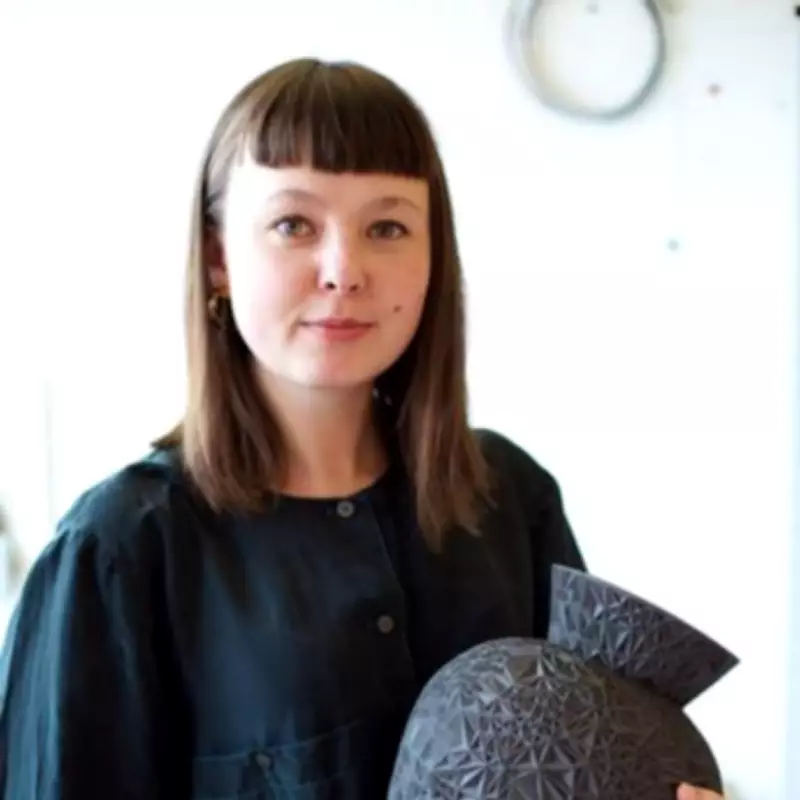
A talented sculptor and ceramacist discovered she was fighting a high-grade brain tumour after abruptly losing her capacity for speech. Leah Jensen, aged 35, had experienced persistent headaches and memory issues for years but dismissed these warning signs as mere fatigue.
The Critical Moment in a London Pub
In 2020, while working a shift at a pub in South East London between COVID-19 lockdowns, Leah initially believed she was suffering from a severe migraine. However, her condition rapidly deteriorated. Her vision became distorted and pixelated, she struggled to comprehend spoken language, and could only utter the word "um" when questioned.
"I had what I thought was a migraine, but it kept getting worse," Leah recalled. "Then I experienced problems with language. I couldn't understand how to read, then I couldn't speak - I could only say 'um'. Then I couldn't understand people speaking, everything sounded like nonsense, so my manager called the ambulance."

Hospital Ordeal During Pandemic Restrictions
Paramedics rushed to the scene and transported Leah to Lewisham Hospital, alerting her partner Mike Clark during the journey. Despite the emergency response, Leah remained convinced her symptoms were temporary and felt embarrassed about the perceived overreaction.
"I felt mortified, I was really embarrassed in the ambulance," she admitted. "I waited in A&E for six hours by myself because it was COVID. Mike had to wait outside. I kept trying to leave because I was tired and it was mayhem."
After scans revealed an abnormality on her brain, medical staff initially suspected a stroke, but Leah's age made this diagnosis unlikely. At 3am, a nurse delivered the devastating news: "We think you've got a brain tumour." At that stage, they didn't yet know it was cancerous.
Delayed Surgery and Cancer Confirmation
Leah understood she needed surgery to remove the mass, but pandemic-related delays forced her to wait 250 agonizing days before the operation could proceed. A week after the tumour removal, she received the definitive diagnosis: Grade Three anaplastic astrocytoma, a high-grade brain cancer.
"Grade 4 is the worst, so what I had was a high-grade cancer," Leah explained. "Mine was slow growing. I'd been getting headaches for years but I didn't think much of it - you think you're tired or you've not drunk enough water."
She reflected on earlier symptoms that might have been warning signs: "I've had a really bad memory for a long time and difficulty recognising people. There are all these things I'd been experiencing that could be signs, but the brain is complicated."
Intensive Treatment and Ongoing Monitoring
Following tumour removal, Leah underwent six weeks of radiotherapy administered five times weekly, followed by a full year of oral chemotherapy. The radiotherapy proved particularly gruelling, requiring her head to be immobilized in a custom-made cage during treatment.
"The radiotherapy was horrific," Leah described. "When it was going on, I think it was fine, but the two weeks after it finished, it was just awful. Then I did a year of chemo, but it wasn't intravenous - it was medicine that you swallow. That was horrible, I lost a big patch of hair on my head where the radiotherapy happened."
Medical teams continue to monitor an ambiguous area on her scans that could be blood, scar tissue, or residual concern. Her monitoring has progressed from MRI scans every three months to every six months, unless symptoms reappear.
Survival Statistics and Emotional Impact
Leah's doctors avoid using the term "remission," preferring to describe her condition as "stable." The statistics for high-grade brain tumours are sobering: only 13 percent of patients survive five years past diagnosis.
"The statistics are pretty bleak," Leah acknowledged. "That's why I guess they don't want to say 'you're in remission'. I'm getting near five years, but I don't think cancer has a clock."

Creative Response and Fertility Concerns
Throughout her medical journey, Leah documented her experience in a hand-stitched fabric diary titled 'Brain Tumour Book - Artist Leah Jensen's Journey Through Cancer Diagnosis to Treatment,' which will be displayed at The Fitzrovia Chapel.
"It all feels like a weird dream that happened," she reflected. "In hospital, I spent all the time I could sewing, because making things and being creative is what I've always done. It's been a bit of a safety blanket."
The treatment significantly impacted her fertility, requiring egg preservation. "I had to have my eggs collected because the chemo and radiation really affect your fertility," she revealed. "In July, I will run out of funding to keep them frozen. It's free for a while on the NHS; it's this whole big thing."
Fundraising for Brain Tumour Research
Leah is now raising funds for the Brain Tumour Charity, an organization of profound personal significance. She highlights the disproportionate impact of brain tumours compared to research funding allocation.
"Brain tumours kill more adults under 40 and children than any other cancer in the UK," she emphasized, "but they only receive three percent of funding on cancer research. This Crowdfunder is to pay for the exhibition and raise money for the charity."
Her fabric diary serves as both artistic expression and medical documentation. "It's a bit like a sketchbook but also a diary," she explained. "I stitched things in there that I thought, and put in pictures I'd taken at the hospital. I had a suspicion I wouldn't remember things very well, and I wanted to use this to remember."