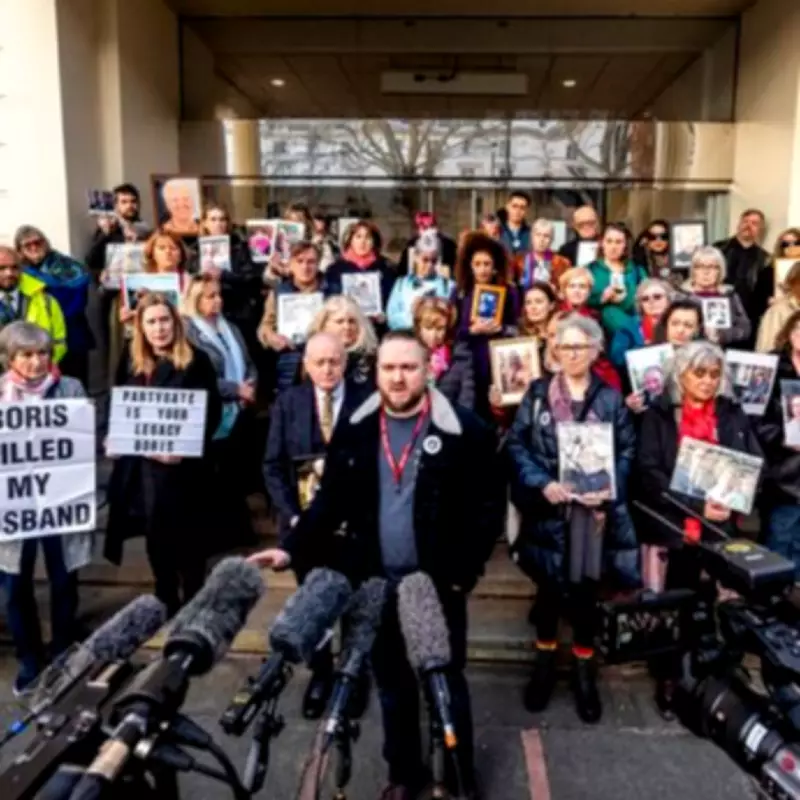
Covid Inquiry Concludes with Heartbreaking Testimonies from Bereaved Families
This week marked the final stage of witness statements at the long-running Covid inquiry, where Glen Grundle, a member of the Northern Ireland Covid-19 Bereaved Families for Justice group, delivered a poignant reflection on the human toll of the pandemic. Speaking from Coleraine, Co Londonderry, Grundle described the irreversible damage caused by losing his mother, Milda, to a Do Not Resuscitate order. "We are all damaged, and damaged beyond repair," he stated, adding that his sleepless nights and lack of care for waking up underscore the profound impact of his loss.
A Painful Finale at Dorland House
The inquiry, held at Dorland House in West London since June 2023, has heard testimonies under Baroness Heather Hallett, culminating in the tenth and final investigation focused on "the human cost of Covid." Outside the inquiry, Matt Fowler, co-chair of the national bereaved families group, emphasized that the inquiry's existence is a testament to ordinary people refusing to be ignored. "Five years ago, we began calling for a public inquiry into the deaths of our loved ones. Today, after thousands of hours of hearings, the final witness has been heard by the inquiry we made happen," Fowler said.
Memories Revived by March Sunshine
As March brings sunshine, it also revives painful memories for bereaved families and pandemic heroes, many of whom still suffer from after-effects. Six years ago, on March 16, the UK Prime Minister advised against non-essential contact and travel, leading to the first lockdown by March 23, 2020. This Sunday, the second Covid Day of Reflection coincides with the end of the inquiry's evidence, offering a moment to remember those who risked their lives.

Frontline Workers Share Their Ordeals
Sade Afolabi, a 65-year-old teacher from Surrey, recounted how her husband, Ademola, fell seriously ill in February 2020, requiring hospitalization and intubation. While she taught online and supported vulnerable pupils, WhatsApp messages revealed that then-Education Secretary Gavin Williamson opposed mask-wearing for teachers, leaving them unprotected. Afolabi described her burnout and anxiety, criticizing the government for failing frontline staff despite public clapping.
Mark Tilley, a 52-year-old ambulance technician from West Sussex, testified about basic shortages during the pandemic. He highlighted inadequate PPE, such as one mop and bucket shared by 40 ambulances, and unsafe working conditions, including broken air conditioning. Tilley volunteered for extra shifts, putting his life at risk, and noted that between March 2020 and February 2022, there were 6,488 Covid-19 deaths among healthcare workers in England and Wales.
Low-Paid Workers Faced Fear and Abuse
Michelle Whitehead, a 52-year-old convenience store worker from the West Midlands, shared her traumatic experiences, describing how she would cry in her car before and after shifts due to fear and abuse from customers. The Covid inquiry found that low-paid employees were at higher risk, with Whitehead comparing the chaos to "Lord of the Flies," where people turned aggressive over shortages.
Calls for Systemic Change and Resilience
The TUC, represented by general secretary Paul Nowak, participated in the hearings, advocating for stronger public services. Nowak stressed the need for sustained investment in health and social care to ensure resilience against future pandemics. He praised recent budget increases for health and education but warned that these measures must not be one-off. Day-one sick pay, he noted, could be a "game-changer" for millions in future crises.
As Britain continues to process the pandemic's legacy, with detailed reports expected into 2027, the inquiry's findings underscore the urgent need for accountability and reform to honor those lost and protect future generations.