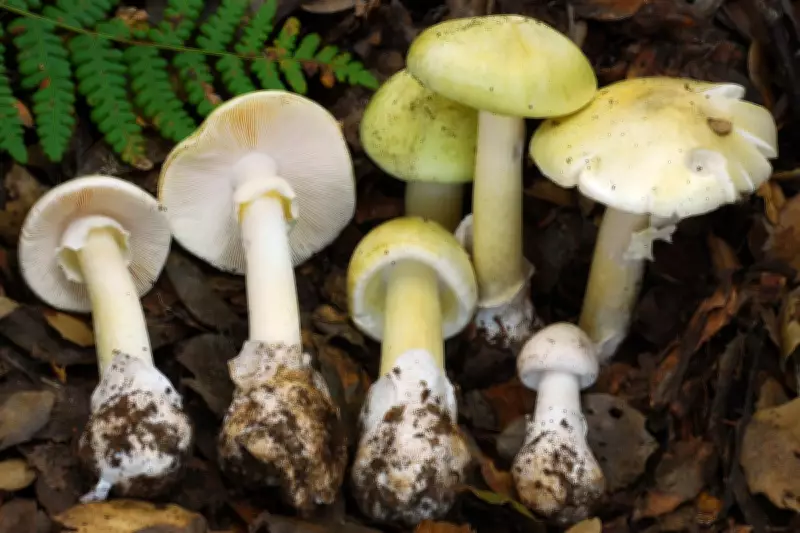
Deadly Mushroom Outbreak Claims Lives in California Following Wet Winter
Four individuals have tragically died and three others have required emergency liver transplants after consuming the highly toxic death cap mushroom, which is currently spreading across California in the wake of a notably rainy winter season. The California Department of Public Health has issued a stark warning, urging residents to completely avoid foraging for wild mushrooms this year due to the extreme difficulty in distinguishing these lethal fungi from safe, edible varieties.
Sharp Increase in Poisoning Cases Reported
Since November 18, health authorities have documented more than three dozen cases of mushroom poisoning, including the four fatalities and three liver transplant procedures. Many of those affected experienced rapidly progressing acute liver injury and subsequent liver failure, with several patients requiring intensive care unit admission. The victims have ranged in age from as young as 19 months to 67 years old.
"This greatly exceeds the typical report of less than 5 cases of mushroom poisonings a year," the health department emphasized in its public health alert. Supporting this alarming trend, U.S. Poison Centers reported handling 2,315 mushroom exposure cases from September 2025 through January 2026—a significant 40% increase compared to the same period in the previous year. It is important to note that exposures do not always result in illness or poisoning.

Experts Warn of Misidentification Risks
Specialists caution that a mushroom's color is not a reliable indicator of its toxicity, and whether the death cap variety is consumed raw, dried, or cooked does not mitigate its deadly effects. Laura Marcelino, a 36-year-old seasonal farmworker from Salinas in Northern California, shared her harrowing experience with the San Francisco Chronicle. Her family gathered mushrooms that closely resembled those she and her husband used to forage in their native Oaxaca, Mexico.
"We thought it was safe," Marcelino stated in Spanish. After initial consumption, her husband felt dizzy and tired, but Marcelino felt fine, leading them to eat the mushrooms again in a soup with tortillas. Their children, who do not like mushrooms, avoided the meal. The following day, both adults became severely ill with vomiting and missed work. Marcelino was hospitalized for five days, while her husband required a liver transplant.
Symptoms and Geographic Spread
Medical experts explain that individuals may experience stomach cramping, nausea, diarrhea, or vomiting within 24 hours of ingesting a toxic mushroom, with conditions potentially deteriorating swiftly thereafter. Early symptoms might temporarily subside within a day, but serious to fatal liver damage can still develop within two to three days.
Death cap mushrooms have been identified in local and national parks throughout Northern California and the Central Coast, with notable clusters found in the Monterey and San Francisco Bay areas.
Multilingual Outreach and Safety Recommendations
The public health department noted that many of those poisoned are Spanish, Mixteco, and Mandarin Chinese speakers, prompting the state to expand its warnings in multiple languages. Spanish was the primary language for over 60% of the affected individuals. Children have also been among the victims this year.
Officials advise closely monitoring children and pets in areas where mushrooms grow and purchasing mushrooms only from trusted grocery stores and reputable sellers. Treatment becomes more challenging once symptoms manifest, so doctors strongly recommend seeking immediate medical care if someone suspects they have consumed a poisonous mushroom.
In case of an emergency poisoning or for questions about mushrooms, U.S. Poison Control Centers can be reached at 1-800-222-1222 or via PoisonHelp.org.