German Shepherd's Persistent Sniffing Leads to Life-Saving Cancer Diagnosis
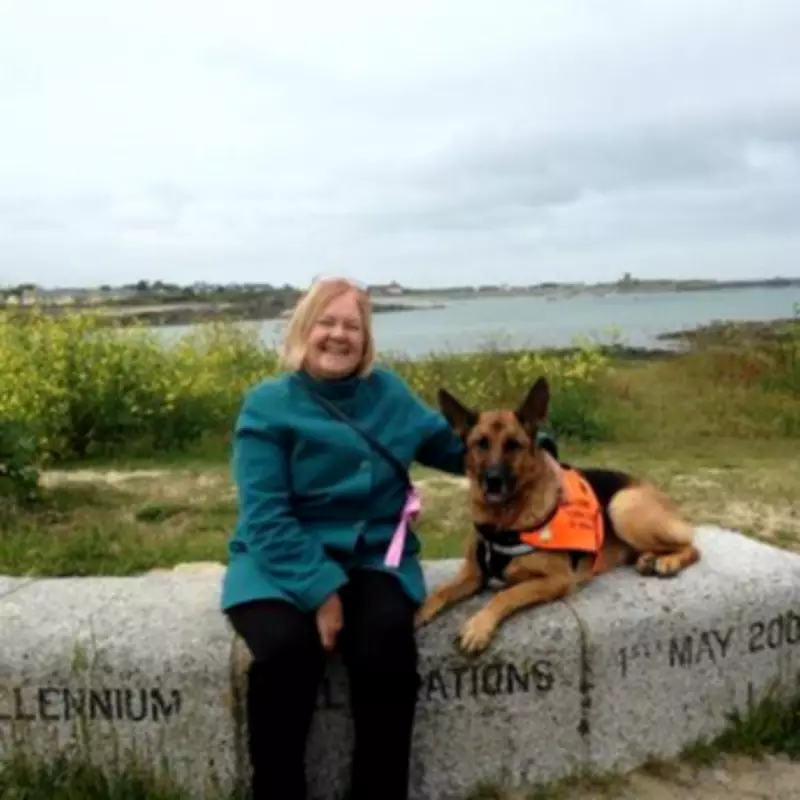
Colleen Ferguson, a 70-year-old woman from Headcorn in Kent, believes her German Shepherd named Inca saved her life through an extraordinary display of canine intuition. The remarkable story began when Inca, then just two years old, started obsessively sniffing Colleen's breath with unusual focus and concern.
From Curiosity to Medical Investigation
After several weeks of Inca's persistent behaviour, Colleen initially sought dental examinations and standard medical tests, all of which returned negative results. The former science and mathematics teacher first suspected the behaviour might relate to her gluten intolerance, perhaps indicating changes in her digestive system.
"Her behaviour towards me changed completely," Colleen recalled. "She just started homing in on my mouth with focused intent. You couldn't push her away until she had taken a proper sniff of my breath."

Despite the initial negative test results, Inca continued the behaviour, prompting Colleen to undergo a full body scan several months later. The scan revealed shocking news: a golf ball-sized tumour in her left lung, later diagnosed as stage one cancer.
Unexpected Diagnosis and Swift Treatment
The diagnosis came as a complete shock to Colleen, who had experienced no significant symptoms apart from general tiredness she attributed to approaching sixty while still working with teenagers. As a lifelong non-smoker and former biology teacher with strong anti-smoking views, lung cancer seemed particularly improbable.
"In no way did I expect lung cancer at all," Colleen admitted. "It was such a shock because I am a non-smoker, and because I taught biology, I was very anti-smoking."
Fortunately, a surgical slot became available quickly, and Colleen underwent tumour removal surgery in June 2015 without requiring additional chemotherapy or radiotherapy treatment. Her surgeon emphasized the rarity of catching lung cancer at stage one, telling her directly: "We never catch it at stage one, your dog has saved your life."
Life After Diagnosis and Canine Partnership
More than a decade after her diagnosis, Colleen has transformed her life completely. She left her teaching career to pursue a master's degree in creative writing and achieved her dream of becoming a published author. She credits Inca with giving her this second chance at life.
"I was just so lucky," Colleen reflected. "Every day is special with her. To catch it at stage one is just remarkable. I don't know how I would have survived with radiotherapy and chemotherapy."
The experience has given Colleen profound appreciation for the subtle signals dogs can provide. "She needs celebrating and people need telling to listen to your dog," she emphasized. "They tell you a lot more subtle signals than people realise."
From Cancer Detection to Recovery Assistance
Inca, now thirteen years old, has taken on an additional role as a recovery assistance dog, supporting Colleen through panic attacks and anxiety that developed following her health ordeal. The writer credits her canine companion with transforming her wellbeing, noting she now experiences only mild breathlessness.
"Wherever I am she is there," Colleen explained. "Dogs give us a lot more comfort than we realise. I was very scared, especially when they said it was first-stage cancer, because I didn't know when that would change."
Reflecting on the remarkable chain of events, Colleen considers the fortunate circumstances that brought Inca into her life. "It was meant to be," she said. "I often think of the chance that she is the one I picked, and how easily it could have been a different dog. I nearly got a golden retriever. What if I hadn't got her and it had gotten to stage four?"
Colleen's story adds to growing evidence of dogs' remarkable ability to detect diseases through scent, while highlighting the profound bond between humans and their canine companions that can literally mean the difference between life and death.