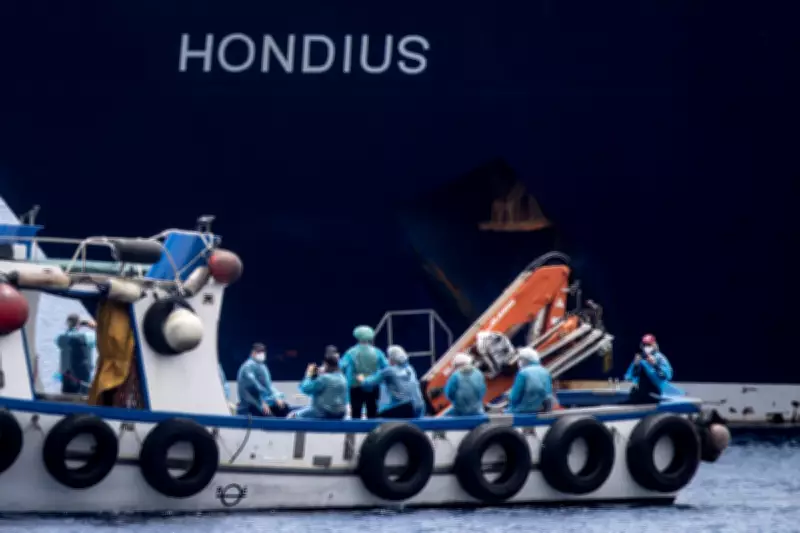
Some Australian travellers from the MV Hondius, the cruise ship at the centre of a hantavirus outbreak, will return to New South Wales this week and be admitted to Australia's first purpose-built biocontainment facility. The federal government is finalising health measures and quarantine arrangements for the group of five people—four citizens and one permanent resident—who are about to disembark in the Canary Islands.
Repatriation and Quarantine Plans
The group is due to travel back to Australia on a charter flight to Perth, accompanied by medical personnel in full personal protective equipment (PPE) who will monitor them and provide assistance if needed. The ship, carrying 146 people, arrived at Tenerife, the largest of Spain's Canary Islands, on Sunday after three people died of the virus and eight others fell ill. Passengers and crew were confined to their cabins to help curb the spread of the infection.
An Australian government spokesperson confirmed that one New Zealand citizen will also travel on the plane. When the charter flight departs Tenerife, safety measures will be implemented in line with guidance from the Australian Centre for Disease Control. The flight was expected to leave Tenerife at 5 p.m. local time on Monday.

Coordination and State Responsibilities
The Department of Foreign Affairs and Trade, which has consular officers on the ground in the Canary Islands to coordinate response efforts, held a call with passengers aboard the MV Hondius to discuss health precautions in the coming days. The Australians and the permanent resident being repatriated live in New South Wales and Queensland. The federal government said it was finalising quarantine arrangements with state health officials, and it will be the responsibility of the states to administer them.
NSW Health stated on Monday that it is working with the federal government and other states to receive, transport, and provide care to passengers. Upon arrival, the passengers will be immediately transported by ambulance to the NSW biocontainment centre at Westmead Hospital in Sydney, where they will undergo clinical assessment. Health officials will then evaluate suitable quarantine arrangements.
Monitoring and Risk Assessment
“These passengers will be closely monitored, and should any develop symptoms, they will be assessed by an infectious diseases physician and provided appropriate care,” a NSW Health spokesperson said. “The risk to the public is low. Hantavirus is only rarely transmitted from person to person, and transmission requires close contact. People with hantavirus infection are not infectious before their symptoms begin. The time from exposure to hantavirus to the onset of symptoms (incubation period) can be up to six weeks.”
The centre at Westmead became operational in 2023, marking Australia's first purpose-built biocontainment facility. NSW Health described it as a highly specialised facility capable of caring for both adults and paediatric patients with high-consequence infectious diseases such as Ebola or MERS. The facility features a dedicated elevator directly from a helipad or ambulance bay, its own sewage treatment plant, and strict protocols for clinicians to put on or remove PPE, involving over 40 steps and taking about half an hour.
Safety Protocols and International Comparisons
The federal government emphasised that safety is the priority during the repatriation, but added that the risk to the broader populace remains low. “The Australian government’s number one priority is the safety of passengers and the Australian community,” a government spokesperson said. “The Australian government is working closely with state authorities to coordinate arrival, health and transport arrangements. Quarantine and health arrangements are managed by states in accordance with their public health requirements.”
The evacuated passengers will be prevented from coming into contact with the general public upon landing in Perth and will be moved directly from the charter flight to transportation that will take them to their quarantine locations. Full details of those travellers’ quarantine requirements will be finalised in the next 24 hours and could resemble measures set out during the COVID-19 pandemic.

Other countries are taking similar precautions for repatriated passengers from the cruise. In France, passengers will be quarantined in hospital for 72 hours for a full assessment before being sent home for 45 days in isolation with monitoring, including regular follow-ups for six weeks—the maximum incubation period for hantavirus. In the UK, passengers will be taken to an isolation facility for similar assessments over 72 hours, after which officials will determine if they can isolate at home or at another suitable location.
Government and Expert Responses
Murray Watt, the federal environment minister, told ABC News on Monday that the situation has become a “terrible situation” for the Australian travellers, adding that proper quarantine arrangements will be in place. “We want to make sure Australians receive the care that they need in this situation,” Watt said. “This is not a situation that people have walked into deliberately. And I think all Australians would want to see each other looked after in this sort of situation.”
Hantavirus, a group of viruses carried by rodents, can cause serious infection in humans, usually through contact with infected rodent urine, droppings, or saliva. The World Health Organization notes that infection can cause a range of illnesses from severe disease to death. However, transmission between humans is rare and only occurs in settings with close, prolonged contact. The WHO recently noted that the threat to the global population remains low, and the Australian Centre for Disease Control said the risk of a widespread outbreak such as COVID-19 or influenza remains very low.