Infected Blood Scandal Compensation Scheme Creates 'Penalty for Dying', Families Warn
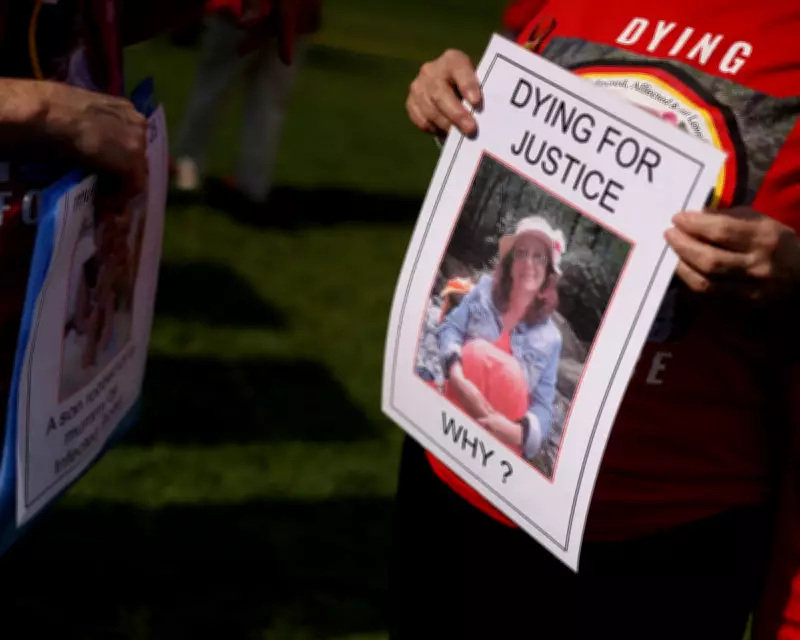
Families affected by the infected blood scandal have launched a scathing critique of the government's compensation framework, labelling it a "penalty for dying" that unjustly reduces financial awards for victims who passed away before the scheme's implementation. This criticism emerged during a vigil held in Westminster in 2024, ahead of the final report from the infected blood inquiry, highlighting ongoing distress among bereaved relatives.
Scheme Disparities and Financial Losses
The compensation scheme provides payouts to living victims and families of those who died after being infected with HIV or hepatitis due to contaminated blood products administered by the NHS. Over 30,000 individuals in the UK received treatments before 1996 that were tainted with HIV, hepatitis C, or hepatitis B, leading to more than 3,000 deaths. Each infected person is entitled to a basic financial loss award of £12,500, plus an additional award for lost earnings post-infection.
However, for victims who died prior to the scheme's commencement, families have been informed that no future financial loss will be paid to their estates. Losses are calculated only from the date of infection until death, which in many cases spanned just a short period. Charities, including the Haemophilia Society and the Hepatitis C Trust, argue in an open letter that this results in significant disparities. For instance, if a person died in the early 1990s during their working life, it could mean a difference of nearly 50 years in financial loss compensation.

Personal Stories Highlight Injustice
Ami Jai Presly lost her father, Jai Brahmbhatt, in 1993 when he was 39 years old. A professor of business studies at Brunel University, he had moved from Kenya to the UK for better haemophilia treatment. Presly discovered that her father's estate would only receive compensation for 16 years of financial loss, roughly half of what it would be if he were alive today. She stated, "We realised at that point that the current framework creates a penalty for dying. It's unethical and wrong." Her sister, Meera Pierson, added that their entire lives have been overshadowed by the scandal.
Rachel McGuinness shared her experience of losing her father, Christopher Thomas, in 1990 when she was 19. He was a haemophiliac diagnosed HIV positive in 1984 after receiving treatment in the 1970s and 1980s. McGuinness expressed surprise and disappointment at the scheme's discrepancies, noting the long wait for justice and the additional burden on her 77-year-old mother.
Ian Dixon, campaigning with his wife Claire, recounted the story of Nora Worthington, who died in 1993 at age 47 after being infected with HIV from a blood transfusion in 1982. Dixon highlighted the stigma and distress faced by the family, estimating that Nora's estate would receive just over £1 million, compared to over £2 million if she were alive. He emphasised, "It's not about the money. It's absolutely about the recognition."
Calls for Fairness and Government Response
Kate Burt, chief executive of the Haemophilia Society, asserted, "Every single person infected as a result of contaminated blood deserves to be valued equally, regardless of whether they survive today or died many years ago. The credibility of the compensation scheme rests on this principle." The charities' letter criticises the scheme for penalising victims for their inability to survive the government's wrongdoing.
A government spokesperson responded, "The victims of this scandal have suffered unspeakable wrongs and this government is committed to listening to and working with them to ensure justice is not only delivered but reflected in the way compensation is treated for everyone. We are committed to making the system as fair and compassionate as possible and are carefully considering responses to a recent consultation, with a response due within 12 weeks."
The infected blood inquiry, chaired by Sir Brian Langstaff, is set to conclude its work on 31 March, having exercised its powers to investigate this tragic chapter in NHS history.