Measles Outbreak in North London Fuels Calls for School Vaccination Mandates
A significant measles outbreak in North London has raised serious concerns about a potential city-wide epidemic, prompting urgent calls for all unvaccinated children to be excluded from schools. The infection hotspot of Enfield, where vaccination uptake stands at a concerning 64 percent, has already implemented measures advising parents that unvaccinated children should be excluded for three weeks if they come into contact with an infected peer.
Health Committee Warns Current Measures Are Insufficient
Following a London Assembly Health Committee meeting, Chairman Emma Best declared that these existing measures do not go far enough to contain the outbreak. "We might not be at the stage of making vaccination mandatory, but we are faced with a very worrying reality if we carry on on this trajectory," she told the Daily Mail.
"Obviously no one wants to see children out of school, but there is a line where it is just too dangerous for a child to be at school. The practice at the moment is right to say: 'If you are unvaccinated don't come to school.'"

Best emphasized the gravity of the situation, noting that measles carries a very real risk of hospitalization for one in five infected individuals and potential fatalities. "It's so important that we safeguard children and I don't think there really is any other option," she stated.
Alarming Statistics Reveal Widespread Vulnerability
So far, London has recorded 127 confirmed measles cases, with 71 concentrated in Enfield alone. However, UK Health Security Agency officials warn the actual number could be significantly higher, with approximately 300 suspected cases already reported.
The situation is particularly concerning given that only 69 percent of children under five have received both doses of the MMR vaccine, far below the 95 percent threshold required for herd immunity. This substantial gap creates ideal conditions for the outbreak to expand rapidly across the capital.
Dr. Yimmy Chow, regional deputy director for the UKHSA, explained the containment challenges: "It really is difficult to contain something as contagious as measles and we're not there yet. People are already infectious for days before the rash appears - so the exposure has already happened in the society."
Measles: A Serious Health Threat with No Treatment
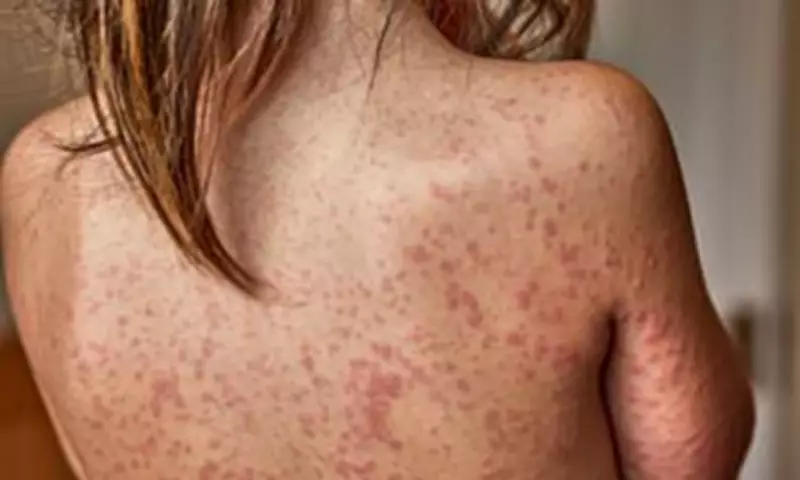
Measles is a highly infectious viral disease that spreads easily among unvaccinated populations. Initial symptoms typically resemble a common cold, but within days a distinctive rash develops. There is no specific treatment for measles, and the illness can lead to severe complications including pneumonia, brain inflammation, and permanent disability.
Public health experts have identified multiple factors contributing to low vaccination rates. In east Enfield, where many residents live below the poverty line, health inequality plays a significant role. Dudu Sher-Arami, director of public health for Enfield, noted: "We need to think about the circumstances in which families living in the most deprived areas are facing - low incomes, frequent shift work, and maybe temporary accommodation."
Affluent Areas Also Show Concerning Vaccination Gaps
However, the problem extends beyond deprived communities. Several London boroughs report alarmingly low vaccination rates, including Hammersmith and Fulham, Hackney, Westminster, and Haringey. Perhaps most surprisingly, the affluent borough of Kensington and Chelsea shows only 51 percent of under-fives appear to be vaccinated.
While this figure might reflect incomplete data from private and international institutions not obligated to share vaccination records, experts worry about growing complacency in wealthier areas. Susan Elden, a consultant in public health for NHS England, observed: "People forget that measles is very real. And whilst there is nothing like an outbreak to remind people how real it is, people are thinking differently about vaccines and whether they are really necessary for their children."

Transparency and Data Collection Challenges
Health officials emphasize the need for improved data collection to accurately assess vaccination rates and identify at-risk areas. Emma Best highlighted this concern: "It could be that in these more affluent areas, people don't think measles will ever affect them - which we know isn't true. Or it could simply be that we don't have the data to build the best picture of the most at risk areas."
She advocated for a system that would alert parents when their children haven't been vaccinated, describing this as "the most important thing parents can do to protect their children."
Broader Public Health Implications
The measles outbreak is creating additional strain on public health resources, diverting attention from routine vaccination programs. Elden explained: "Everything was set up for routine vaccination, but now we're having to pull school vaccination teams who vaccinate against things like HPV to play catch-up, which means there is a lot more work on the ground."
This reallocation of resources potentially puts children at risk of other serious diseases, creating a complex balancing act for health authorities. As the outbreak continues to evolve, the debate around mandatory vaccination in schools intensifies, with public health officials warning that failure to contain measles could have devastating consequences for London's children.