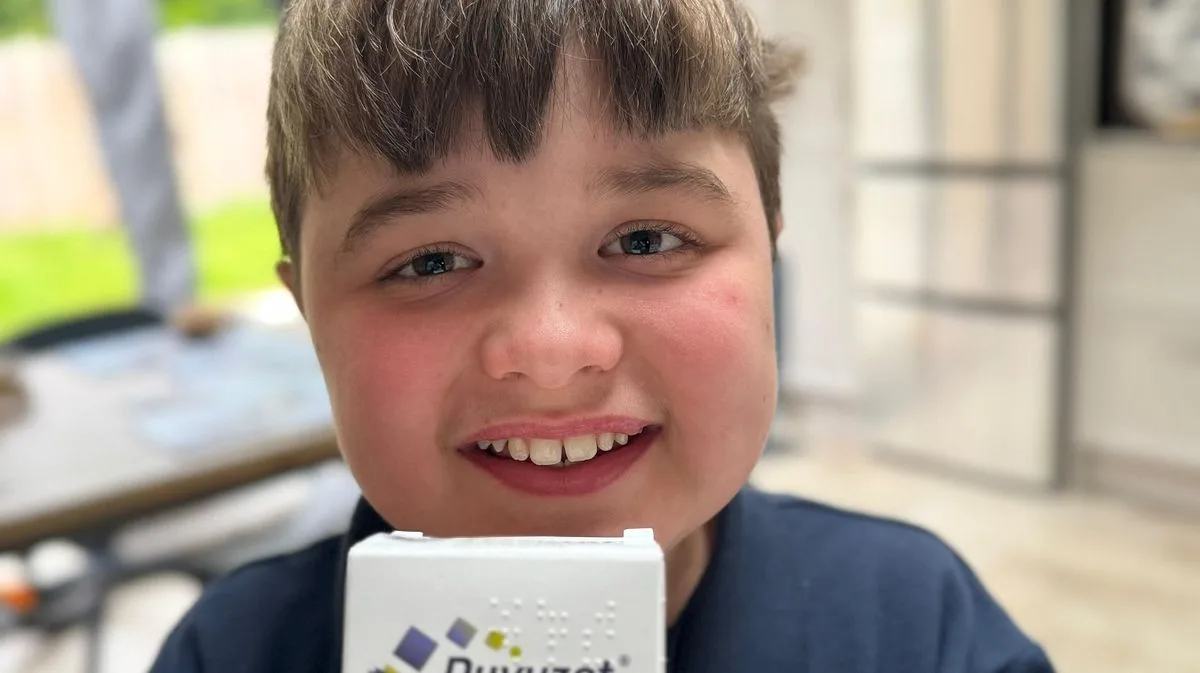
A 12-year-old boy with Duchenne Muscular Dystrophy (DMD) has finally begun treatment with givinostat on the NHS, but his father has warned that many other families may not be as fortunate. Ben Clarke, from Sonning Common, Oxfordshire, is among hundreds of patients set to benefit from the drug, which was approved through an early access programme in certain NHS Trusts.
Ben's father, Alex Clarke, told the Mirror that while the family is overjoyed, the fight is not over. Givinostat has only been approved for boys who can still walk, leaving non-ambulant patients without access. Alex recalled Ben's reaction to the news: 'The smile on his face was incredible. He is just so happy that it was available and he could now get this drug.'
Ben was diagnosed with DMD at age four in 2017 after his parents noticed concerning symptoms. At the time, outdated online guidance suggested he would not live beyond his 12th birthday, which Alex described as 'heartbreaking'. The family made a decision to focus on giving Ben the best life possible, and he now attends mainstream school full-time, described by his father as 'the sunshine that lights up a room'.

Despite being able to walk, Ben relies on a wheelchair for longer distances, and everyday tasks have become increasingly difficult. Alex said: 'As a parent, that is really hard to see... there’s nothing you can do except be there to love and support him.' The family spent over a year campaigning for access to givinostat through Duchenne UK's 'Time is Muscle' campaign after their local trust initially declined to participate in the early access programme.
Duchenne UK's co-founder and CEO criticised the lengthy approval process, stating: 'It has taken NICE almost two years to make a decision. During that time, many families were left without access... while their child’s condition progressed.' The charity called for urgent reform to ensure drugs for rare, severe paediatric diseases are assessed more quickly.
Alex urged continued campaigning for non-ambulant boys: 'We have to keep in mind that there is a huge part of our community who are non-ambulant and are in wheelchairs and are unable to access this.' He hopes the next phase of the campaign will secure access for all patients who could benefit from the treatment.