Fire Departments Switch to Calmer Alert Systems to Protect Firefighter Health
In a significant shift for emergency services, fire stations are increasingly abandoning traditional blaring sirens in favour of softer, more gradual alarm systems. This move aims to reduce the physiological stress on firefighters while simultaneously improving their response times to emergencies.
Danbury Fire Department Implements Progressive Alert Technology
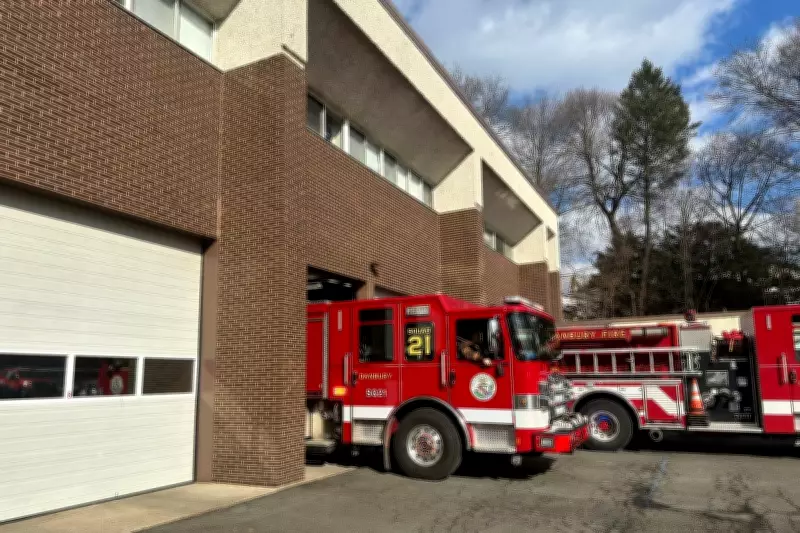
The Danbury Fire Department in Connecticut has become one of the latest adopters of this gentler approach, implementing a new system in September that features alarms starting at lower volumes before gradually increasing. The system incorporates a calm, computerized voice that clearly announces emergency details alongside warm red lighting and monitor displays showing incident information.
"It's much easier on your nervous system," said Captain Kevin Lunnie, who noted significant heart rate spikes under the previous system. "Most people found it very jarring. The old system would jolt firefighters awake day or night with full-volume single tones followed by a cacophony of fluctuating pitches."

Scientific Backing for Health Benefits
Advocates point to compelling research supporting the health benefits of progressive alert systems. A decade-old study published in the Journal of Occupational and Environmental Hygiene found that immediately loud alarms increased firefighter heart rates by a median of seven beats per minute, compared to just five beats per minute with gradual volume systems.
"When the alarm was used in a ramp-up fashion—so a gradual buildup on the alarm—the heart rate was lower to the alarm, so it put less stress on their body," explained Dr. Jay MacNeal, associate emergency medical services director for the Beloit Fire Department in Wisconsin and one of the study's authors.
This research takes on particular significance given that heart problems represent the leading cause of on-duty firefighter deaths. According to the National Fire Protection Association, 20 of the 51 on-duty firefighter fatalities in 2024 resulted from sudden cardiac death.
Improved Efficiency and Response Times
Beyond health benefits, the new systems demonstrate practical advantages. Danbury's Phoenix G2 system, funded by approximately $500,000 from the 2021 American Rescue Plan Act, integrates with computer-aided dispatching to alert stations faster than human dispatchers could manage previously.
The system sends emergency information directly to firefighters' phones and watches while station monitors display incident details and a two-minute countdown timer begins. "The result is quicker response times," confirmed Danbury Assistant Fire Chief William Lounsbury.
Industry Adoption and Standardisation Efforts
Danbury joins thousands of fire departments across the United States and internationally in adopting progressive alert technology. Honeywell's Phoenix G2 system alone serves nearly 6,000 firehouses nationwide, with other companies offering similar solutions.
The National Fire Protection Association has responded to the growing evidence by issuing new standards recommending alarms that start at lower volumes with calm, computerized voices. Meanwhile, the International Association of Fire Fighters, representing over 360,000 firefighters and paramedics, supports these systems but seeks more specific industry standards.
"We would like to see an industry standard that really starts to define the decibel levels, the intervals, the integration of turning on the lights, what that progression should be," said Sean DeCrane, the IAFF's assistant to the general president for health and safety. "We believe the standard should be based on research."
As fire departments continue prioritising both responder wellbeing and operational efficiency, the transition from startling sirens to calmer, more sophisticated alert systems represents a significant evolution in emergency service protocols that benefits both firefighters and the communities they serve.