The Invisible Killer: Radiation's Silent Assault on Chernobyl's Victims
Radiation operates as an odorless, invisible assassin, capable of surging through the human body and tearing it apart at a cellular level, causing irreversible damage to DNA. When reactor number four at the Chernobyl nuclear power plant exploded in April 1986, debris emitted radiation at an astonishing rate of 10,000 roentgens per hour. This level was sufficient to deliver a fatal dose to anyone standing nearby for just a few minutes.
Firefighters' Ultimate Sacrifice and a Global Catastrophe
Firefighters made the ultimate sacrifice on April 26, absorbing unprecedented amounts of radioactive poison as they battled to extinguish the enormous flames of history's most devastating nuclear accident. As a gigantic radioactive cloud began spreading across the globe, contaminating 40 percent of Europe and reaching into northern Africa and North America, one woman found herself directly in the eye of the storm.
Maria Protsenko, dressed merely in a blouse, skirt, and sandals, was personally responsible for orchestrating the mass evacuation of Pripyat's 45,000 civilians, emptying the devastated Soviet city of all signs of life. Previously serving as the chief architect of the city, she had lovingly designed neighborhoods for young families. In a split second, however, she transformed into a kind of grim reaper, sweeping away all the civilization she had helped to create.

Recounting the Fateful Day: A City Buried Forever
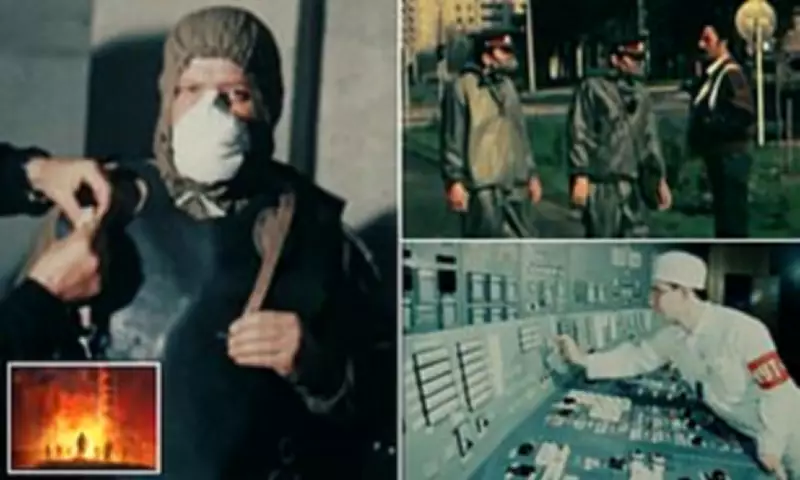
Recounting the fateful day to the makers of the upcoming series 'Chernobyl: Inside the Meltdown' on National Geographic, Protsenko transports herself back 40 years and speaks of wounds that have never healed. 'For the first time in my life, I was not building a city, I was burying it forever,' she said, reflecting on the immense scale of destruction. 'This is not only a man-made disaster, it is a catastrophe that broke the lives of thousands of people.'
By 11 a.m. the day after the explosion, a mass evacuation was announced and scheduled for 2 p.m., but by that point, it was tragically too late for many. Some residents living closest to the power plant had already received internal radiation doses in their thyroid glands of up to 3.9Gy, roughly 37,000 times the dose of a chest X-ray, after breathing radioactive material and consuming contaminated food.
Immediate Aftermath and Long-Term Health Impacts
Immediately after the accident, thyroid cancer became particularly rampant in Belarus, Ukraine, and Russia, with 5,000 cases diagnosed among those who were children and adolescents at the time of exposure. Today, Pripyat stands as an eerie ghost town of cavernous kindergartens, abandoned houses, and sports halls left to decay, having been declared too radioactively dangerous for human habitation for at least 24,000 years.
Protsenko wore no protective clothing as she led the vast evacuation operation, standing on a bridge overlooking the city while 1,500 buses picked up families district by district. She stayed up all night designing intricate maps, enabling her to execute the mammoth task with tactical precision, ensuring no one was left behind in the industrial wasteland.
'At 2 p.m. the first bus arrived... I was standing there in my blouse and my skirt, and I had sandals on my bare feet. I had no protective gear,' she told the documentary. Only thick sheets of lead or massive concrete blocks could have prevented her from contamination. 'All that radioactive dust was rising and got on my bare feet and my legs. That's why they were so itchy. Can you imagine how much radioactive dust was flying from that place, at that time?'
The Unfolding Tragedy and Emotional Scars
At that moment, however, no one could fully comprehend the scale of the tragedy. Girls and boys played together in the streets as they awaited their lifesaving convoys, not yet grasping that the evacuation was not temporary and they might never see each other again. Many did not have a chance to say goodbye before vanishing from each other's lives forever, transforming from neighbors into refugees in a single journey.

'We evacuated nearly 45,000 people. Without panicking and noise, we evacuated the entire city,' Protsenko said. She remains haunted by the memory of one woman who watched her intensely from a bus window as she was torn away from her community. 'She didn't just look at me, she turned her head, following me with her stare. There was something in her face, like she was screaming inside: "What is this?! Where am I going?!"'
Personal Exposure and Lasting Health Consequences
While helping the city's inhabitants escape, Protsenko had no idea she was exposing herself to lethal radiation. 'At that moment, I was not only not afraid, I did not even think about it,' she admitted. It was only after the disaster that she recalled spending hours absorbing toxic fallout near the Red Forest, breathing in countless particles of contaminated dust as convoys rolled past.
'The thing is, radiation does not make noise like exploding bombs. It does not burn like a fire. It has no smell. You do not feel it immediately, it kills quietly, slowly. And there is no awareness at all that you are in danger,' she explained. Following the evacuation, she developed a persistent cough, headaches, dryness in her mouth, and intense itching in her legs, yet still did not grasp that she had likely absorbed a significant radiation dose.
Now aged 80, she continues to live with the long-term impacts of the disaster. 'I am no longer 40… my health is no longer what it used to be… all as a result of the radiation exposure I received long ago.' She added, 'No one would envy it.'
Soviet Secrecy and Delayed Evacuation
While some degree of exposure was inevitable for everyone near the accident, Soviet authorities exacerbated the situation by underplaying the tragedy in its immediate aftermath, ultimately slowing down the evacuation. Despite the explosion in the early hours of April 26, life in the city initially continued as normal, with children playing outside and parents running errands, unaware they were at the center of a nuclear catastrophe.
'The night was clear, warm, and quiet. The residents of the city were peacefully asleep and knew nothing yet about the disaster that had occurred,' Protsenko recalled. 'Information about the radiation situation was kept in strict secrecy.' When tasked with leading the evacuation, even she had not grasped the full scale of the calamity but knew she had a critical job to do. 'By 6 p.m… we had practically evacuated the entire population of the city,' she said. Within a few hours, it was done, and Pripyat would never be the same again.
Lingering Legacy and Global Repercussions
By that time, she was one of the last people left in the uninhabitable wreckage of a town. 'The city became empty… no lights were on… it felt a little eerie.' The Chernobyl disaster is not confined to a single day but went on to redefine the lives of hundreds of thousands worldwide. Investigations ultimately concluded that faulty protocols in the plant's design and poorly trained personnel caused the explosion, which blew the 1,000-ton steel lid off the reactor, equivalent to the weight of three 747 passenger planes.
In the weeks and months following the accident, scores of firefighters, engineers, military troops, police, miners, cleaners, and medical personnel, collectively known as 'liquidators,' were sent to the destroyed power plant to control the blaze and core meltdown. In Belarus, 40,049 liquidators were registered to have cancers by 2008, along with a further 2,833 from Russia. In Ukraine, disability among workers soared, with 68 percent regarded healthy in 1988, compared to only 5.5 percent still in good physical condition 26 years later.
Modern Challenges and Ongoing Threats
Beyond coping with physical sickness, Protsenko still grapples with the day-to-day consequences of Russian authoritarianism. In 2022, she was forced to flee Ukraine in a wheelchair with her daughter and their kitten following Vladimir Putin's full-scale invasion. With Putin's callous disregard for safety, launching a major offensive to capture the area around Chernobyl just days into his invasion only to abandon it weeks later, only time will reveal how far the long shadow cast by the nuclear plant will stretch.
Chernobyl: Inside the Meltdown airs on National Geographic on Sunday, April 19, at 9 p.m. and 10 p.m., and Monday, April 20, at 9 p.m. and 10 p.m.