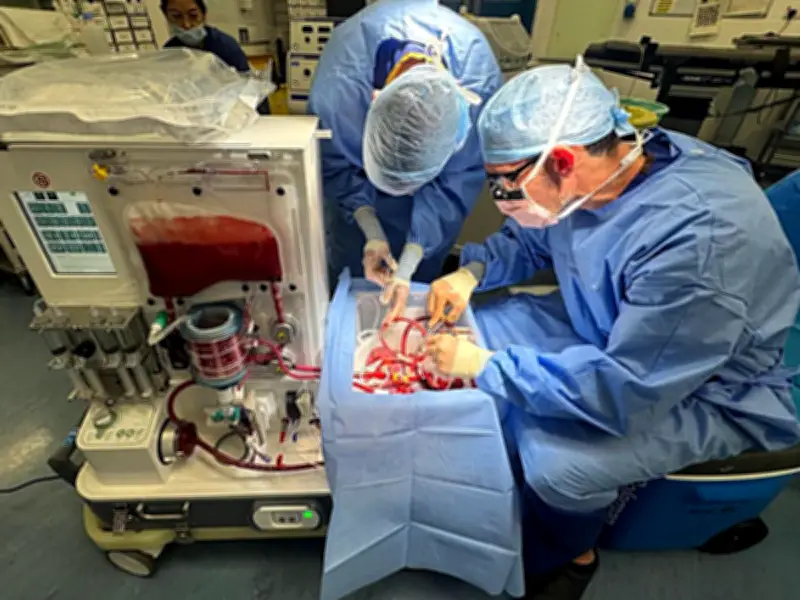
Surgeons at the Royal Free Hospital have performed the first transplant using a pioneering technique that pumps donor organs with oxygenated blood and nutrients, a breakthrough expected to increase the number of NHS organ transplants by nearly 20% each year.
First transplant achieved with machine perfusion
A donor liver was retrieved and transported to the new Assessment and Recovery Centre (ARC) at the Royal Free Hospital, where it underwent an organ-boosting process using an OrganOx Metra machine. This 'machine perfusion' circulated oxygenated blood, medications, and nutrient-rich fluids through the liver, allowing surgeons to conduct extra testing to confirm its suitability for transplant. The liver was then successfully transplanted into a patient at King's College Hospital.
ARCs are now being set up at 15 hospitals across England, specialising in different organs such as kidneys, livers, and hearts. The pilot aims to eventually make this the standard of care nationwide.

Impact on transplant waiting list
The NHS transplant waiting list is at a record high of over 8,000 people, and thousands have died waiting in the past decade. Derek Manas, medical director at NHS Blood and Transplant (NHSBT), called the transplant 'a seminal moment and a breakthrough' that could unlock a step change in organ transplantation. If the pilot succeeds, a full national ARC model would be the first of its kind in the world, enabling more than 700 extra transplants annually.
NHSBT estimates that by 2030, the system could facilitate 750 extra liver, lung, and kidney transplants each year. Future developments may include surgical repairs, blood type changes, and cell therapies to further boost organ function.
Overcoming time constraints
Currently, medics must make quick decisions on organ retrieval after a donor's death, and some organs are not transplanted due to uncertainty about their quality. Machine perfusion provides up to 24 hours of extra testing and assessment time, allowing clinicians to determine that many organs are healthy enough for transplant. This could significantly reduce the number of usable organs that go unused.
Consultant David Nasralla, a liver transplant surgeon at the Royal Free, said: 'This is a milestone moment which will hopefully lead to many more successful transplants and lives saved. For the UK and NHSBT to pioneer the approach is ground-breaking and it has galvanised the entire transplant community.'
Organ donation rates and the law
The rate of bereaved families supporting donation has dropped to 59%, down from 68% before the Covid-19 pandemic. The Mirror campaigned for Max and Keira's law, which came into force in 2020, creating a presumption in favour of donation while allowing next of kin to veto transplants. More families have vetoed transplants since the pandemic, for unclear reasons.
Miriam Cortes-Cerisuelo, clinical lead for transplant surgery at King's College Hospital, described the organ-saving procedure as 'groundbreaking'. She said: 'Over recent years there have been huge strides in organ donation and transplantation and this has the potential to be the next step in saving patients' lives. We are excited to see how being part of this pilot could help transform the way we care for liver patients in the future, bringing hope to the thousands of people who are waiting for an organ donation.'
To register an organ donation decision, call 0300 123 23, visit organdonation.nhs.uk, or use the NHS app.