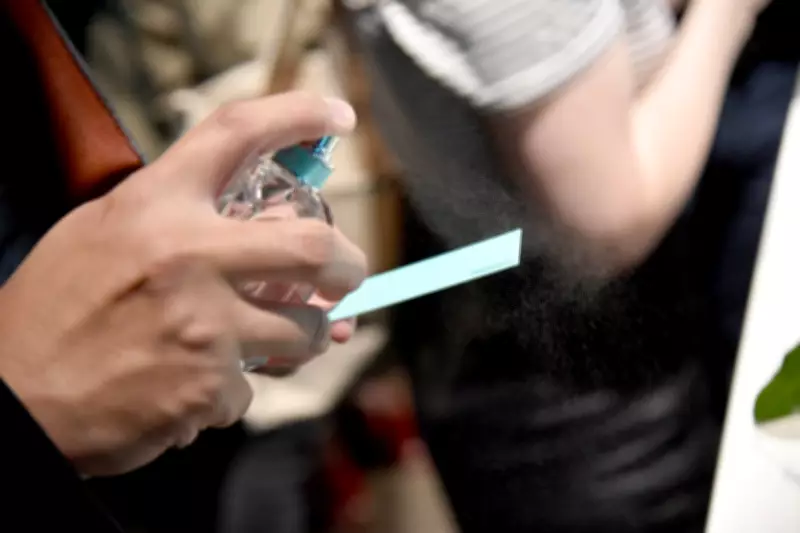
Users of GLP-1 weight loss drugs are reporting an unexpected and expensive side effect: a newfound obsession with perfume. Many have taken to Reddit to share their experiences, describing an insatiable desire for sweet, dessert-like fragrances and amassing large collections of bottles.
A Costly New Hobby
Katie, a 46-year-old teacher from the Washington, D.C., suburbs, started taking Eli Lilly's Zepbound in March 2024 after years of struggling to lose weight following a total hysterectomy. She told The Independent that her interest in fragrance skyrocketed. "I was always mildly into fragrance, but it increased by a factor of a thousand," she said. She began ordering samples from sites like Lucky Scent and Scent Split, seeking more variety. "I went from owning a handful of designer fragrances found at Sephora or Macy's to owning a collection of 50+ full bottles, most of which are from niche houses." Katie estimates she has spent around $3,000 on perfume in the last two years. Her current favorite, Byredo's Alto Astral, retails for $330 and smells like coconut water and incense.
Reddit Community Embraces 'Ozempic Smell'
Katie is among many Redditors who have posted about the allure of perfume after using GLP-1s, a phenomenon dubbed "Ozempic smell." Users share suggestions and photos of their collections. One user wrote, "I started taking a GLP-1 last May and I’ve gone from owning two perfumes to 24, and that doesn’t include my travel sizes and decants. I’m also a total gourmand girl, I just want to smell like a bakery all the time lol." Another user, Odd-Guarantee-7571, said, "I’ve always been into scents … but it became obsessive when I started Zepbound. I want to smell everything, from soap to dog shampoo—as long as it’s fragranced I’m gonna smell it." A third user noted, "I can smell a gourmand, sweet fragrance and enjoy it without getting ravenously hungry. This has opened up my world of fragrances significantly."

Scientific Explanations
Experts offer several theories for this phenomenon. Leslie Kay, a professor of psychology and neuroscience at the University of Chicago, explained that the drugs make the part of the brain that processes smells extremely sensitive to food odors. "The drugs could help engage the olfactory pleasure circuits and feelings of satisfaction, hijacking them for non-real food smells, like gourmand and other types of perfumes," she said. Paule Joseph, a Senior Investigator at the National Institutes of Health, added that GLP-1 receptors sit on mitral cells in the olfactory bulb, which carry smell signals to the brain. "A drug that reshapes appetite is also acting on the tissue that processes odor," she noted.
Brain Processes, Not Nose
Hiroaki Matsunami, a professor at Duke School of Medicine, theorized that the underlying process occurs in the brain, not the nose. He said GLP-1 drugs affect brain nerve cells, including those related to nausea. "It is not too surprising that it could also influence odor perception or odor-associated responses," he said. Catherine Dulac, a professor at Harvard University, noted that the sense of smell is highly affected by internal states. For example, we are more sensitive to odors when hungry and less so when full. "Because GLP1 affects so much the organism metabolic state, in ways that we do and do not understand, this is not extremely surprising."
Not a Clinical Side Effect
So far, this perfume obsession has not appeared in clinical trials and seems to primarily impact users' wallets. Katie, who went off Zepbound for six months after surgery, found that her interest in fragrance persisted. She has enjoyed this strange effect, saying, "I’ve learned so much, and am fascinated by the whole process—the artistic side of the creation of a scent, but also the sourcing of ingredients, the creation of new aromachemical molecules and the industry as a whole."