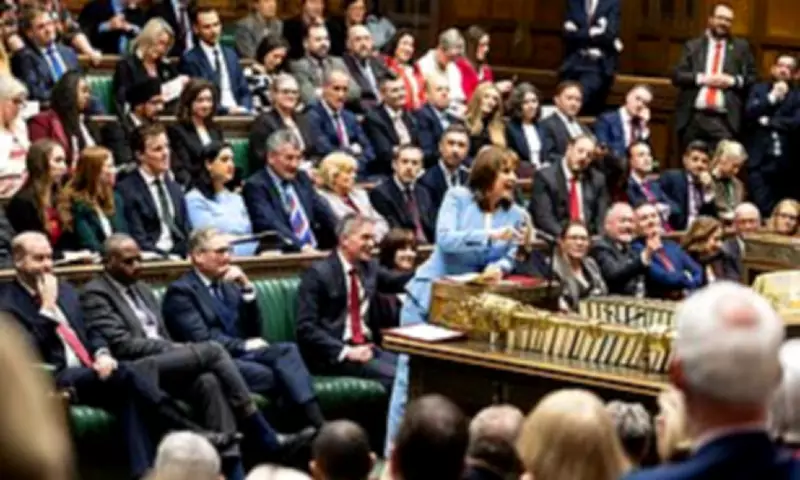
MPs Blast Starmer's EU Reset Strategy as Confused and Directionless
Members of Parliament have launched a scathing critique of Prime Minister Keir Starmer's attempts to reorient the United Kingdom towards Europe, describing his approach as deficient in "direction, definition and drive." The criticism emerges from a comprehensive report authored by Parliament's Foreign Affairs Committee, which includes dissenting voices from within Starmer's own Labour Party.
Committee Chair Highlights Strategic Failures
Dame Emily Thornberry, who chairs the Foreign Affairs Committee, authored the report's most damning passages. She characterised the government's EU reset as "languishing," with MPs experiencing the sensation of being "on a journey with no clear destination." Thornberry elaborated that across numerous policy areas, the administration has neglected to establish timelines, milestones, or clear priorities, and appears to lack an "ambitious, strategic vision" for the UK's future relationship with the European Union.
While Labour has publicly promoted the economic benefits of this reset—claiming it could bolster the economy by £9 billion by 2040—the committee's investigation found the government had "failed to clearly identify" its strategic priorities during last year's significant Lancaster House summit. The report concluded that, overall, the European Union appears to have secured more tangible progress toward its critical demands, particularly concerning fisheries, than the United Kingdom achieved.

Chancellor Reeves Signals Closer EU Alignment
The publication of this critical assessment follows Chancellor Rachel Reeves's recent indications of a renewed push to strengthen ties with Brussels as a mechanism for stimulating economic growth. During her annual spring statement on the economy, Reeves asserted that Brexit had "cut us off from our closest trading partners." She further signalled that fostering closer relationships with the EU would form the cornerstone of a new growth strategy scheduled for unveiling later this month.
Reeves stated the government's intention to focus on "breaking down trade barriers and deepening alliances with our European partners for a more secured, and connected economy." Treasury sources have emphasised that these plans would not violate Labour's established red lines, which explicitly rule out rejoining the single market or customs union. However, they are anticipated to involve increased regulatory alignment with EU rules, a scenario where the UK would have no formal say in their formulation.
Report Demands Transparency and Parliamentary Scrutiny
The Foreign Affairs Committee report issued a direct admonishment of Sir Keir's secretive operational style, urging the government to "end its secrecy over EU matters." It called for the administration to clearly outline its plans for the next phase of negotiations in an official white paper. Furthermore, the report insisted that "Government should also be willing to subject its plans to proper parliamentary scrutiny and facilitate the establishment of a new EU scrutiny committee in the Commons."
Political Opposition and Sovereignty Concerns
Dame Priti Patel, the shadow foreign secretary, intensified the political pressure by accusing Labour of being "reactive, opaque, and unwilling to spell out the trade-offs" in its efforts to thaw UK-EU relations. Patel contended, "Keir Starmer does not have the backbone to stand up to the EU and is eager to put British sovereignty on a silver platter to distract from his perpetual domestic woes."
The report also highlighted broader geopolitical shortcomings, noting that as Europe faces potential escalation in Middle Eastern conflicts, the UK and EU remain "far from ready" to cooperate effectively on shared security interests. It pointed specifically to "extremely disappointing" negotiations regarding Britain's participation in the EU's substantial £130 billion 'Security Action for Europe (Safe)' rearmament fund.
Ongoing Controversies and Brexiteer Warnings
Sir Keir has consistently pursued closer ties with the European bloc since assuming office, framing it as a necessary post-Brexit "reset." However, this week the Prime Minister faced accusations of planning a fresh "surrender" to Brussels over the implementation of digital identity documents, as revealed by the Daily Mail.

Adding fuel to the controversy, a survey commissioned by Labour and discreetly published last week endorsed the "cross-border use of digital identities and credentials," with industry leaders urging ministers to "prioritise relationships with Europe." Brexiteer MPs have warned that European officials would likely demand full regulatory alignment with the bloc as the price for any closer cooperation, representing a significant blow to UK sovereignty.
The combined weight of the parliamentary report, political opposition criticism, and warnings from Brexit supporters paints a picture of an EU reset strategy mired in confusion, lacking clear strategic objectives, and facing significant internal and external challenges as the government attempts to redefine the UK's relationship with its continental neighbours.