Chancellor Reeves Warns Brexit Could Leave UK 'Stranded' Between Trading Blocs
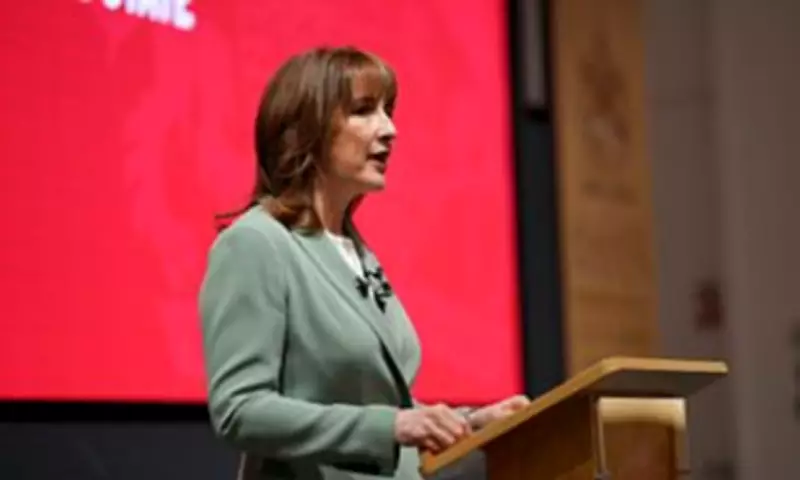
Chancellor Rachel Reeves has issued a stark warning that Brexit risks leaving the United Kingdom 'stranded' in an increasingly fragmented global economy. In a major policy speech delivered at the Mais lecture hosted by Bayes Business School in London, the Chancellor argued for closer ties with the European Union while defending her government's tax policies and outlining a three-pronged growth strategy.
Reeves Advocates for Deeper EU Relationship Amid Global Shifts
Reeves emphasized that 'globalisation as we once knew it is dead,' nodding to changing international dynamics including the new US approach under President Donald Trump. She directly criticized the 2016 decision to leave the EU, which Labour had fiercely opposed at the time.
'Brexit created profound uncertainty, raised new barriers to trade and leaves Britain facing an additional danger today: the risk that we find ourselves stranded between powerful trading blocs as globalisation retreats,' Reeves stated unequivocally.

The Chancellor revealed her preference for European Commission President Ursula von der Leyen over Donald Trump in recent comments, stating 'I believe that our future is closely intertwined with that of Europe.'
Three-Pronged Growth Strategy: AI, Regional Development, and EU Relations
Reeves outlined what she termed 'three big choices on the greatest growth opportunities for Britain in the decade to come.' These include:
- Growth in every part of Britain: Moving beyond London-centric economic development
- AI and innovation: Exploiting artificial intelligence for economic advantage
- A deeper relationship with the EU: Strengthening ties with European neighbors
'Our plan is clear. To build for growth, to champion innovation, and to make Britain the place where the industries of the future are created,' Reeves declared.
Defending Tax Policies Amid Economic Challenges
Despite signs of economic slowing, the Chancellor staunchly defended her government's tax policies, arguing they had placed the country in a 'stronger' position.
'I don't believe that we would be in a stronger place today if we had entered with higher inflation, higher interest rates and higher borrowing or with collapsing public services,' Reeves countered to critics of her tax approach.
She acknowledged the 'stormy start' to Labour's time in power, admitting 'I won't pretend that the last 18 months haven't been without their challenges.'
Regional Growth and Fiscal Devolution Plans
Addressing skepticism about past failed attempts at regional growth, Reeves pointed to specific interventions including securing shipbuilding in Belfast, car manufacturing in the West Midlands, and steel production at Port Talbot and Scunthorpe.
'Each part of Britain can carve out its own niche in industries crucial to the UK's prosperity and security, drawing on the skills of their workforce, their existing industrial strengths and the natural assets on which they are built,' she asserted.
The Chancellor announced that Business Secretary Jonathan Reynolds will publish the government's steel strategy on Thursday to secure a long-term future for British-made steel. Additionally, regional leaders will gain 'control of a share of some national taxes,' including income tax, with Reeves promising to set out a 'roadmap for future fiscal devolution' at the next Budget.
Political Context: Labour's EU 'Reset' and Brexit Realities
The Chancellor's comments come as Prime Minister Keir Starmer has vowed a 'reset' in relations with the EU, which critics have branded an attempt to unwind Brexit. However, the government insists the UK will not rejoin the customs union or single market.
Talks with Brussels have reportedly stumbled over EU demands, including concessions on student fees and potential youth 'free movement' schemes. Reeves positioned her approach as pragmatic within this complex political landscape, emphasizing that 'in this changing world, Britain is not powerless. We can shape our own future. Our method is stability, investment and reform – through an active and strategic state.'