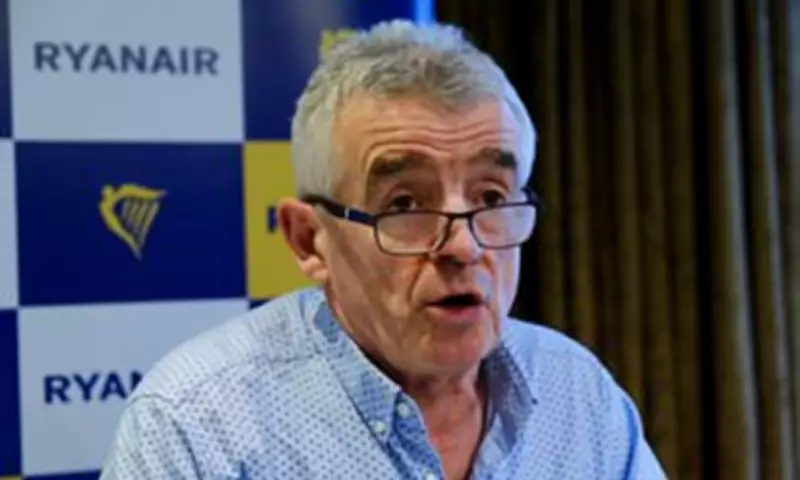
Ryanair's chief executive has launched a scathing attack on the European Union, accusing it of deliberately punishing British holidaymakers over Brexit by imposing lengthy passport control queues. Michael O'Leary, who personally voted Remain in the 2016 referendum, stated the bloc was 'undoubtedly' forcing UK citizens to endure extended waits at airports as what he described as a 'f*** you' for leaving the EU in 2020.
New Border System Creating Chaos
The controversy centres on the EU's Entry Exit System (EES), a new automated border control mechanism that requires third-country nationals, including British travellers, to register fingerprints and have photographs taken upon entering the Schengen Area. This zone comprises 29 European countries, predominantly within the EU itself.
Since its initial introduction in October last year, the system has reportedly caused 'significant disruption' at passport control points across numerous airports. Mr O'Leary did not mince words, labelling the EES rollout a 's*** show and a shambles' in comments to The Times newspaper.

Delays Expected to Worsen
Data collected by Airports Council International reveals a 'continued deterioration in waiting times at border crossing points' where the EES has been implemented. Delays are 'regularly reaching up to two hours during peak traffic periods', with some airports reporting even longer queues. Aviation bodies have warned that without immediate intervention, these waits could potentially stretch to four hours or more over the busy summer holiday season.
The trade body highlighted that major travel hubs in Germany, France, Iceland, Greece, Italy, Spain, and Portugal are being particularly impacted by the new system's teething problems.
Brexit Factor in Queue Management
Mr O'Leary explicitly linked the situation to the UK's departure from the European Union. 'There's a bit of Brexit in this too,' he remarked. 'Here, you voted for Brexit — f***ing join the queue.' He argued that the EU could mitigate the crisis by allowing member states to defer full EES implementation for five months, until the end of September, which he said would make 'much more sense' to avoid exacerbating problems during the peak travel period.
Although the system is being introduced in stages with full operation expected from April 2026, it has already created substantial backlogs and increased waiting times for passengers. Last month, the EU granted the 29 participating countries a more flexible timeline, extending the implementation deadline to early September.
Compounding Issues at Borders
Further complications are arising from what Mr O'Leary described as understaffed immigration kiosks. Additionally, passengers who have already registered under the new biometric system are being funnelled into the same queues as first-time users, negating any potential efficiency gains.
The Ryanair CEO warned that smaller regional airports, including those serving popular holiday destinations like Seville, Alicante, Tenerife, and Faro, are likely to experience the most severe delays due to infrastructure limitations.
Industry Calls for Urgent Action
Aviation industry representatives have written to EU Commissioner for Internal Affairs and Migration, Magnus Brunner, demanding immediate action to prevent what they term 'excessive' delays from the EES rollout. They highlighted three core issues compounding the delays: 'chronic' understaffing at border control posts, 'unresolved' technical malfunctions with the new equipment, and the 'very limited uptake' of the Frontex pre-registration application by Schengen states.
'Failing immediate action to provide sufficient flexibility,' the industry warning stated, 'severe disruptions over the peak summer months are a real prospect.' The situation presents a significant challenge for millions of British travellers planning European getaways, with the bank holiday weekend already witnessing lengthy queues at major UK airports like Heathrow.