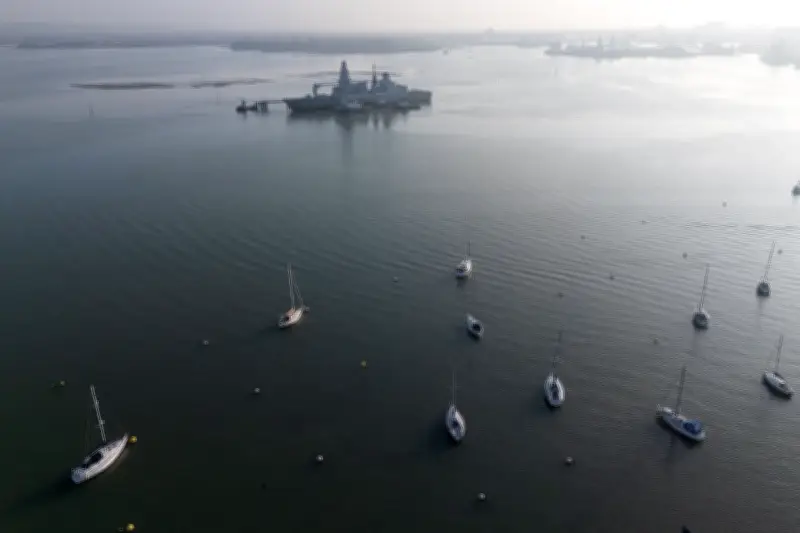
The Royal Navy has scrapped plans to replace its ageing Type 45 destroyers with a new class of guided-missile warship, the Type 83, in favour of procuring at least six common combat vessels (CCVs) that will act as command hubs for uncrewed systems, according to officials. The decision is part of the long-awaited defence investment plan (Dip) aimed at prioritising drones and modernising the military, with delivery expected in the 2030s.
Shift to Hybrid Navy
Prime Minister Sir Keir Starmer is expected to unveil the blueprint in the coming days as he seeks to shore up his legacy before leaving No 10 as soon as July 20. The new vessels are part of efforts to expand the Navy's reach and firepower without a proportional increase in crew or cost, the Ministry of Defence said. They will work alongside eight Type 26 and five Type 31 crewed frigates. Underwater drones and sensor platforms will also feature heavily after ministers warned of rising Russian submarine activity in the Atlantic near critical undersea cables.
Funding and Political Context
Defence Secretary Dan Jarvis is understood to have secured an extra £1 billion for the plan, taking the settlement to around £14.5 billion, up from the £13.5 billion offered to former defence secretary John Healey, who resigned in protest. However, this falls short of the £28 billion officials previously said was needed. Speaking to broadcasters, Housing Secretary Steve Reed said the UK needed to prepare for potential conflicts of the future rather than 'whatever the last war was like', adding that the Dip was 'days away'.

Sir Keir will publish the plan during the transition period before his successor, likely Andy Burnham, takes office. The Sunday Times reported that Burnham, who has been authorised to receive Government briefings, has seen and signed off on the blueprint. Opposition critics have described the £1 billion uplift as a 'drop in the ocean', while former chief of the defence staff Admiral Sir Tony Radakin told the BBC's Sunday With Laura Kuenssberg programme that the next leader may need to find more money, operating 'almost like a wartime prime minister' in light of global threats.
New Capabilities and Atlantic Programmes
Defence Secretary Jarvis said: 'Our Royal Navy is a formidable force, operating to protect our nation and our allies in the Atlantic and beyond. These common combat vessels will provide our dedicated sailors with hybrid ships that are designed and built for the increasing threats we face. Developed with exceptional British innovators, the new ships will be British-built, supporting jobs across the nation and giving the Royal Navy a capability built for modern warfare.'
The plans come as First Sea Lord Admiral Sir Gwyn Jenkins leads efforts to shift towards a new 'hybrid Navy' made up of both traditional crewed ships and submarines and autonomous vehicles and AI. The programme will also anchor three new Atlantic programmes – Atlantic Bastion, Atlantic Shield and Atlantic Strike – designed to counter Russian activity in the North Atlantic and High North.
Funding for Commandos and Criticism
Elsewhere, £500 million will be promised to Britain's commandos under changes to the Dip, with high-speed boats and strike drones committed to the elite force, focusing on the High North in the face of rising Russian activity. The funding will partly go towards new high-speed commando insertion craft, which officials said could be used for operations including the seizure of Russian shadow fleet vessels. This follows Royal Marine commandos helping intercept the tanker Smyrtos in the Channel earlier this month.
Shadow defence secretary James Cartlidge criticised the plans as 'too little, too late', stating: 'If correct, these reports suggest Labour's long-delayed defence plan will have barely any more cash than the previous one – which their own former defence secretary John Healey said in his resignation letter would make Britain 'less safe'. How can that situation have changed with such a small addition of cash? So it's no surprise we are hearing reports of capabilities being scrapped, just at the time we are meant to be strengthening our armed forces.' He added: 'This is no way to run a country and the brilliant men and women of our armed forces deserve much better.'