The government is preparing for local opposition as it pushes forward with plans to house asylum seekers in former military barracks, with Justice Minister Jake Richards stating that ministers will do "whatever it takes" to end the use of hotels for asylum accommodation.
Planning Permission Sought for Three Sites
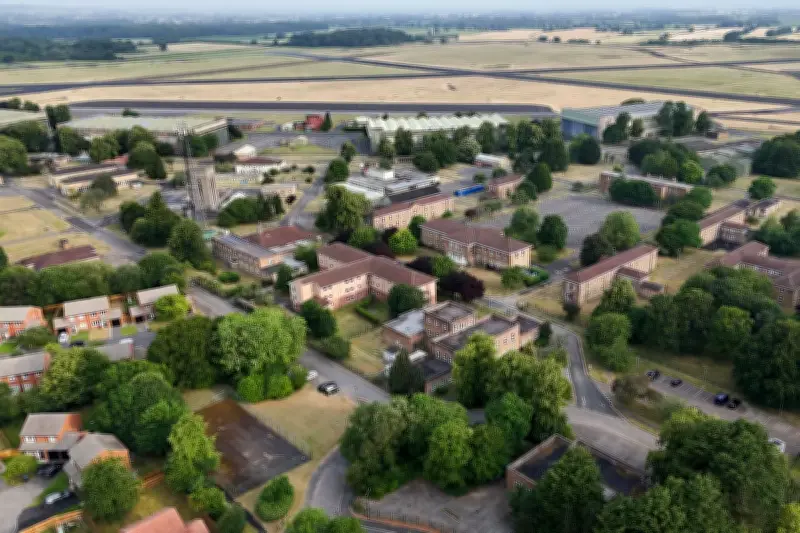
The Home Office has announced it is seeking planning permission for three Ministry of Defence sites to accommodate 3,750 asylum seekers: Bicester in Oxfordshire, Barnham in Suffolk, and Linton-on-Ouse in North Yorkshire. This includes a revived effort to use the disused RAF base near York, a plan that was abandoned in 2022 after local opposition and a council legal challenge.
The government also aims to extend the use of existing sites in Crowborough, East Sussex, until 2030 and Wethersfield in Essex beyond 2027.

Local Council Expresses Disappointment
Braintree District Council, which covers the Wethersfield site, expressed strong disappointment. Council leader Tom Cunningham said the community had been "treated with contempt" by the government. He noted that the Home Office informed the council on Thursday that the former RAF base's capacity would increase from 800 to 1,245.
"We are bitterly disappointed that, after more than three years of having the UK's largest asylum accommodation centre imposed on this district, it appears it will now stay for an indeterminate amount of time," Cunningham said. He added that the site, located in a very rural area, lacks the necessary infrastructure. "This decision will be deeply concerning for a community that has responded to an unprecedented situation with patience, dignity and pragmatism."
Minister Acknowledges Opposition
Justice minister Jake Richards acknowledged the government would face local opposition but stressed the necessity of the move to end the use of hotels. Speaking on BBC Radio 4's Today programme, Richards said: "The military sites that we are proposing to use… are large sites, they are more contained. I understand there will always be opposition to such proposals as we're setting out today."
He added: "Ultimately the question for politicians, when you're in government, is what are your priorities? And we made a promise to the British people that we would close these hotels, which have caused so much angst, so much anxiety, and so much pain across the country and we will do that."
Decline in Hotel Use
The number of asylum seekers housed in UK hotels has fallen to its lowest level since data was first reported in 2022. According to Home Office figures, 20,885 people were in such accommodation at the end of March, down 35% year-on-year from 32,326. The peak was 56,018 at the end of September 2023. On Thursday, the Home Office confirmed that 20 more hotels have now been closed.
Criticism from Refugee Council
Imran Hussain of the Refugee Council criticised the plan, stating: "Moving refugees from unsuitable hotels to unsuitable former military sites is storing up problems for the next prime minister by repeating policies that failed in the recent past. It would be wise to rethink this approach."