

CBS News Radio Service Terminated After Nearly a Century of Operation
CBS News has announced the closure of its iconic radio news service, ending a legacy that spanned almost 100 years. The decision, confirmed on Friday, will see the service cease operations on May 22, resulting in the loss of up to 70 jobs as part of broader network restructuring under CEO Bari Weiss.
Historic Legacy and Cultural Impact
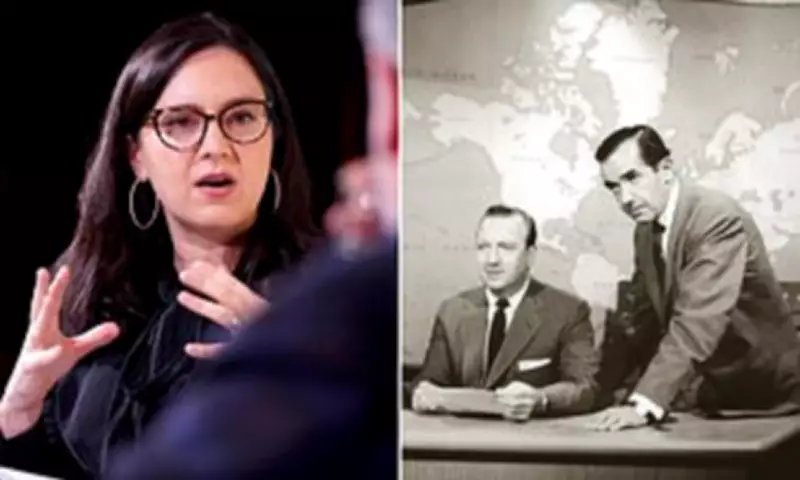
When CBS News Radio first aired in September 1927, it served as the foundational precursor to the entire network, launching the career of a young William S. Paley. The service became legendary through Edward R. Murrow's dramatic rooftop reports during the Nazi bombing of London in World War II, keeping American listeners captivated and informed during critical moments in history.
Throughout its operation, CBS News Radio provided material to approximately 700 stations nationwide, best known for its top-of-the-hour news roundups that reached an estimated 30 million Americans weekly. The network nurtured iconic journalists including Walter Cronkite, Edward Murrow, Douglas Edwards, Dallas Townsend, and Christopher Glenn, whose voices became familiar fixtures in American households.

Leadership Statements and Industry Reactions
CBS News editor-in-chief Bari Weiss addressed staff members, acknowledging radio's integral role in the network's history while explaining the difficult decision. 'Radio is woven into the fabric of CBS News, and that's always going to be part of our history,' Weiss stated. 'I want you to know that we did everything we could, including before I joined the company, to try and find a viable solution to sustain the radio operation. But with the radical changes in the media industry, we just could not find a way to make that possible.'
Former CBS executives expressed strong disagreement with the timing and strategic implications of the closure. Harvey Nagler, who served as vice president of radio until 2016, told the New York Post: 'At some point in time, closing it was going to be inevitable, but I don't believe now was the time to do it. Those in a corporate position were not aware of the clout and the reach of CBS News Radio. It's a profound strategic failure. It's unfortunate on that basis alone.'
Craig Swagler, former vice president of the radio network, warned of broader consequences: 'The shutdown will have a major impact to the accessibility of information across the country. We often look at media as a business and not as a public service.'
Industry Context and Historical Significance
The closure represents a significant moment in media evolution. From the 1920s through the 1940s, radio dominated American news consumption alongside newspapers, with families gathering around receivers for President Franklin Delano Roosevelt's 'Fireside Chats' during the Depression. CBS News Radio's 1938 broadcast of Germany's invasion of Austria, marking Murrow's first on-air appearance, stands as a historic milestone in broadcast journalism.
Longtime CBS News anchor Dan Rather, who succeeded Walter Cronkite in 1981, reflected on the announcement: 'It's another piece of America that is gone. Given the way things are going, I was saddened, but I wasn't surprised by it.' Rather recalled filing reports up to a dozen times daily during the civil rights era and noted that when Cronkite announced President John F. Kennedy's assassination on television, he had simultaneously relayed the news on radio. 'Radio was considered an equal responsibility to television,' the 94-year-old journalist emphasized.
Broader Network Changes and Industry Analysis
The radio closure follows earlier programming cuts late last year, including Weekend Roundup and World News Roundup Late Edition, as CBS attempted to sustain the service. The network also reduced its workforce by approximately six percent, affecting over 60 positions on Friday alone.

Michael Harrison, publisher of radio trade publication Talkers, characterized the development as part of a larger trend: 'This is another part of the landscape that has fallen off into the sea. It's a shame. It's a loss for the country and for the industry. Its heyday spanned decades. It was quality on every level. It sounded good. Its coverage was as objective as possible within the realm of human nature. Its resources were extensive. It had a very high trust factor that was considered the standard of the day.'
The television era's emergence in the 1950s initiated radio's gradual decline, with digital platforms and podcasts now dominating audio consumption. This shift occurs amid broader industry consolidation, with parent company Paramount Global potentially absorbing CNN as part of its announced Warner Bros Discovery acquisition.
Leadership Direction and Future Implications
Weiss, founder of the Free Press website who joined CBS without prior broadcast news experience, has rapidly become a polarizing figure in journalism. Her tenure has included controversial decisions such as delaying a 60 Minutes story critical of former President Donald Trump's deportation policy for a month, raising questions about the network's editorial direction.
Addressing staff in January, just three months into her leadership role, Weiss invoked Cronkite's name as representing outdated approaches, warning that continuing with current strategies would leave the network 'toast.' She announced the hiring of 18 new contributors and emphasized the need for stories that 'surprise and provoke - including inside our own newsroom.'
The front page of CBS News' website did not immediately feature coverage of the radio service's termination, highlighting the changing priorities in modern media distribution. As the May 22 closure date approaches, industry observers continue to assess the long-term implications for news accessibility and the evolving media landscape.





