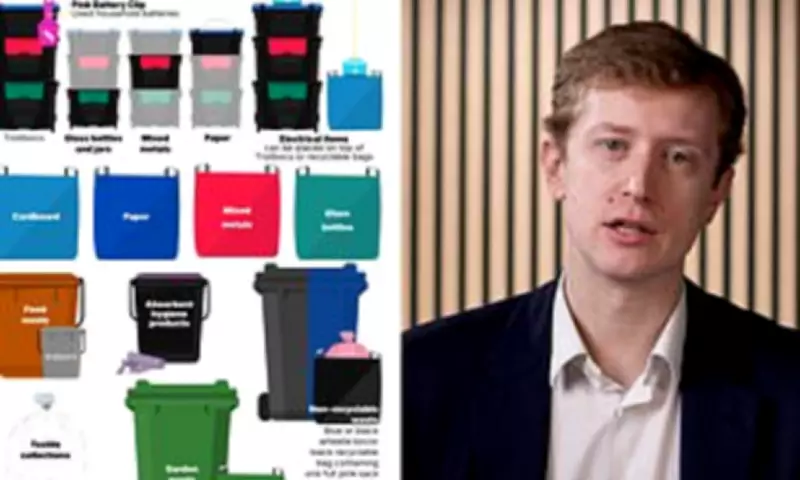
Great British Bin Bonanza: Council Imposes Twelve-Bin System on Households
In a move that has ignited widespread discussion, one local council has introduced stringent new waste collection rules, mandating that households utilise up to twelve separate bins for sorting their rubbish. This initiative, part of a broader effort to enhance recycling rates and reduce landfill waste, has been met with a mix of support and criticism from residents and environmental groups alike.
The Postcode Lottery of Rubbish Collection
Fred Kelly, a prominent environmental campaigner, has highlighted the stark disparities in waste management practices across different regions, dubbing it a "postcode lottery." While some areas benefit from streamlined, efficient collection services, others face complex and demanding systems like the twelve-bin requirement. Kelly argues that this inconsistency undermines national efforts to promote sustainability and can lead to confusion among the public.
The new rules aim to bring order to waste disposal by categorising materials into specific bins for items such as plastics, glass, paper, food waste, and general refuse. Proponents claim that this detailed sorting will significantly boost recycling rates and minimise environmental impact. However, critics point to the logistical challenges and space constraints for households, particularly in urban areas with limited storage.

Impact on Households and Communities
Residents affected by the twelve-bin system have expressed concerns over the practicality of managing so many containers. Many worry about the additional time and effort required to sort waste correctly, as well as the potential for increased costs if bins are not used properly. The council has responded by offering educational resources and support to help households adapt to the new requirements.
This development comes amid a national push to improve waste management infrastructure and meet environmental targets. Other councils are closely monitoring the outcomes of this initiative, considering whether to adopt similar measures or opt for more flexible approaches. The debate underscores the ongoing tension between ambitious environmental policies and the everyday realities faced by citizens.
As Britain grapples with the challenges of modern waste disposal, the success or failure of such bin-heavy systems could shape future policies nationwide. Stakeholders are calling for a balanced approach that prioritises both ecological benefits and practical feasibility for all households.