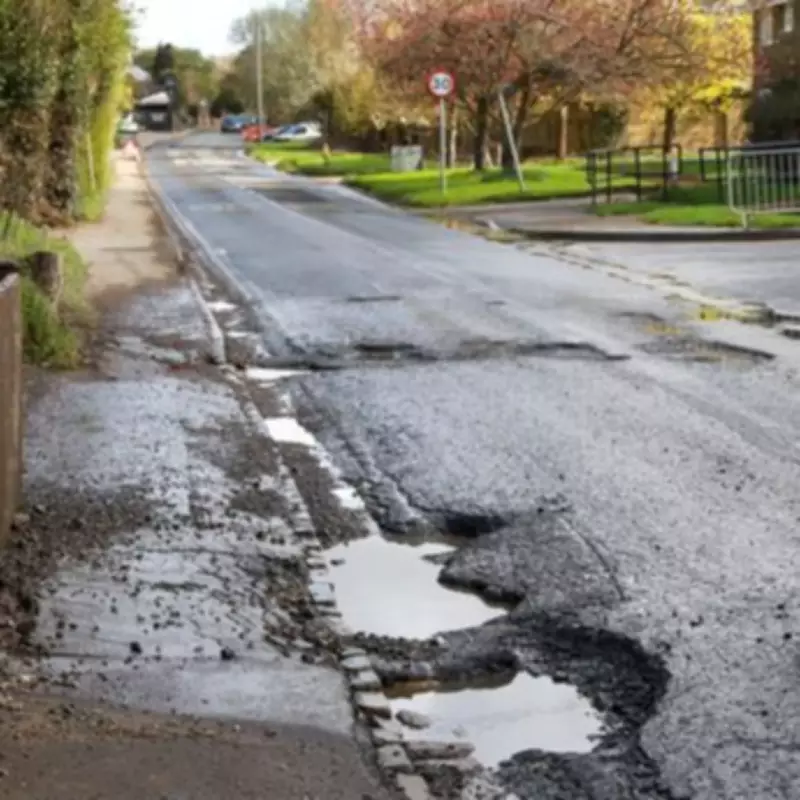
A frustrated driver in Northamptonshire has taken matters into his own hands by filling potholes with soil and flowers, sparking a fierce rebuke from his local council, which is under the control of Reform UK. Jon Nunn, a 45-year-old resident of Corby, has become so exasperated with the deteriorating road conditions that he has embarked on a personal mission to highlight the issue, but North Northamptonshire Council has condemned his actions as "extremely dangerous."
Driver's Unconventional Protest Against Potholes
Jon Nunn, who has lived in Corby for 25 years, told the BBC that he decided to plant flowers in potholes to draw attention to what he describes as "massive" road defects. He claims to fill two or three potholes daily, aiming for around 20 per week, using soil and floral arrangements. His efforts have gained significant attention on TikTok, where videos of his DIY repairs have garnered thousands of views, with Nunn insisting that the people of Corby "deserve better" road maintenance.
However, Nunn has issued a stark warning to others, stating, "I'm doing it myself, on my own, but I wouldn't recommend anyone does it. I don't want other people to put their life at risk to fill these potholes." He explained that the potholes frequently cause damage to his business vehicles before he can address them, and noted that the council often repairs the holes within days of his floral interventions, though he believes this reactive approach is insufficient.

Council's Strong Warning and Safety Concerns
North Northamptonshire Council, which Reform UK took control of last year after the Conservatives lost power, has responded forcefully to Nunn's actions. In a statement to the BBC, the council described his methods as "extremely dangerous" and "strongly advised against" such DIY repairs. The authority emphasized that working on roads without proper training, traffic management, or safety equipment poses serious risks, and filling potholes with incorrect materials can create additional hazards and delay official repairs.
The council acknowledged local concerns about potholes in Corby and Kettering, attributing the problem to an "unprecedented increase" in road defects. They stated that highways teams are prioritizing the most severe and safety-critical issues, but urged residents to report potholes through the council's website instead of taking matters into their own hands. "We are working as hard as possible to bring roads up to standard," the council added, highlighting their commitment to addressing the crisis.
Rising Pothole Crisis and Compensation Trends
This incident occurs against a backdrop of a growing pothole epidemic across the UK. Recent data obtained by Confused.com through Freedom of Information requests reveals that between 2022 and 2025, over 3.4 million potholes were reported nationwide, with more than 600,000 (18%) recorded in 2025 alone. During this period, councils received 144,230 compensation claims for pothole-related vehicle damage, paying out a total of more than £11 million, including £1.1 million in 2025.
Despite the high number of claims, the success rate for compensation is declining sharply. In 2025, councils paid out on just 19% of claims, down from 29% the previous year, marking the lowest percentage of successful claims in recent years. This trend suggests that local authorities are becoming more stringent in handling pothole damage complaints, even as the physical infrastructure continues to deteriorate.
Broader Implications for Road Safety and Policy
Jon Nunn's unconventional protest underscores a wider frustration among motorists and residents over inadequate road maintenance. His actions have sparked a debate about the effectiveness of council responses and the safety of DIY solutions. While the council's warning highlights legitimate concerns about public safety and proper repair protocols, Nunn's viral campaign has amplified calls for more proactive and efficient road management.

As pothole-related compensation claims mount and repair backlogs grow, this case in North Northamptonshire serves as a microcosm of a national issue. It raises questions about funding, prioritization, and community engagement in infrastructure upkeep, particularly in areas under new political leadership like Reform UK-controlled councils. The tension between individual activism and official authority may prompt further discussions on how to balance public safety with the urgent need for road repairs.