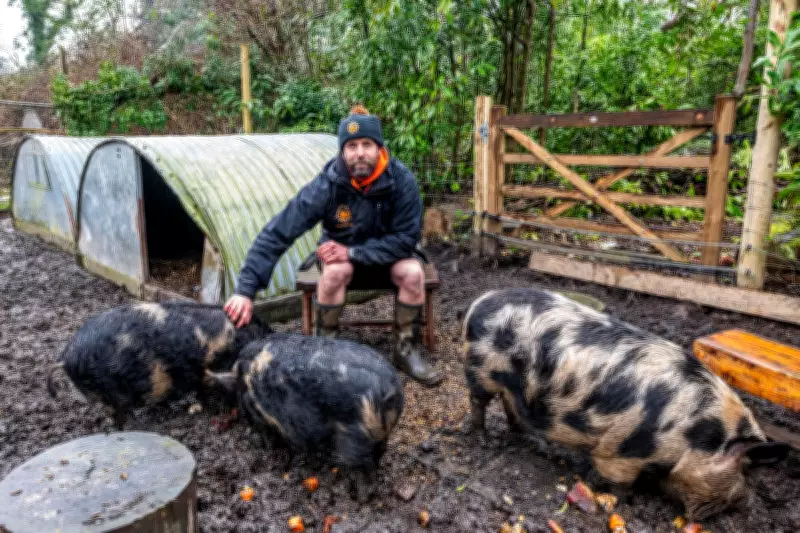
Dorset Outdoor Centre Forced to Rehome Beloved Therapy Pigs After Council Planning Dispute
An outdoor activity centre in Dorset has been compelled to rehome its cherished kune kune pigs following a contentious planning row with local authorities. Council officials determined the animals were 'leisure pigs' rather than agricultural livestock, leading to enforcement action over alleged planning breaches and social media activity that promoted the pigs for therapeutic purposes.
Council Intervention Over Pig Classification
James Short, who operates Adventure Pirate near Lytchett Minster, introduced three kune kune pigs to land adjacent to his educational business, which previously housed animals. However, when he began advertising 'pig walking' and 'pig therapy' services primarily for children on social media platforms, Dorset Council intervened decisively.
Council officers informed Mr Short that the pigs no longer qualified as agricultural livestock but were instead classified as 'leisure pigs', for which he lacked necessary permissions. Officials also raised significant concerns about a pig walk trail Mr Short had started constructing, stating it was 'detrimental to the greenbelt land' and violated planning regulations.

Failed Negotiations and Emotional Impact
The 42-year-old father-of-two attempted to negotiate with Dorset Council, offering to revert to keeping the pigs solely for agricultural purposes for his family. Despite this compromise proposal, officials insisted the animals had to be removed entirely, resulting in their heartbreaking rehoming.
Mr Short described the enforcement process as 'aggressive', revealing that officials threatened potential imprisonment during discussions. 'The whole system just seems wrong and it's made me feel like I'm a really bad person,' he lamented. 'They came straight in with 'we will put you in prison', it's just so aggressive. It's heartbreaking. They are part of our family, my daughter is besotted with them.'
Planning Violations and Social Media Evidence
Adventure Pirate, established in 2019, offers bushcraft and survival skills courses alongside activities including air rifle shooting, axe throwing, and archery. The centre transformed overgrown woodland into a popular destination for school groups, home education providers, and holiday clubs.
While Mr Short had secured permission to change the site to 'leisure' use for his activity business, he encountered enforcement issues because the pig pens were situated approximately 16 feet outside the approved boundary, on land designated as agricultural. A planning officer's letter cited screenshots from the company's social media showing public interaction with the animals as evidence that 'the pigs are not being kept purely for agricultural purposes.'
The letter emphasized: 'The operational area is clearly defined. All activities must take place strictly within the red line boundary and in accordance with the relevant planning conditions. The pig pens being located outside the permitted planning area constitutes a change of use of the land and therefore a breach of planning control.'
Financial Strain and Planning Complexities
Mr Short revealed the substantial financial burden created by ongoing planning issues, estimating over £50,000 spent addressing various planning challenges. 'Navigating a complex planning system has been one of the biggest challenges we have faced,' he explained. 'It's so expensive to get a planning consultant - they're £175 an hour, I don't make that in a day.'
The entrepreneur had previously attempted to establish a glamping setup with two shepherd's huts and a barn, submitting a retrospective planning application that was refused with a subsequent appeal dismissed. 'The area had been a pig pen when the previous tenants were here so we thought 'we will convert it back to a pig pen',' Mr Short recalled. 'I even checked with the council and was told pigs were permitted on greenbelt land.'
Therapeutic Intent and Breed Characteristics
The concept for pig therapy originated from the kune kune breed's notably docile nature. 'We got our pigs and had the idea to do pig therapy and walking them – they're kune kune pigs so they're like big labradors. You can lie down with them and stroke them,' Mr Short elaborated.

However, council officials determined that therapeutic intentions transformed the animals' classification. 'The council said that because we want to do the pig therapy, the animals were not agricultural, they were leisure pigs,' Mr Short explained. 'They have used our social media against us – we ran a poll asking for people's help to name the final pig and then said the people who chose the winning name could visit and meet her. They screenshotted that and said it showed we were using them for leisure and commercial purposes to promote the business.'
When approached for comment regarding the ongoing investigation, Dorset Council maintained they could not discuss live enforcement matters, leaving the outdoor centre owner facing both emotional distress and significant financial consequences from the planning dispute.