Leicester Square LED Advertising Scheme Blocked by Westminster Council
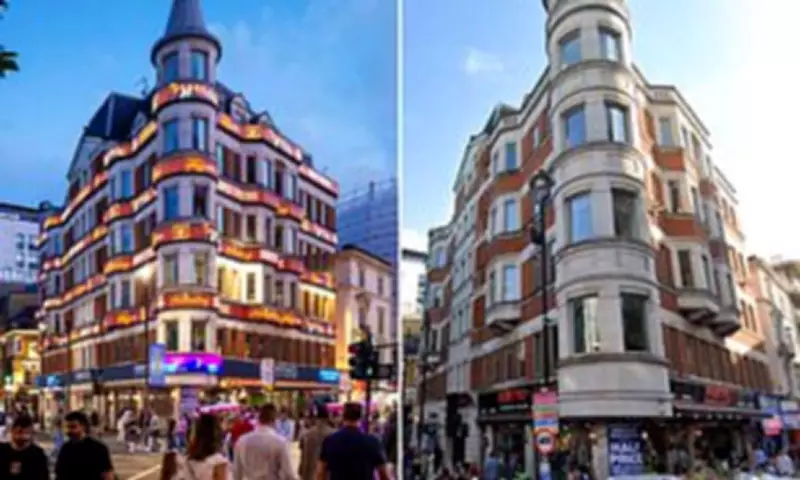
Controversial proposals to install extensive LED advertising screens in London's Leicester Square have been decisively rejected by Westminster City Council. The plans, submitted by Banner Holdings Limited, have been halted following strong objections that they would be more suited to "Disneyland" and could create a "no-go zone" for individuals with visual sensitivities.
Conservation Concerns and Character Preservation
The proposed development involved installing five continuous LED panels along 39 Charing Cross Road, featuring illuminated bands displaying static advertisements. However, the building in question falls within the designated Leicester Square Conservation Area, which mandates that any developments must "preserve or enhance the character or appearance" of the locale.
Councillor Patrick Lilley, Chair of the Westminster City Council Planning Sub-Committee, voiced significant concerns during deliberations. He argued that the bright, extensive screens would disrupt the streetscape and declared they "would be more fitting for Disneyland Paris" than the historic central London location.

Accessibility and Overstimulation Issues
Beyond aesthetic considerations, the proposal raised serious accessibility concerns. Opponents highlighted that the intense illumination would create substantial difficulties for people with visual processing disorders, effectively rendering parts of the area inaccessible.
Michael Riley, representing those affected, stated: "Leicester Square shouldn't become a no-go zone for people like me and there's thousands of us - people like us - who cannot stand the overstimulation." This perspective was supported by Council Case Officer Sebastian Knox, who described the plans as "excessive" and formally recommended refusal.
Conflicting Views on Entertainment District Identity
The application did receive some support from those who believed the advertising would complement the area's character. Ward Councillor for St James's, Councillor Louise Hyams, contended that Leicester Square represented the ideal location for such displays, being the heart of London's entertainment district.
Henry Squire of Squire and Partner Architects reportedly suggested the panels would harmonize with the area's existing character while providing valuable opportunities to support local businesses through advertising revenue. The developers themselves maintained that their proposal would neither harm the conservation area's character nor negatively impact public amenity.
Official Decision and Conservation Impact
Despite these arguments, the planning sub-committee reached its decision last Tuesday to refuse the application. Their draft decision letter outlined comprehensive reasoning, stating: "Because of the excessive scale, high level positioning and cumulative illuminated visual impact of the five proposed LED screens, the advertisements would harm the appearance of the building and the appearance (amenity) of the area."
The committee further determined that the proposal "would fail to maintain or improve (preserve or enhance) the character and appearance of the Leicester Square Conservation Area and would harm the setting of the Grade II listed Hippodrome."
Historical Context of Leicester Square Controversies
This advertising dispute represents merely the latest in a series of controversies affecting Leicester Square. Last year, a significant legal ruling addressed noise complaints from amplified buskers that nearby businesses described as "psychological torture."
Staff at Global Radio headquarters, housing stations including LBC, Heart FM and Classic FM, reported being forced to make telephone calls in cupboards to escape the relentless noise. Simon Thomas, executive chairman of the adjacent Hippodrome Casino, similarly complained of being "plagued" by noise that rendered normal work impossible.
A City of London magistrates court judge ruled that Westminster Council must take stronger action against buskers playing amplified music on continuous loops, noting that "the use of repetitive sounds is a well-publicised feature of unlawful but effective psychological torture techniques."

During those proceedings, the court heard recordings made by Global employees at their desks, including performances of Tracy Chapman's "Fast Car" and Adele's "Someone Like You." Showbiz editor Charlotte Jacob testified about being unable to conduct conversations with colleagues just meters away due to loud renditions of "Hallelujah."
Following that judgment, a Westminster Council spokesperson acknowledged the legitimate concerns while pledging to "continue seeking a balance between minimising nuisance to our residents and businesses whilst ensuring performers can continue to add to the vibrant heritage of street entertainment in Westminster."
The council committed that environmental health teams would "continue to partner with the police to address noise complaints and will continue to seize equipment or prosecute individuals when necessary."
This latest decision regarding LED advertising reinforces Westminster Council's ongoing challenge in balancing commercial interests, conservation requirements, and public accessibility in one of London's most iconic public spaces.