

Oscar Winners Embark on Ambitious AI Documentary Project
A team of Academy Award-winning filmmakers has undertaken the ambitious task of creating what they hope will be the definitive documentary about artificial intelligence. The project, titled "The AI Doc: Or How I Became an Apocaloptimist," represents a collaboration between the creative forces behind "Everything Everywhere All At Once" and "Navalny," who initially connected during the Oscars circuit.
A Sisyphean Challenge in Fast-Moving Technology
The filmmakers originally envisioned completing the documentary within a single year, but the rapidly evolving nature of artificial intelligence extended the production timeline to nearly three years. Co-directors Daniel Roher and Charlie Tyrell, alongside co-producer Daniel Kwan, aimed to move beyond daily headlines to provide audiences with a more enduring perspective on what artificial intelligence means for humanity's future.
"The film is a journey of understanding that casts me as sort of a proxy for everyone, as a pea-brain regular person who's trying to understand what the hell is going on in the world," Roher explained in an interview with The Associated Press earlier this year.

Producer Diane Becker described the project as the most challenging film she has ever made, calling it a Sisyphean task where "literally the minute we started making it, it was out of date." Despite these difficulties, the team felt compelled by the urgency of the subject matter and the potential for their work to serve as both an educational primer and a nonpartisan call to action.
Gathering Diverse Expert Perspectives
The documentary features an impressive roster of more than forty interviewees representing diverse viewpoints and expertise levels within the artificial intelligence field. Notable participants include OpenAI's Sam Altman, Anthropic's Daniela and Dario Amodei, Google DeepMind's Demis Hassabis, and Center for Humane Technology co-founder Tristan Harris.
Securing these interviews proved challenging initially. Veteran producer Ted Tremper, who previously worked on "The Daily Show," sent over eighty emails to industry leaders shortly after the 2023 Oscars, receiving only six responses. Through persistence, trust-building, and numerous off-the-record conversations, those initial contacts eventually led to interviews with prominent CEOs and thought leaders.
"It turns out, it takes a lot of humans to talk about AI," Becker observed about the extensive interview process that generated approximately 3,300 pages of transcripts.
Visual Approach and Philosophical Framework
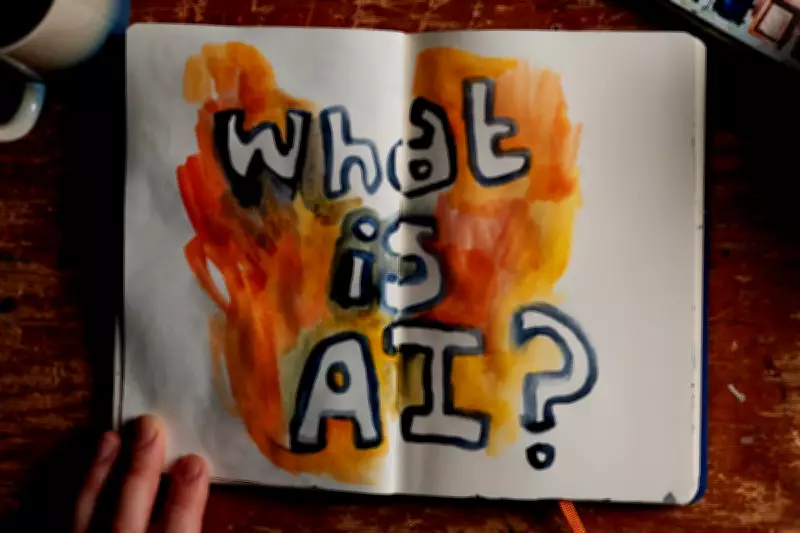
Behind the scenes, a substantial team worked to synthesize complex information and translate it into compelling cinematic form. The filmmakers deliberately chose an anti-digital visual aesthetic, incorporating handmade elements including Roher's notebook drawings and stop-motion animation to create a distinctive viewing experience.
The documentary's subtitle, "Or How I Became an Apocaloptimist," introduces a philosophical concept central to the film's perspective. Roher explained that he identifies neither as an optimist nor as someone who believes in an inevitable apocalypse, but rather as someone who recognizes both possibilities simultaneously.
"What I take solace in is the idea that we still have agency over steering this thing towards the good and away from the bad," Roher said. "If we can walk this narrow path between the two and be very thoughtful and discerning, I think it will be OK."
Accessible Education and Catalytic Conversation
The documentary assumes no prior knowledge about artificial intelligence from its audience. Tremper noted that his 78-year-old father, who has never owned a laptop, watched and understood the film, demonstrating its accessibility to viewers across technological literacy levels.
Producers hope audiences will experience the documentary in theaters or with other people to facilitate post-viewing discussions. "The best part about it is, the lights go up and you want to have conversation," Becker remarked about the theatrical experience.

Tristan Harris, who has no financial stake in the film's success, emphasized its potential as a catalyst for broader societal understanding. "I honestly think if 99% of people on the planet were just to understand the basics of what's going on here, they would say, 'That doesn't sound good,'" Harris stated.
Harris compared the documentary's potential impact to that of "An Inconvenient Truth" or "The Social Dilemma," suggesting it could spark a movement addressing artificial intelligence's implications for employment, well-being, and fundamental aspects of human existence. "This one actually is a risk that we all face in the next single-digit number of years," Harris added, distinguishing artificial intelligence from other global challenges like climate change or specific political issues.





